


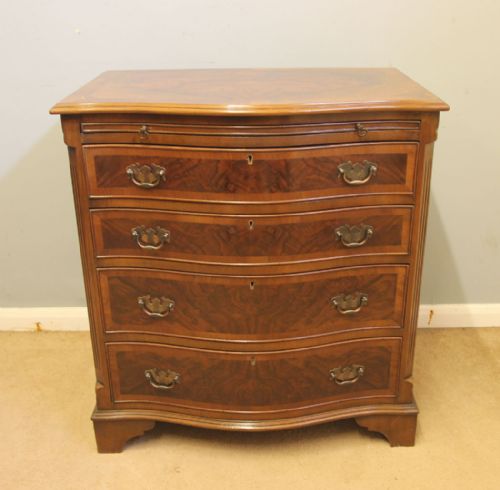

Four Drawer Walnut Chest
A four drawer walnut chest offers deep, handsome storage scaled for everyday life, combining rich timber grain with practical proportions.

Identifying a Four Drawer Walnut Chest
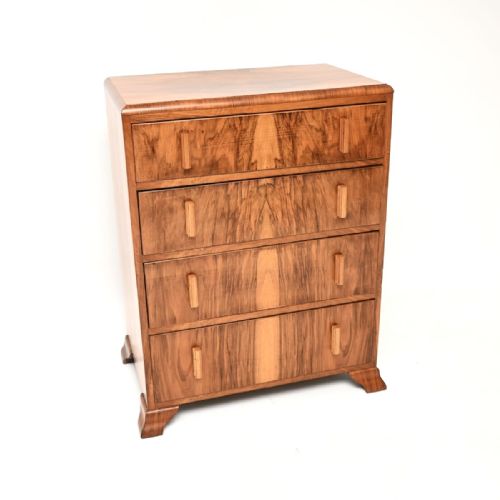
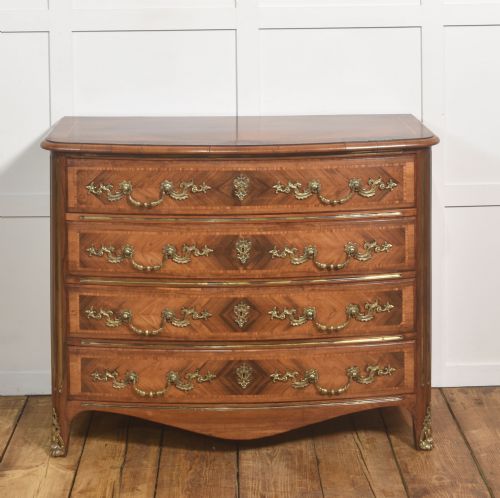
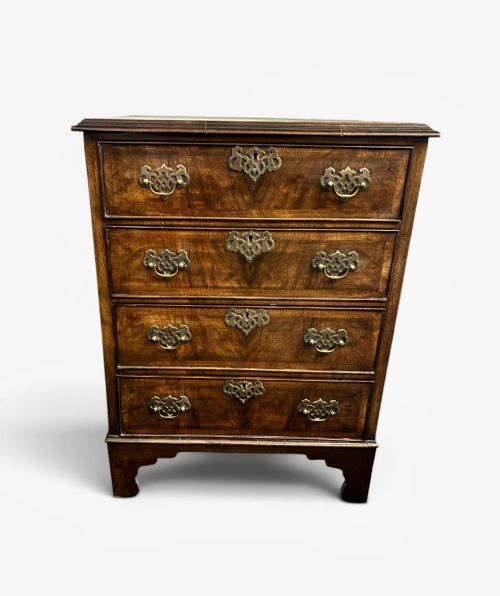
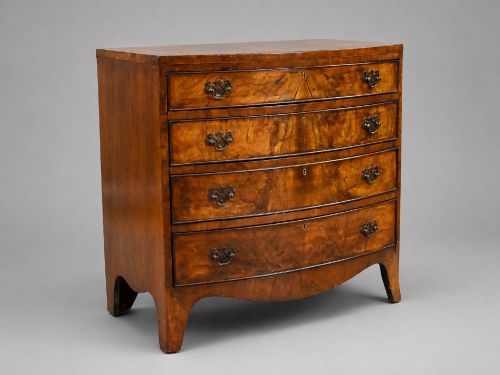
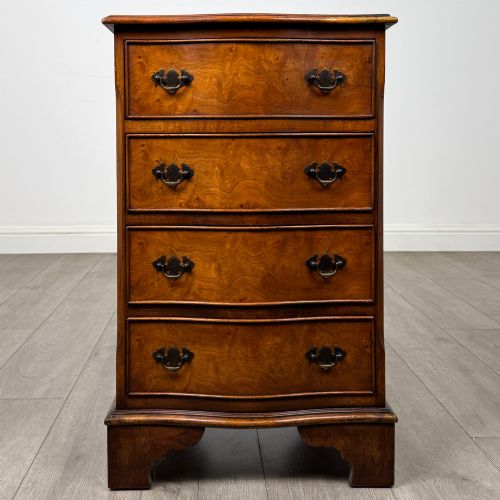
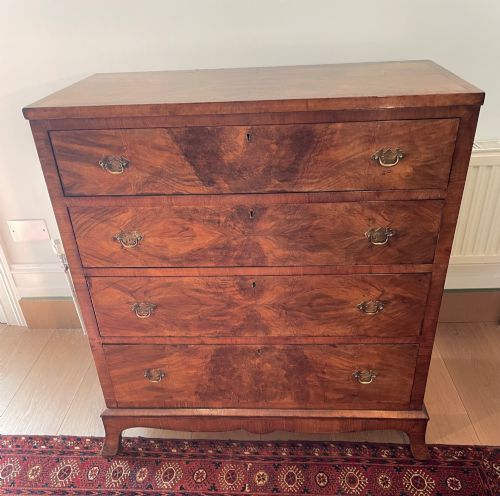
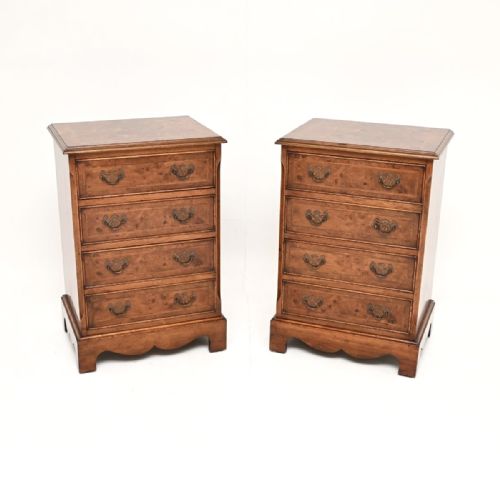
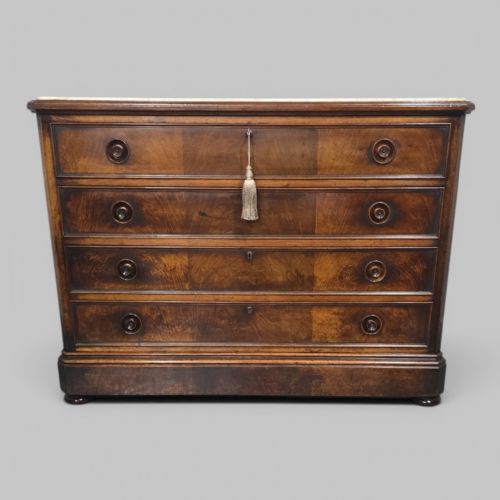
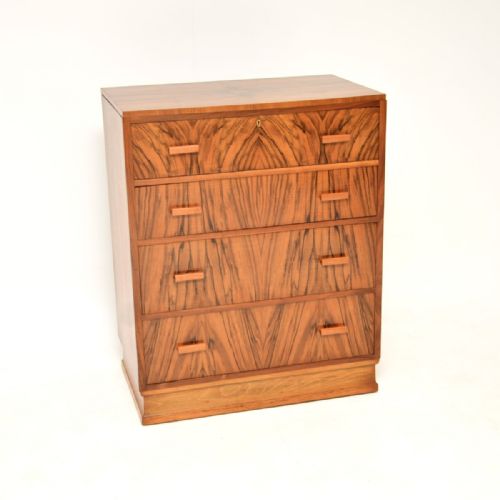
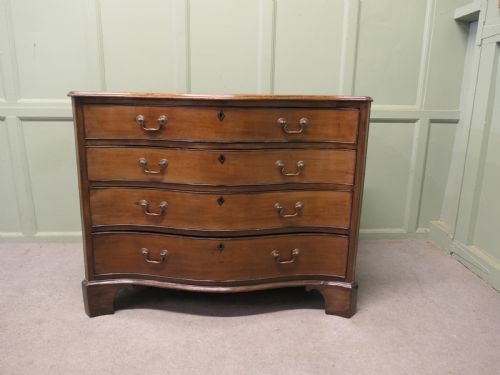
A four drawer walnut chest provides four stacked tiers of graduated or equal drawers designed for linen or clothing storage. You will encounter various iterations of this form across this page, from Georgian style designs to later Edwardian and Victorian examples.
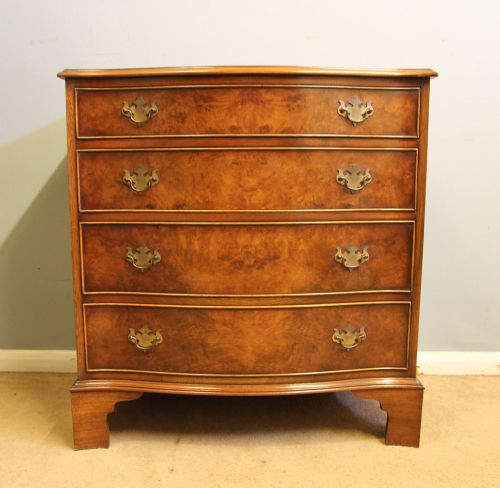
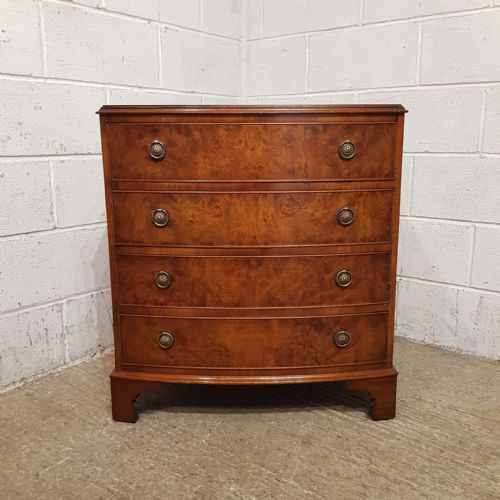
The pieces appearing here range from plain walnut surfaces to highly decorative burr walnut and figured timber. Regional varieties include English, French, and Swedish workshops, spanning the nineteenth and twentieth centuries.
Many examples feature compact proportions or serpentine fronts, whilst others incorporate specialised elements such as brushing slides. The overarching characteristic remains the four horizontal rows of drawers framed in walnut.
Assessing Quality and Execution
The division between standard and superior pieces rests on the choice of veneer and the precision of its matching. Master craftsmen selected burr timber with intense grain movement, placing it deliberately across the four drawer faces.
Structural refinement also defines the better examples, visible in the smoothness of the drawer runs and the crispness of any carved detailing. Inferior items display plain timber boards with minimal figure and simpler construction.
Retail Price Guide 2026
Typical UK retail prices for four drawer walnut chest, calculated from the Sellingantiques database of over a million retail prices indexed since 2003. This retail price guide relies exclusively on Sellingantiques data; no external sources or auction records are used, so the figures do not describe the wider market.
Materials recorded across the inventory include walnut, burr walnut, walnut veneer, birch, and solid brass.
The Four Drawer Walnut Chest Glossary
- Brushing slide
- A pull-out shelf integrated above the top drawers, historically used for folding clothes or inspecting garments. It adds utility and refinement to the chest.
- Serpentine
- A front contour that curves outward in the centre and inward toward the edges, creating a gentle wave effect. This shape requires advanced woodworking skill to execute properly.
- Figured walnut
- Timber possessing an attractive, natural grain pattern caused by uneven growth or branch junctions. Craftsmen matched these figures carefully across drawer fronts.
- Neo-Rococo
- A revival style drawing on eighteenth-century French design, characterised by asymmetrical curves and flowing ornamentation. Pieces in this style exhibit more dramatic shaping.
Frequently Asked Questions
How do I care for a walnut chest?
Keep the timber away from direct heat sources and strong sunlight to prevent the walnut veneer from drying out or fading over time.
Apply a traditional wax polish occasionally to nourish the wood and maintain a soft, protective sheen across the surface.
Are these chests suitable for modern bedrooms?
The compact proportions and warm brown tones of walnut make these chests highly adaptable for contemporary domestic spaces.
They provide substantial vertical storage without demanding an excessive footprint on the floor.
What is a brushing slide used for?
The sliding shelf positioned above the top drawers served as a temporary surface for folding garments or inspecting items before dressing.
In modern use, it remains a convenient detail that demonstrates the higher tier of cabinet making.
How do I distinguish between periods?
Examine the overall silhouette, handle styles, and construction methods to gauge whether a piece belongs to the Victorian, Edwardian, or later twentieth-century eras.
Neo-Rococo and Arts and Crafts examples display distinct decorative traits that separate them from standard Victorian or Art Deco designs.