
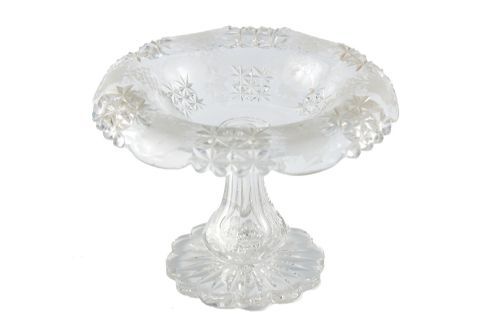


Footed Glass Fruit Bowl
These footed glass fruit bowl pieces lift the dining table, pairing heavy lead crystal with elevated pedestals to showcase seasonal produce.
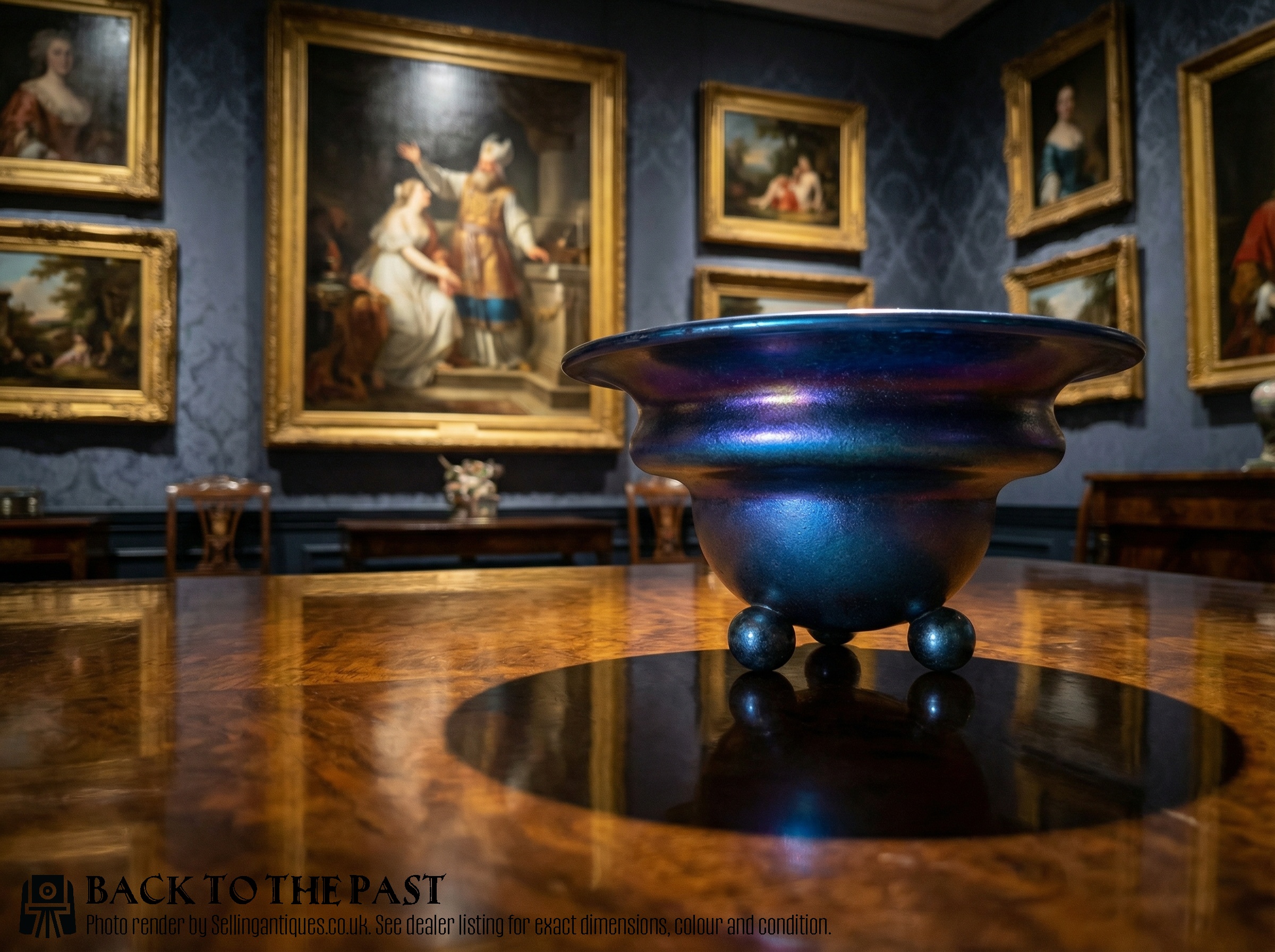
Footed Glass Fruit Bowl
A footed glass fruit bowl brings together the utility of a serving dish and the presence of a pedestal stand, forming a distinctive centrepiece for the table. When you search for a footed glass fruit bowl, you find vessels designed to raise fruit or sweetmeats above the linen.
The selections here span centuries of design, with Victorian, Georgian, Edwardian, and Art Deco periods all represented. You will frequently encounter forms such as tazzas, comports, and centrepieces, alongside traditional Irish crystal and pieces decorated in the Art Nouveau or Japonisme tastes.
Makers and glassworks from England, France, and beyond contributed to this tradition, producing items in cased, opalescent, and heavy cut crystal. These vessels served both practical dining functions and purely decorative roles in period interiors.
How they were made
Production relies on hand blowing and moulding lead crystal or standard glass, often incorporating cased layers where coloured glass overlays a clear core. Artisans then shape the foot and bowl while the metal remains pliable at high temperatures.
Surface decoration involves wheel-cutting, etching, and engraving to create patterns of hobnails or fruiting vines. Some examples feature applied gold enamel or iridescent treatments achieved through metallic oxide coatings.
Some Victorian dining tables grew so heavy with cut glass fruit bowls and matching tazzas that butlers required assistance just to reset the room.
What varies in quality
Quality rests on the depth and clarity of the metal, where heavy lead crystal produces a resonant ring and brilliant refraction. Crisp wheel-cutting with sharp facets distinguishes superior vessels from softer, mould-pressed alternatives.
The integration of the foot to the bowl and the finish of the pontil mark on the underside reveal the maker's hand. Artistry in surface ornamentation, such as delicate enamel work or iridescence, further elevates certain pieces above standard production.
St Louis glassworks·R Lalique·Loetz·François-Eugène Rousseau·Baccarat·Waterford
The Footed Glass Fruit Bowl Glossary
- Tazza
- A shallow bowl or plate mounted on a stem and foot, used historically for serving small portions of fruit or sweetmeats. These elevated dishes dominate many formal tables.
- Comport
- A standing dish or pedestal bowl designed for fruit and dessert service at the end of a meal. They share a similar elevated form with tazzas.
- Lead crystal
- Glass containing a significant proportion of lead oxide, which increases weight, clarity, and the capacity to refract light. This material forms the basis of many fine cut vessels.
- Cased glass
- Glass composed of two or more distinct layers of different colours, allowing artisans to cut through the top layer to reveal the contrasting colour beneath.
- Pontil mark
- The rough scar left on the base of a blown glass vessel where the holding rod was snapped off after shaping. Its presence indicates traditional hand-blown manufacture.
Footed Glass Fruit Bowl: Frequently Asked Questions
What is a footed glass fruit bowl used for?
These vessels were created to hold and display fruit, sweets, or desserts at the centre of a dining table. Their elevated pedestals allowed them to command attention above other tableware.
Over time, many of these bowls transitioned into purely decorative objects or centrepieces for sideboards and entrance halls, valued for their ability to catch the light.
How do I distinguish Georgian from Victorian pieces?
Georgian and early nineteenth-century pieces often display heavier lead crystal, deeper hand-cut facets, and distinct pontil marks on the base. The cutting tends to be bold and straightforward.
Victorian and later Edwardian examples frequently introduce etched motifs, naturalistic forms, or coloured overlays. Art Nouveau and Art Deco pieces bring distinct stylistic curves or geometric stems.
Are these bowls suitable for daily use?
While these vessels are robust enough to hold fruit, their age and delicate cut glass or enamelled surfaces mean they require careful handling. Hand washing in lukewarm water is essential to protect the surface.
Many owners prefer to keep them as display pieces rather than subjecting them to the hazards of everyday dining and routine cleaning.
What does cased glass mean?
Cased glass involves fusing two or more layers of different coloured glass together while hot. This technique creates a rich optical depth.
Craftsmen often cut through the outer layer to expose the contrasting colour underneath, producing striking patterns in shades like yellow or red over clear crystal.
Why do some bowls have a rough spot underneath?
That rough spot is the pontil mark, where the glassblower's pontil rod attached to the base during the final stages of forming the bowl. Its presence confirms that the piece was hand-blown rather than entirely machine-made.
Finer antique pieces often show evidence of this mark being ground down or polished smoothly, though a tactile trace frequently remains.