


Victorian Glass Compote Dish
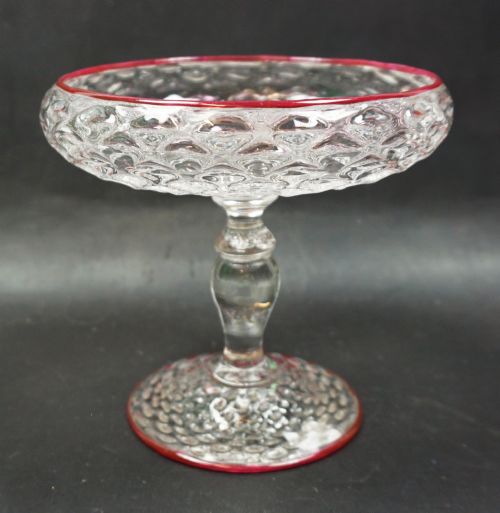
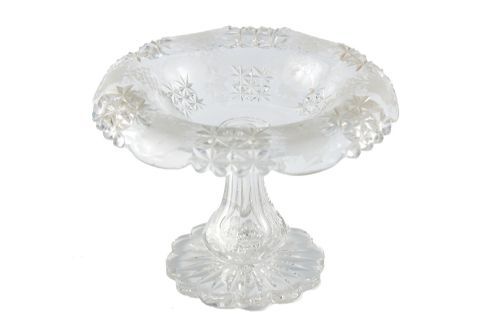
These victorian glass compote dish pieces are elevated pedestal vessels shaped for display and serving, combining Victorian weight with decorative presence.
Victorian Glass Compote Dish
A victorian glass compote dish takes the form of a pedestal bowl or tazza designed for table service and display. These elevated vessels stand on raised feet or stems, lifting fruit, sweetmeats or decorative arrangements above the surface.
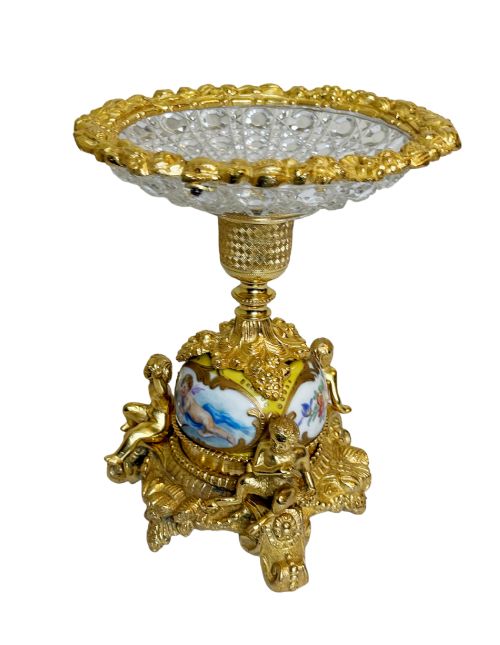
Pieces on this page span the nineteenth century and into the Edwardian period, with forms ranging from simple cut glass bowls to elaborate centrepieces with gilt bronze mounts.
English and Bohemian workshops dominate the selection, bringing together pressed, moulded and etched techniques in clear, ruby, cranberry, yellow and green glass.
Materials and construction
Makers shaped lead crystal and glass through moulding, cutting and etching to catch the light across honeycombed and panelled surfaces. Molten batches took colour from metallic oxides, yielding rich tones of ruby, cranberry, yellow and green.
Some elaborate centrepieces incorporate cast gilt bronze mounts and gold leaf decoration, adding structural metalwork and gilded detailing to the glass bowls and tazzas.
Some Victorian table centrepieces feature mischievous cherubs cast in gilt bronze, keeping a permanent watch over the fruit.
Judgements of quality
Quality rests on the crispness of the cutting, the depth of the colour and the harmony of any applied metalwork. Sharply defined facets and unclouded crystal reflect superior craftsmanship compared to soft, hazy moulding.
The weight of the lead crystal and the balance of the pedestal stem relative to the bowl dictate the physical presence of the piece on the table.
The Victorian Glass Compote Dish Glossary
- Compote
- An elevated bowl or dish with a pedestal foot used for serving fruit or sweets. It sits higher than a standard flat dish.
- Tazza
- A shallow saucer-like dish mounted on a stem and foot. This Italian term describes many of the pedestal serving vessels found here.
- Lead Crystal
- Glass containing lead oxide, which increases brilliance, weight and workability for deep cutting. It rings when struck gently.
- Etched Glass
- Glass decorated by scratching or eating away the surface with acid to leave a design. This technique creates delicate frosted patterns against clear glass.
Victorian Glass Compote Dish: Frequently Asked Questions
What were compote dishes used for?
These elevated vessels served fruit, preserves, nuts and sweetmeats during formal dining courses throughout the nineteenth century. Placed in the middle of the table, they functioned both as practical serveware and decorative centrepieces.
Their height helped break up the flat plane of the dining table and allowed guests to reach across for small portions of food during dessert services.
How do I clean an antique glass compote?
Wash these pieces gently by hand in lukewarm water using a mild detergent, supporting the heavy pedestal base at all times. Avoid sudden temperature changes to protect the old glass from cracking.
Dry them immediately with a lint-free cloth to prevent water spots from clouding the cut facets or any gilt bronze mounts.
Can I use them for serving food today?
Most pieces remain entirely suitable for serving dry foods, fruit or confectionery at the table. Coloured and clear glass is food safe, though pieces with delicate gilding or bronze mounts require extra care.
Hand washing is essential for preserving the historic surfaces, and acidic foods should not be left in contact with gilt or metal parts for extended periods.
How do I date a glass compote?
Dating relies on observing the silhouette, the colour palette and the manufacturing techniques visible in the glass. Heavy lead crystal with deep geometric cutting often points to the Victorian era, while lighter etching and specific tones like cranberry or yellow appear across the later nineteenth and early twentieth centuries.
Maker marks are rarely present on these pieces, so stylistic clues and material composition serve as the primary guides for age.