


Vintage Pedestal Glass Bowl
A vintage pedestal glass bowl elevates any table, offering a raised vessel that catches the light through cut, etched, or coloured surfaces.
Vintage Pedestal Glass Bowl
When you search for a vintage pedestal glass bowl, you encounter raised vessels designed for fruit, sugar, or table display. These pieces stand upon a raised foot or base, taking forms such as comports, tazzas, and centrepieces.
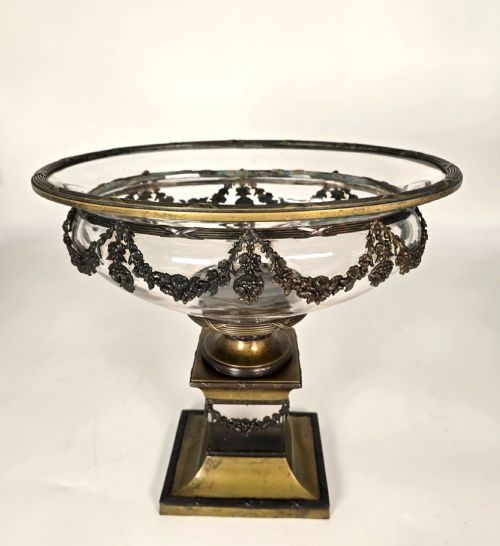
The selection ranges from Victorian cut crystal and etched vessels to Art Deco blue glass and gilt bronze mounted centrepieces. Victorian and early twentieth-century examples predominate, spanning periods from the eighteenth century to the art deco era.
Makers and origins include English, French, German, and Bohemian workshops, utilising glass alongside silver, brass, and pewter mounts.
How they were made
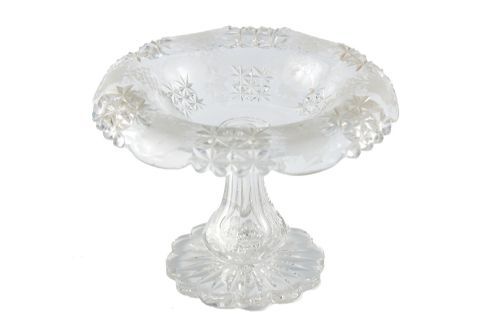
Glassmakers utilised hand-blown and lead crystal techniques, shaping molten material into heavy vessels before applying cutting wheels to carve geometric and hobnail patterns. Surface decoration often involved engraving, etching, and the application of gold leaf, gilding, or cameo glass techniques.
Many bowls incorporate metalwork, featuring mounts of brass, gilt bronze, silver plate, or German silver to secure the elevated glass bowl to its base.
Listings span multiple eras, including the eighteenth century, Victorian period, Edwardian era, Art Nouveau, and Art Deco styles.
What varies in quality
Quality rests upon the crispness of the cutting and engraving, the clarity and weight of the lead crystal or glass, and the integration of metal mounts. Heavy hand-blown blanks and deeply carved facets demonstrate superior manufacturing skill.
The sophistication of decorative details, such as gilded grapevine motifs, cameo glass, or figural pewter and bronze elements, separates standard production wares from finer studio and factory pieces.
Graystan·Etling·Monart·Orivit·Waterford
The Vintage Pedestal Glass Bowl Glossary
- Comport
- A raised dish or bowl used for serving fruit or sweetmeats at the table. These pedestal vessels are often interchangeable in period terminology with tazzas and centrepieces.
- Tazza
- A shallow saucer-like bowl supported on a stem and foot, frequently utilised for display or serving. They appear in glass with etched and gilded decoration.
- Hobnail
- A decorative glass-cutting pattern consisting of closely set, projecting square knobs that resemble the hobnails used in heavy boots. This texture catches the light across nineteenth-century bowls.
- Lead crystal
- Glass containing lead oxide, which increases the weight, brilliance, and refractive index of the material. It forms the heavy, resonant base for cut glass tablewares.
- Cameo glass
- An art glass technique produced by etching or carving through fused layers of different coloured glass to create contrasting designs. It appears on turn-of-the-century tazzas.
Vintage Pedestal Glass Bowl: Frequently Asked Questions
What is a pedestal bowl used for?
These elevated vessels served multiple dining and display purposes over the centuries. They functioned as centrepieces, fruit bowls, sugar basins, and serving dishes.
In period settings, their height brought height and visual interest to the table arrangement, lifting sweetmeats or fruit above the cloth.
How do I date a glass pedestal bowl?
Dating relies on observing stylistic markers, cutting techniques, and metal mounts. Victorian pieces often feature heavy cut crystal or etched floral motifs.
Later items from the nineteen-twenties and thirties display Art Deco forms, bolder colours like vaseline or cobalt, and distinct figural supports.
What is the difference between a comport and a tazza?
Both terms describe raised serving vessels on stems, but usage often depends on the period and shape. A tazza is typically shallower and flatter, resembling a wide saucer on a foot.
A comport generally provides a deeper bowl suited for fruit or compote, though historical listings often use the terms interchangeably.
Are these bowls suitable for daily use?
While many of these vessels were designed for dining, their age and delicate decorative elements require careful handling. Hand washing is essential to preserve gilding, etched surfaces, and metal mounts.
Lead crystal and antique glass can be enjoyed on the table for serving dry foods or fruit, or displayed empty to showcase the craftsmanship.