




Folk Art Pine Cupboard
A folk art pine cupboard brings regional European craftsmanship and hand-painted character directly into a room.
Folk Art Pine Cupboard
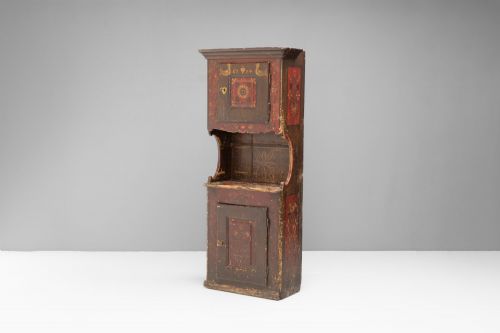
A folk art pine cupboard comprises storage pieces built primarily from softwood and decorated with hand-applied paint, ragwork, or floral motifs. These items originate across various European regions, including Sweden, Hungary, Austria, and Italy, spanning the eighteenth and nineteenth centuries.
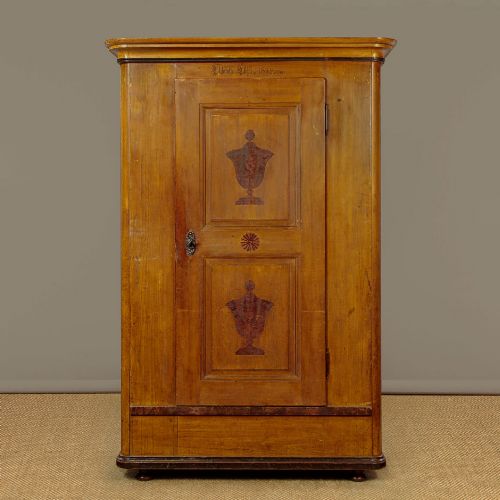
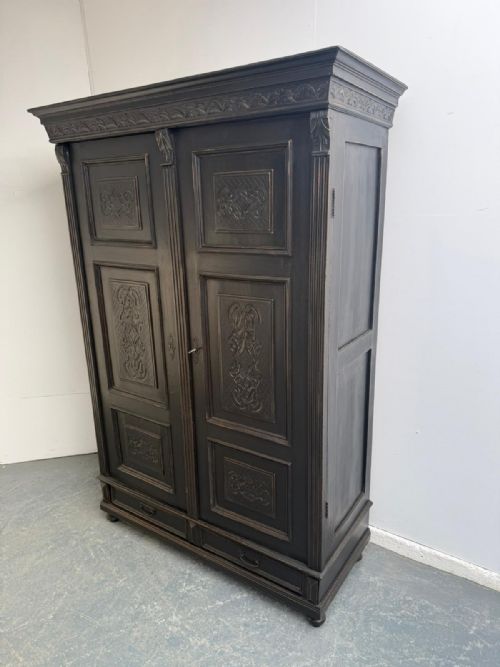
The selection on this page consists predominantly of nineteenth-century examples, ranging from compact wall cupboards and corner cabinets to large two-piece kitchen dressers, tall wardrobes, and marriage armoires. Regional aesthetics shape the forms, from Gustavian clean lines to Alpine and Scandinavian country styles.
Buyers encounter hanging cupboards, units on stands, and multi-drawer storage pieces that served practical household functions in rural farmhouses and village homes. Pine serves as the primary structural timber, occasionally supplemented by oak or fitted with iron, brass, glass, and ceramic hardware.
How they were made
Carpenters constructed these cupboards using native pine timbers, sometimes combining oak for structural strength or interior elements. Iron hinges, brackets, and locks secured doors and lids, whilst brass or ceramic components appeared on handles and fittings.
Surface decoration defined the aesthetic through techniques such as hand-painting, ragwork, and carving. Artisans applied pigmented layers to create floral patterns, cream and teal finishes, or green and black washes that marked domestic milestones like marriages.
Some nineteenth-century marriage cupboards carry painted dates that outlasted the original owners by generations.
What varies in quality
The sophistication of the painted surface decoration distinguishes standard utility pieces from exceptional works of regional art. Original paint schemes that retain their initial layered pigments carry greater visual depth than later overpainting.
Construction methods and joinery integrity dictate the durability and proportion of each cabinet. Pieces that preserve their original ironwork, hardware, and structural pine boards maintain a stronger connection to their period of origin.
Melissa White
The Folk Art Pine Cupboard Glossary
- Ragwork
- A decorative painting technique where rags or cloths apply colour to create textured patterns on the wood surface. This method was common in nineteenth-century Scandinavian cabinet decoration.
- Marriage armoire
- A large wardrobe or cupboard commissioned or gifted to celebrate a wedding, often inscribed with dates or initials and decorated with floral motifs. These pieces typically originated in regions like Bohemia, Hungary, or the Alpine territories.
- Gustavian
- A Swedish neoclassical design style characterised by restrained classical proportions, lighter painted finishes, and simpler decorative carvings. It developed under the influence of King Gustav III during the late eighteenth century.
- Armoire
- A large freestanding cupboard or wardrobe used primarily for storing clothing and textiles. Northern European examples frequently feature double doors and painted exterior panels.
Folk Art Pine Cupboard: Frequently Asked Questions
What is a folk art pine cupboard?
A folk art pine cupboard is a utilitarian storage cabinet built from softwood and decorated by hand with paint, ragwork, or carved details. These pieces reflect regional European traditions from the eighteenth and nineteenth centuries.
They encompass hanging wall cabinets, kitchen dressers, and tall wardrobes originating from countries such as Sweden, Hungary, and Austria.
How were these cupboards used historically?
These cabinets served practical storage functions in rural homes, holding household provisions, kitchenware, linens, and clothing. Larger armoires and dressers often functioned as central storage pieces in farmhouse kitchens and living spaces.
Many specific forms, such as marriage cupboards, marked significant family milestones and were decorated to commemorate unions.
How do I style a painted pine cupboard at home?
A painted pine cupboard works well as a statement storage piece in kitchens, dining rooms, or hallways, adding colour and texture to neutral interiors. Their painted surfaces and regional decorative motifs allow them to contrast with modern furnishings.
Interior shelving accommodates tableware, linens, or books, turning functional storage into a display element.
How can I tell the period of a pine cupboard?
Dating relies on examining construction techniques, hardware materials, and the composition of the painted surface layers. Eighteenth-century examples often display different structural joinery and hand-mixed pigments compared to Victorian or mid-nineteenth-century pieces.
Documented dates, historical inscriptions, and regional stylistic traits provide further context for establishing when a piece was made.