


Vintage Folk Art Dresser
A vintage folk art dresser brings rustic character and hand-painted charm into a room, offering practical storage with genuine historic personality.
Vintage Folk Art Dresser
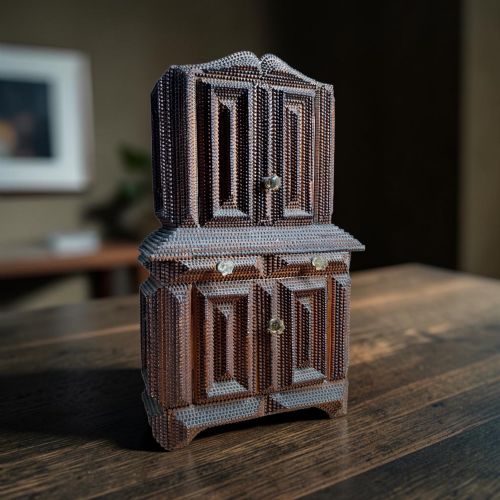
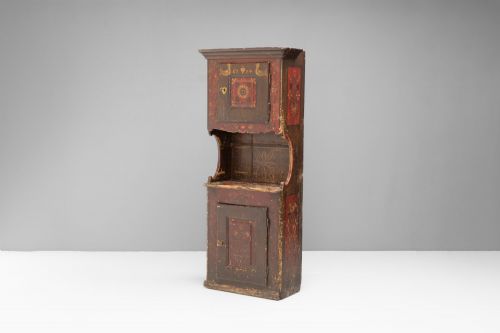
When you search for a vintage folk art dresser, you encounter regional European cabinetry and storage pieces adorned with original painted decoration. These items range from Hungarian two-piece dressers and Austrian commodes to Scandinavian kitchen cupboards and French tramp art buffets.
The pieces appearing on this page span the nineteenth and early twentieth centuries, capturing Victorian country aesthetics alongside continental folk art traditions. You are most likely to meet pine chests of drawers and kitchen cabinets finished in period paint surfaces.
Makers and workshops from Hungary, Sweden, and Austria dominate the selection, bringing distinct regional forms to each piece. These storage items served utilitarian household purposes before becoming appreciated for their decorative painted surfaces.
Materials and construction methods
Carpenters built these pieces primarily from solid pine and other local woods, utilising traditional joinery suitable for domestic furniture. Iron and metal hardware such as hinges, handles, and locks secured doors and drawers.
Surface decoration relies heavily on hand-applied paint, including scumble finishes, simulated birch effects, and ragwork patterns. Artisans used oil-based and water-based pigments directly on the wood, often layering colours over decades of use.
Gemla Fabrikers managed to make humble pine look convincingly like birch, proving that eighteenth-century paint can easily fool modern eyes.
What distinguishes finer examples
The survival of original surface paint determines much of the visual appeal and historical integrity of a piece. Examples retaining their initial cream, teal, or multi-layered polychrome decoration stand apart from stripped or later repainted items.
The complexity of the regional carpentry and decorative motifs, such as tramp art carving or detailed hand-painted floral panels, separates standard utility furniture from more expressive folk art creations.
Gemla Fabrikers
The Vintage Folk Art Dresser Glossary
- Tramp art
- A form of woodworking where chip-carving creates geometric relief patterns, often using discarded packaging materials. This technique appears on nineteenth-century buffets and cabinets.
- Scumble pine
- A painting technique where a translucent top glaze is manipulated with tools or rags to simulate the grain of rarer woods like birch or oak. It creates textured, mottled surfaces on pine furniture.
- Ragwork paint
- A decorative finish applied by dabbing or rolling fabric over wet paint to create mottled patterns. This method adds visual depth to cupboard doors and drawer fronts.
- Gustavian
- The Swedish neoclassical style characterised by lighter colour palettes and simplified classical ornamentation. It influences many nineteenth-century Scandinavian cabinets and dressers.
- Commode
- A low cabinet or chest of drawers designed for domestic storage. Austrian and continental versions often feature shaped drawer fronts and original painted finishes.
Vintage Folk Art Dresser: Frequently Asked Questions
What is a vintage folk art dresser?
A vintage folk art dresser is a nineteenth or early twentieth-century wooden storage piece featuring hand-painted regional decoration. These items originate from countries like Hungary, Sweden, and Austria.
They combine utilitarian cupboard or drawer storage with decorative painted surfaces that reflect local European folk traditions.
How do I care for original painted pine?
Original painted surfaces require gentle cleaning with a dry or slightly damp cloth, avoiding harsh chemical solvents. Keeping furniture away from direct sunlight and excessive humidity protects the historic finish.
Waxing is generally unnecessary for painted pine and can alter the dry, matte appearance of historic paint.
How can I tell a Gustavian cabinet from other styles?
Gustavian cabinets typically exhibit lighter painted finishes, often in cream or pale grey, combined with restrained neoclassical detailing. They originate from Sweden during the nineteenth century and prior.
These pieces contrast with more brightly coloured Austro-Hungarian or continental folk art cupboards.
What materials were used to build these cupboards?
Pine serves as the primary wood for the vast majority of these regional European cupboards and chests of drawers. Iron and metal hardware provide structural support for doors and drawers.
Surfaces are finished with hand-applied paints, including scumble and ragwork techniques, rather than modern synthetic varnishes.