

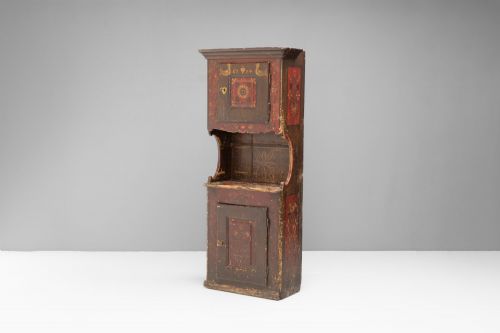
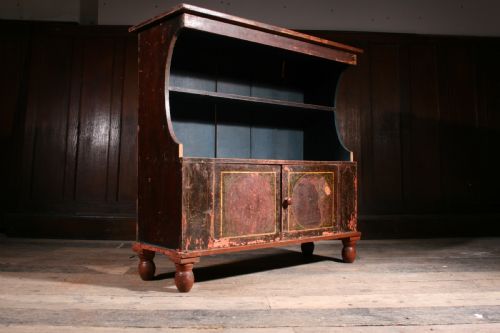


Red Painted Wood Cabinet
A red painted wood cabinet brings instant warmth and character to a room, offering both practical storage and a striking decorative focal point.
Red Painted Wood Cabinet
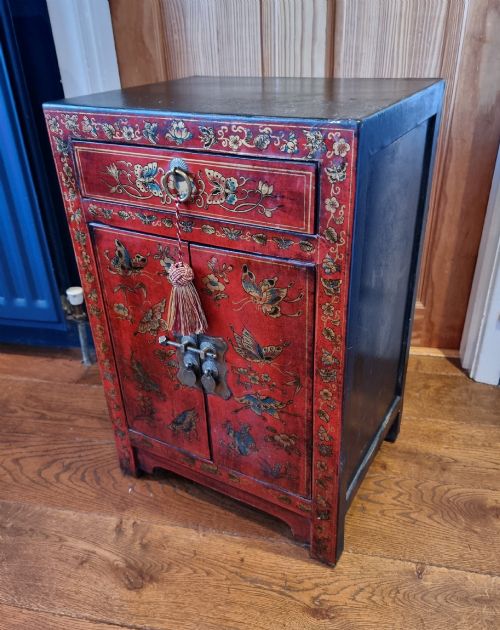
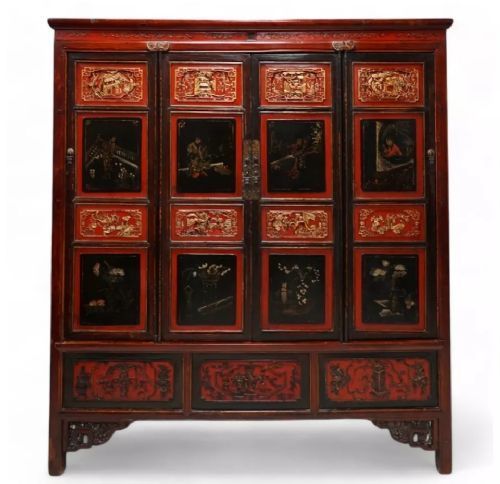
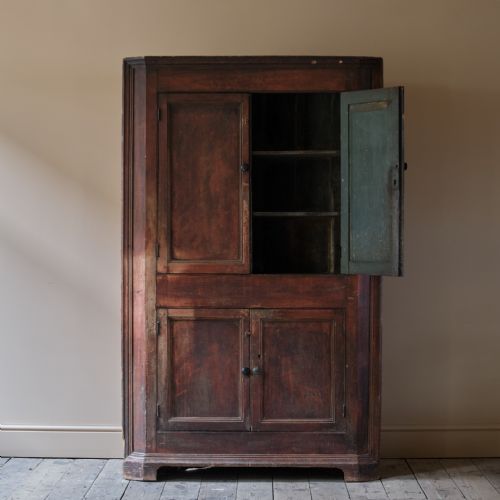
When you search for a red painted wood cabinet, you encounter a surprisingly diverse selection of forms spanning the Georgian period, the nineteenth century, and the early decades of the twentieth century. These storage pieces range from tall corner cupboards and bookcases to low marriage cabinets, wall-hanging vitrines, and folk art altars.
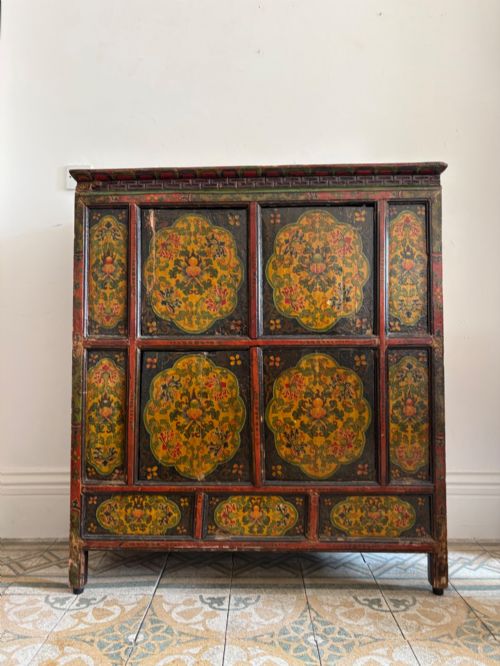
The aesthetic vocabulary stretches across several distinct geographical and stylistic traditions, including traditional English Chinoiserie, vibrant Tibetan hand-painted decoration, Chinese lacquerwork, and European country folk art. Most examples rely on solid timbers such as pine or elm, which serve as a stable canvas for rich coats of red paint, lacquer, or polychrome detailing.
Buyers seeking a red painted wood cabinet will find that smaller wall-mounted cupboards and side cabinets appear alongside larger floor-standing bookcases and armoires. Each piece carries the distinct marks of its period, whether through the restrained elegance of a Georgian carcass or the ornate figurative scenes of Asian lacquer.
Materials and construction
Makers constructed these cabinets using traditional timber joinery, frequently employing pine, elm, and other sturdy woods for the main carcasses and shelving. Iron or brass hardware, such as strap hinges, locks, and decorative escutcheons, provides both structural reinforcement and visual contrast against the painted surfaces.
The defining characteristic of these pieces is the surface finish, which involves meticulous layers of red paint, lacquer, or gold leaf applied over timber. Artisans utilised hand-painting techniques to execute floral motifs, Chinoiserie landscapes, and polychrome folk art details that have aged patinately over the centuries.
Current listings feature pieces built from pine and elm, finished in red paint, lacquer, and gold leaf across the Georgian, Victorian, and early twentieth-century eras.
Assessing quality and character
The distinction between average and exceptional pieces lies primarily in the integrity of the original surface and the sophistication of the decorative work. Cabinets retaining their original painted or lacquered schemes command greater appreciation than those with later repainting, as the historic layers show authentic craquelure and wear.
Construction standards also dictate value, with finer items demonstrating precise cabinetmaking in their drawers, panelled doors, and original brass or iron fittings. The depth and skill of the hand-painted details - such as delicate floral arrangements or intricate Chinoiserie vignettes - elevate the visual presence of the piece.
The Red Painted Wood Cabinet Glossary
- Chinoiserie
- European decorative style inspired by Chinese art and design, frequently featuring figures, pagodas, and landscapes rendered in paint and gold leaf.
- Polychrome
- Decorated in multiple colours, often seen in folk art cabinets, shrines, and altars where various bright pigments bring surface carvings to life.
- Vitrine
- A glass-fronted display cabinet or wall-hanging case designed to showcase precious objects, ceramics, or curiosities.
- Marriage cabinet
- A traditional Chinese cabinet traditionally given as a wedding gift, often finished in red lacquer and fitted with elaborate brass hardware.
- Breakfront
- A piece of furniture where the central section projects forward from the flanking sections, creating architectural depth.
Red Painted Wood Cabinet: Frequently Asked Questions
Are these cabinets suitable for modern homes?
These versatile pieces integrate easily into contemporary interiors, providing functional storage in living rooms, hallways, or bedrooms. Their vibrant colour adds an instant focal point to neutral rooms and contrasts well against minimalist walls.
Because they come in various sizes, from wall-hanging vitrines to tall bookcases, you can find a scale that fits compact apartments as well as larger period properties.
How can I tell if the paint is original?
Original painted surfaces typically exhibit natural wear, subtle fading, and fine crackling consistent with age. Under close examination, older pigments show gentle integration into the wood grain rather than sitting flatly on top.
Professional evaluation under ultraviolet light can sometimes reveal later touch-ups or overpainting. Look for consistent patination across both exterior panels and interior surfaces.
What is the difference between lacquer and paint?
Paint is a liquid coating of pigment and binder that dries to form an opaque film on the wood surface. Lacquer, particularly in Asian decorative traditions, involves multiple sap-based resin layers built up and polished to a hard, durable sheen.
While painted finishes often show brushstrokes or folk art hand-decorations, traditional lacquer provides a smooth, glass-like depth that resists moisture and wear.