
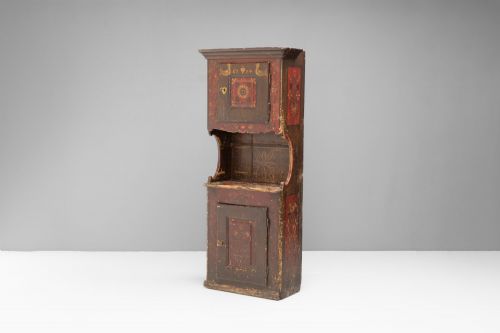


Scandinavian Folk Art Cupboard
A scandinavian folk art cupboard brings regional colour and utility into a room through hand-painted surfaces and robust country construction.
Scandinavian Folk Art Cupboard
A scandinavian folk art cupboard represents the practical storage of northern European homes, typically found in wall-hanging formats, corner configurations, or full-height wardrobes. Most examples encountered here originate from Sweden, Finland, and the wider Baltic region during the nineteenth century.
The forms range from compact wall cabinets designed for domestic rooms to larger kitchen cabinets and cupboards on stands. Regional workshops shaped these pine pieces for everyday utility, leaving a legacy of vernacular design that prioritises functional shelving and sturdy doors.
Materials and construction methods
Makers built these pieces primarily from solid pine, utilising local timber to construct carcases, shelves, and doors. Iron and brass hardware such as hinges and latches secured the structures for daily domestic use.
Surfaces received treatments of paint, mineral paint, and traditional ragwork techniques to decorate the pine timber. This layered application provided both protection for the wood and distinctive chromatic finishes.
Listings span the eighteenth and nineteenth centuries, including Georgian and Gustavian styles executed in pine, paint, iron, and brass.
Distinctions in quality and finish
The character of the painted surface distinguishes individual pieces, ranging from simple monochrome coats to intricate ragwork and hand-painted folk motifs. Original pigment layers retain weathering and patination that reflect decades of domestic service.
Structural complexity also alters the work, separating standard wall cabinets from ambitious cupboards on stands, dressers, and large hall wardrobes. The integration of iron or brass mounts and the survival of early paint layers define the upper tier of these pieces.
The Scandinavian Folk Art Cupboard Glossary
- Ragwork
- A decorative painting technique using rags to apply or texture pigment onto pine surfaces. This method creates mottled, cloud-like patterns popular in traditional Scandinavian furniture.
- Gustavian
- The Swedish neoclassical style spanning the late eighteenth and early nineteenth centuries. It often lighter forms and paler paint palettes than heavier rustic country pieces.
- Wall cupboard
- A compact storage cabinet designed to be mounted directly onto a wall. These units typically feature single doors and internal shelving for smaller domestic items.
- Corner cupboard
- A triangular storage unit constructed to fit neatly into the corner of a room. This form maximised floor space in traditional northern European domestic interiors.
Scandinavian Folk Art Cupboard: Frequently Asked Questions
How do I hang a wall cupboard safely?
Wall cabinets require secure fixings into solid masonry or direct attachment to timber wall studs due to the heavy pine construction. The weight of the timber and stored items demands robust brackets behind the carcase.
Professional installation ensures the cabinet remains stable over time, preventing any strain on the original antique hinges and joints.
Are these cupboards suitable for modern kitchens?
These cupboards provide practical storage for modern interiors, offering deep shelves and enclosed spaces for daily items. Their painted pine finishes complement contemporary kitchen spaces while adding historical texture.
Careful placement away from direct heat sources and excessive moisture protects the aged paint surfaces from unnecessary deterioration.
How do I clean a painted pine surface?
Maintenance requires only a soft, dry cloth to remove dust from the painted pine and ragwork surfaces. Avoid harsh chemical cleaners or excess water, which can damage historic mineral paint and underlying timber.
Regular gentle dusting preserves the original patination and prevents dirt accumulation in the textured details of the folk art decoration.
What is the difference between Gustavian and folk pieces?
Gustavian pieces draw on neoclassical design principles with cleaner architectural lines and paler, formal colour palettes. Folk art cupboards embrace regional rustic charm through bolder painted decoration, ragwork finishes, and simpler country construction.
Both styles emerged from Scandinavian workshops during the nineteenth century but served different aesthetic tastes within domestic interiors.