



Folding Walnut Accent Table
A folding walnut accent table brings rich timber grain and clever space-saving design into a room without dominating the floor plan.
Folding Walnut Accent Table
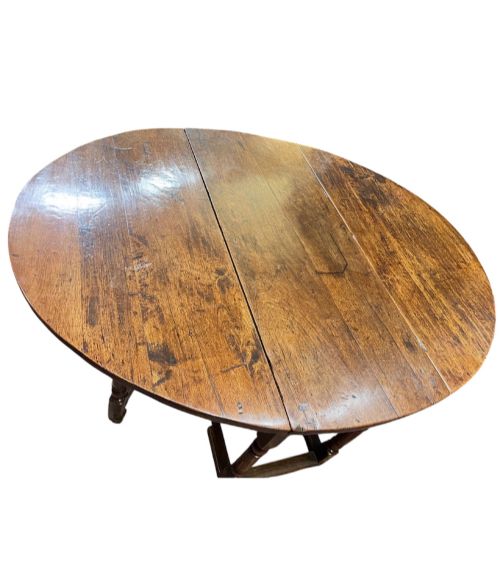
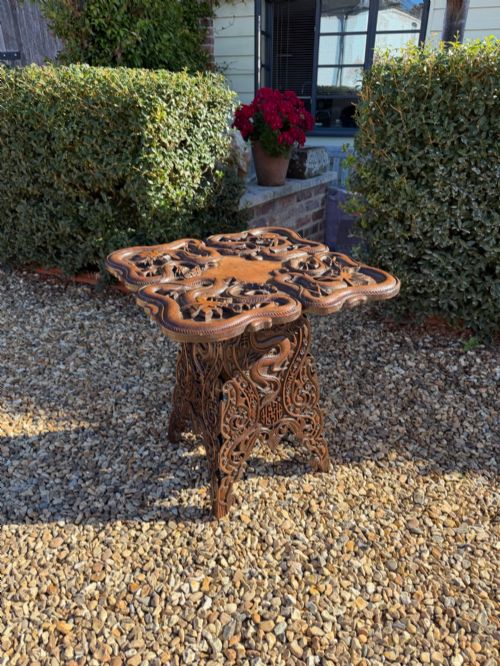
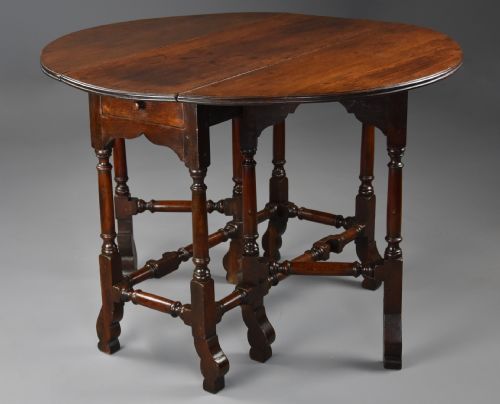
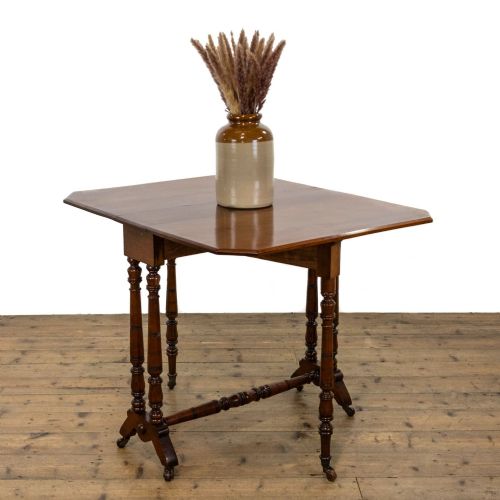
A folding walnut accent table encompasses portable surfaces designed for occasional use, predominantly appearing on this page as Victorian Sutherland tables, gateleg tables, and card tables. These pieces utilise hinged leaves or folding frames that allow them to stand compactly against a wall when not in use.
The materials and periods span from eighteenth-century red walnut gateleg pieces to Victorian and Edwardian burr walnut examples. Buyers frequently encounter oval and rectangular dropside tables intended for tea, games, or general occasional use in drawing rooms and parlours.
How they were made
Cabinet makers utilised solid walnut and decorative burr walnut veneers applied to secondary timbers, often accentuating the timber's natural grain figures on the top surfaces. Marquetry inlay, brass hardware, and boxwood stringing frequently appear to embellish the edges and panels.
Structural folding mechanisms rely on clever gateleg frames, drop-flap hinges, and pivoting table tops that demand precise joinery to ensure stability when open. Hardwoods like red walnut provide the durable framing necessary to support repetitive folding and unfolding over centuries.
Folding Walnut Accent Table Retail Price Guide 2026
Typical asking prices for folding walnut accent table among the pieces listed under this phrase on Sellingantiques today, from the lower quarter to the upper quarter. They describe what is for sale here now, not the wider market.
Listings feature walnut, burr walnut, and red walnut timbers alongside brass and ceramic components across Victorian, Edwardian, and eighteenth-century periods.
What varies in quality
The quality of a folding walnut accent table rests primarily in the selection of the timber veneer, particularly the liveliness and symmetry of the burr walnut figuring on the main flaps. Superior examples display careful book-matching of the grain and subtle marquetry detail rather than plain, unfigured surfaces.
Engineering precision in the folding action distinguishes finer pieces from heavier, utilitarian ones. Smoothly operating hinges, rigid leg alignment when extended, and the retention of original brass castors denote superior nineteenth-century and earlier workshop production.
The Folding Walnut Accent Table Glossary
- Sutherland table
- A narrow drop-leaf table featuring exceptionally slender gatelegs that support wide folding flaps. It was invented in the nineteenth century and designed to fold flat for storage against a wall.
- Gateleg table
- A table with hinged leaves supported by legs that swing outward like a gate. This form provides a large surface area while collapsing into a narrow footprint.
- Burr walnut
- Sourced from the abnormal growth or burl of a walnut tree, producing highly twisted, decorative grain patterns. Cabinet makers prized this wood for veneering prominent table tops.
- Marquetry
- The art of applying pieces of veneer to a structure to form decorative patterns and pictures. Floral motifs and geometric banding are common on Victorian and Edwardian tops.
- Drop-flap table
- A table equipped with hinged leaves that hang down at the sides when not supported. Brackets or pivoting legs swing out to hold the leaves horizontal.
Folding Walnut Accent Table: Frequently Asked Questions
How do I use a folding walnut accent table in a small room?
These tables fold flat with their leaves dropped down, allowing them to sit neatly against a wall as a console or side piece. When guests arrive or you need extra surface space, simply swing the gatelegs out and raise the flaps.
Their narrow profile when closed makes them adaptable for hallways, tight landings, or beside seating where permanent furniture would block pathways.
How do I distinguish between an 18th century and a Victorian table?
Eighteenth-century examples often utilise solid red walnut with simpler gateleg frames and deep, natural patination developed over long use. They tend to have a robust, utilitarian architectural honesty.
Victorian and Edwardian versions frequently showcase decorative burr walnut veneers, complex marquetry inlay, and slender, turned underframes with small brass castors designed for drawing-room elegance.
Can I use a antique folding table for daily dining?
Most accent and Sutherland tables are constructed for light domestic duties like holding tea services, books, or card games rather than heavy family meals. The folding hinges and slender gatelegs are engineered to support moderate weight rather than heavy leaning.
Placing hot dishes directly on the polished walnut surface can damage the finish, so coasters and mats are essential for everyday protection.
How do I care for burr walnut veneer?
Keep walnut furniture away from direct sunlight and sudden temperature shifts, which can cause timber to dry out and veneers to lift. Dust gently with a dry, soft cloth and feed the wood periodically with appropriate wax to maintain the lustre.
Avoid silicone-based polishes and excessive moisture, as water can seep beneath old finishes and stain the delicate grain patterns underneath.