


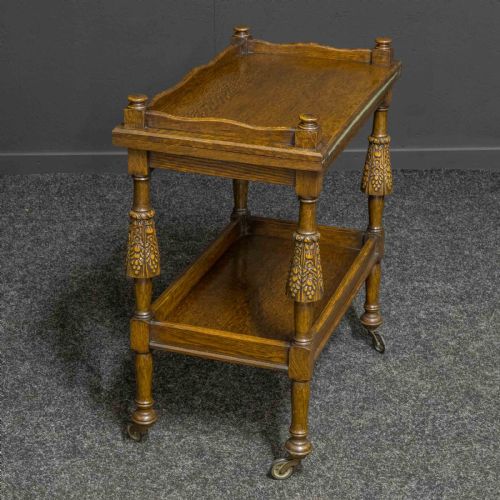
Folding Tiered Side Table
When you search for a folding tiered side table, you find a clever surface that collapses for storage and expands to serve tea, drinks or meals.
Folding Tiered Side Table
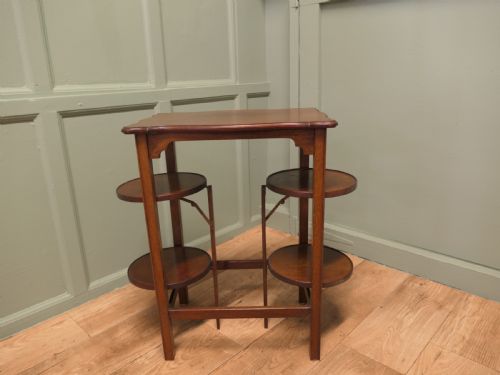
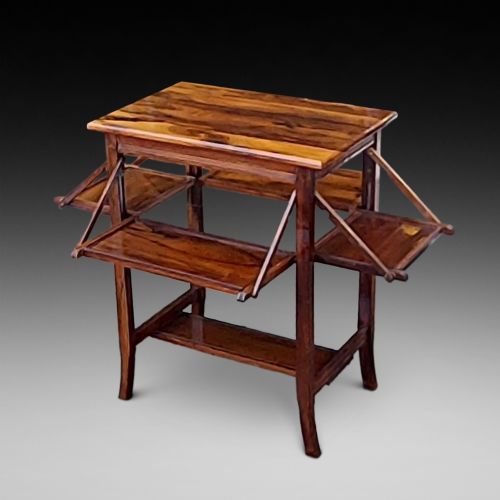
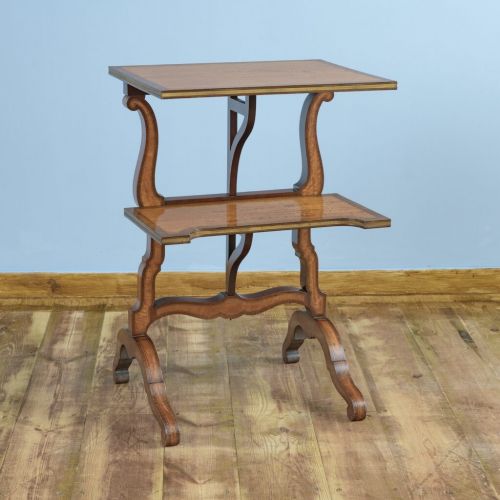
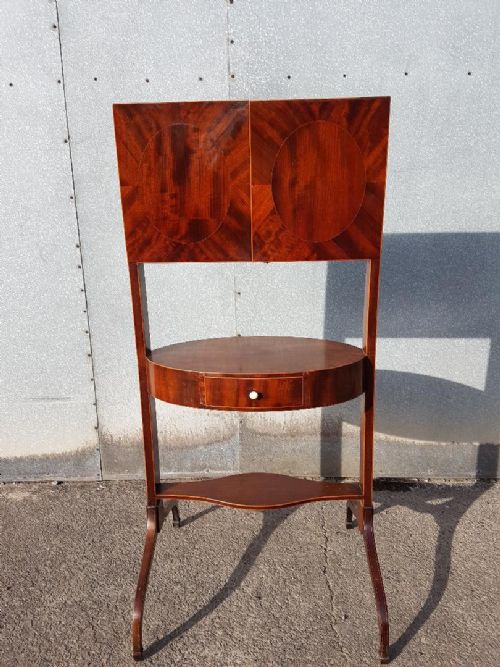
A folding tiered side table provides multiple levels of surface space while retaining the ability to fold flat or collapse for convenient storage. The examples appearing under this search phrase span centuries of domestic design, from Georgian dumb waiters to Edwardian tea tables and Art Deco metamorphic designs.
The most common formats you encounter here are double and triple-tier dumb waiters in mahogany, alongside Sutherland tables in walnut and rosewood. These pieces served practical roles in the dining room and drawing room, offering extra tiers for plates or tea wares without taking up permanent floor space.
Origins stretch from the late eighteenth century through the Victorian and Edwardian eras into the nineteen-thirties. You meet pieces reflecting George III Sheraton styling as well as later regional cabinet-making from Edinburgh.
How they were made
Cabinet-makers utilised dense timbers such as mahogany, walnut, rosewood, and satinwood, often embellishing the surfaces with boxwood inlay. These woods provided the structural strength required for folding leaves, pivoting tiers, and drop-down mechanisms.
Hinges, brass castors, and pivoting brackets allow the multi-tiered structures to drop, fold, or swing into compact configurations. Joinery relied on traditional turning, veneering, and framing techniques to ensure stability whether the table stands fully open or folded away.
Some nineteenth-century tables were built so cleverly that tea could be served to twelve people and vanished into a slim panel behind the sofa afterward.
What varies in quality
Quality rests in the precision of the folding mechanism and the stability of the tiers when extended. Superior pieces operate smoothly without wobbling at the joints, whereas lesser examples suffer from loose pivots or sagging shelves.
The choice of timber and secondary veneers also dictates the grade of the piece, with finely figured mahogany, satinwood, and rosewood sitting above plain oak or standard timber constructions. Original brass hardware and crisp inlay work further separate standard utility items from distinguished workshop output.
Maison Giroux·Whytock & Reid of Edinburgh·Morison of Edinburgh
The Folding Tiered Side Table Glossary
- Dumb waiter
- A multi-tiered stand used for holding food, plates, or drinks without requiring a servant present. These frequently feature folding shelves or rotating tiers.
- Sutherland table
- A narrow drop-leaf table where the leaves comprise a large portion of the top, supported by pivoting gatelegs. When folded down, the table occupies minimal space.
- Metamorphic table
- A piece of furniture designed to transform from one form into another, such as shifting from a compact occasional table into a card table.
- Triplate
- A design incorporating three distinct plates or tiers arranged vertically to hold items. This form maximises vertical display space in smaller rooms.
- Boxwood inlay
- A decorative technique using strips of pale boxwood inlaid into contrasting dark timbers like mahogany or walnut. It creates fine geometric or floral borders.
Folding Tiered Side Table: Frequently Asked Questions
What is a folding tiered side table used for?
These tables served historically as auxiliary serving surfaces in dining rooms and drawing rooms. The multiple tiers held tea equipment, dishes, or drinks during gatherings.
Today, they function well as flexible side tables or lamp stands in compact living spaces. You can fold them down and tuck them away when floor space is needed.
How do I identify the period of a folding table?
Dating relies on timber choice, hardware style, and structural proportions. Georgian pieces often feature solid mahogany with turned central columns, while Edwardian and Victorian versions frequently utilise rosewood, walnut, or satinwood with distinct edge mouldings.
Consulting the construction of the hinges and internal mechanisms also clarifies the era. Earlier examples rely on hand-forged iron or early brass fittings, whereas twentieth-century pieces show more standardised joinery.
Do all these tables fold completely flat?
Not every piece folds flat in the same manner. Some designs utilise drop leaves that lower on either side, while dumb waiters often have tiers that pivot or fold downward against a central support.
Sutherland tables fold down to a very slim profile by dropping both main leaves and swinging the supporting legs inward. Examining the specific mechanism in the listing reveals how compact the piece becomes.
How should I care for a antique wooden folding table?
Keep the timber away from direct heat sources and strong sunlight to prevent the veneers from drying and cracking. Regular dusting with a soft, dry cloth maintains the polish without building up residue.
Avoid forcing any folding or pivoting joints if they feel stiff. A light application of appropriate wax on the moving wooden parts can ease friction over time.