
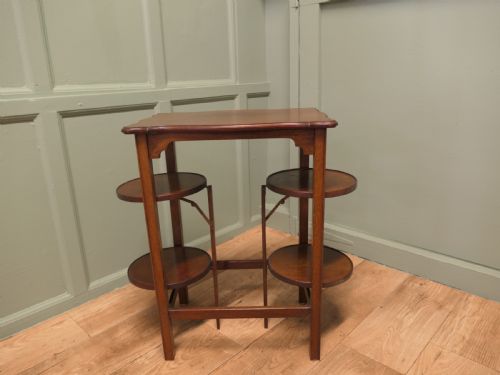
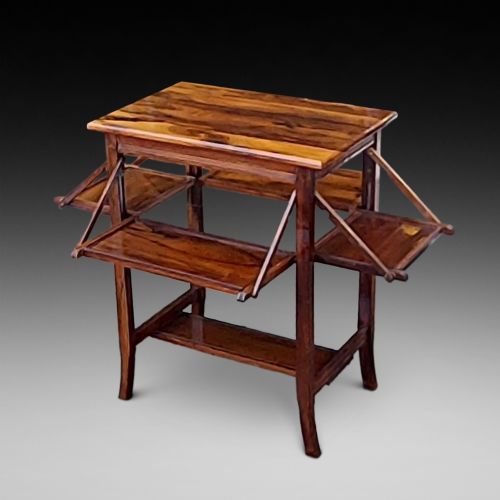
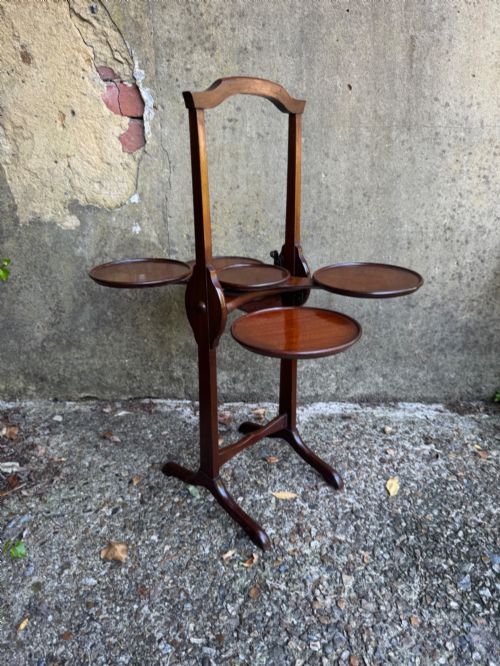


Edwardian Cake Stand Table
These pieces known as an edwardian cake stand table bring tiered practicality and refined timberwork to afternoon tea.
Edwardian Cake Stand Table
An edwardian cake stand table combines the surface area of a tea table with the vertical tiering of a serving stand, designed to hold pastries and porcelain efficiently. Buyers browsing this selection encounter various tiered configurations, from folding tea tables to revolving lazy susans and multi-level etageres.
The pieces represented here span primarily from the Edwardian era and 1900, alongside occasional examples crossing into Georgian, Victorian, and 1930 periods. Formats range from circular three-tier stands and double cake stands to campaign style serving tables and oval display shelves.
Most entries adhere to the classic Edwardian and Victorian aesthetic, whilst others reflect Arts and Crafts sensibilities or Georgian influences. Their primary purpose remains the presentation of food and teaware within domestic entertaining spaces.
How they were made
Cabinetmakers constructed these tables predominantly using solid and veneered timbers including mahogany, rosewood, oak, walnut, and ebonised wood. Inlaid decoration frequently embellishes the circular tiers and surfaces of these tables.
Metal components appear in brass fittings and silver plate elements, notably on platter tazzas and folding mechanisms. Folding tea tables and tiered stands rely on hinged joints and vertical spindle supports for stability and storage.
Listings feature woods such as mahogany, rosewood, oak, walnut, and ebonised wood across Edwardian, Victorian, and Georgian periods.
What varies in quality
The choice of cabinet timber and the precision of inlaid woodwork set finer examples apart from simpler utility pieces. Richly grained rosewood and mahogany demonstrate superior material selection compared to standard oak or ebonised alternatives.
The complexity of the mechanism also dictates grade, with smoothly operating folding hinges and well-balanced multi-tiered revolving structures representing higher standards of period joinery.
The Edwardian Cake Stand Table Glossary
- Etagere
- A set of open shelves for displaying small objects or serving items. These tiered stands utilise vertical space effectively.
- Lazy Susan
- A revolving circular tray placed on a table to assist in serving food. This rotating mechanism allows easy access to dishes from any seated position.
- Tazza
- A wide, shallow saucer-like dish raised on a stem and foot. In silver plate, these serve as decorative serving platters.
- Dumb Waiter
- A tiered piece of freestanding furniture used to hold tableware without requiring a servant present. Victorian examples often feature multiple circular tiers.
- Inlay
- A technique where pieces of contrasting timber or material are inserted into depressions within the base wood to form decorative patterns. Edwardian pieces frequently employ this for surface enrichment.
Edwardian Cake Stand Table: Frequently Asked Questions
What is an edwardian cake stand table used for?
These tables were originally designed to present cakes, pastries, and tea service equipment during afternoon gatherings. The tiered shelves allowed hosts to serve multiple items without cluttering the main tea table.
Today, they function as versatile display surfaces for plants, books, or decorative objects in living spaces and hallways.
How do I distinguish an edwardian table from a victorian one?
Edwardian pieces generally exhibit lighter framing, brighter mahogany or rosewood timbers, and more restrained inlaid decoration. They reflect a shift towards airier domestic interiors following heavier Victorian tastes.
Victorian examples often employ darker wood, heavier turning, and more robust structural proportions, particularly in multi-tier dumb waiters.
Are these tables suitable for everyday use?
Folding tea tables and sturdy oak tiers can handle light daily placement of items, though antique polished surfaces benefit from coasters and protective mats. Their compact footprints make them practical beside chairs or sofas.
Care should be taken with folding mechanisms and antique hinges to avoid straining the joints during adjustment.
What woods were commonly used?
Mahogany and rosewood dominate the finer formal tables, often enhanced with contrasting stringing or floral inlay. Oak appears more frequently in utilitarian or Arts and Crafts pieces.
Walnut and ebonised wood also occur, providing darker tones suited to specific period interiors.