



Folding Fireplace Screen
These folding fireplace screen pieces bring practical hearth safety alongside decorative metalwork from the Victorian era down to the 1920s.
Folding Fireplace Screen
A folding fireplace screen provides a practical barrier against sparks while serving as a decorative focal point in the room. When searching for a folding fireplace screen, buyers encounter various configurations designed to protect the hearth.
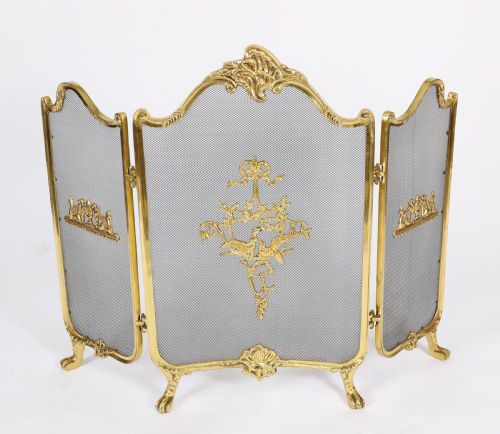
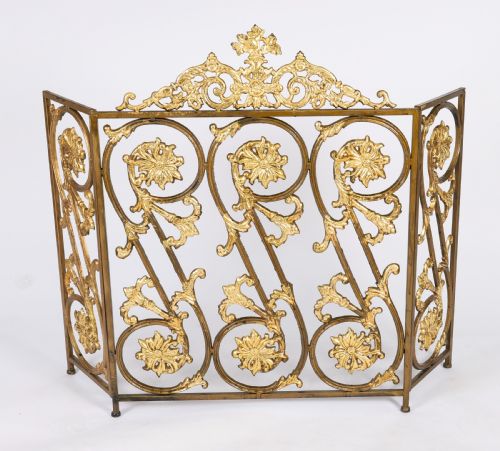
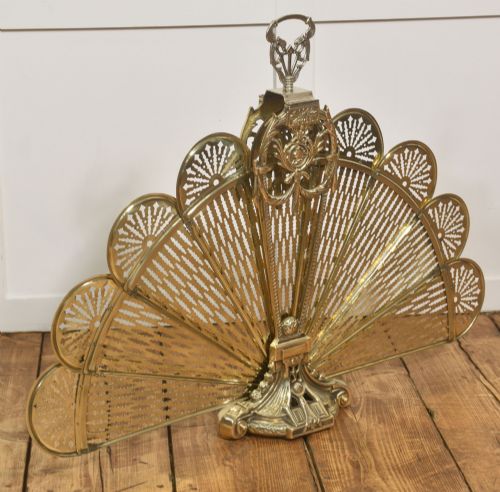
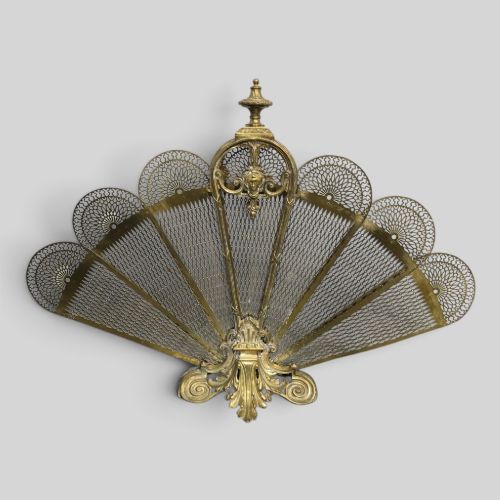
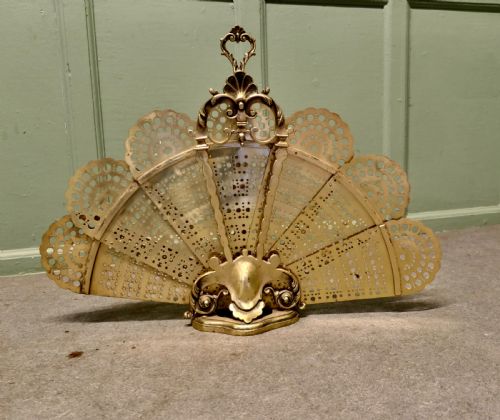
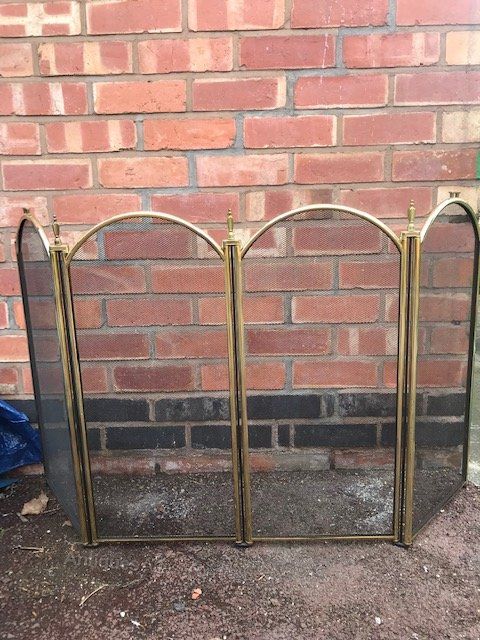
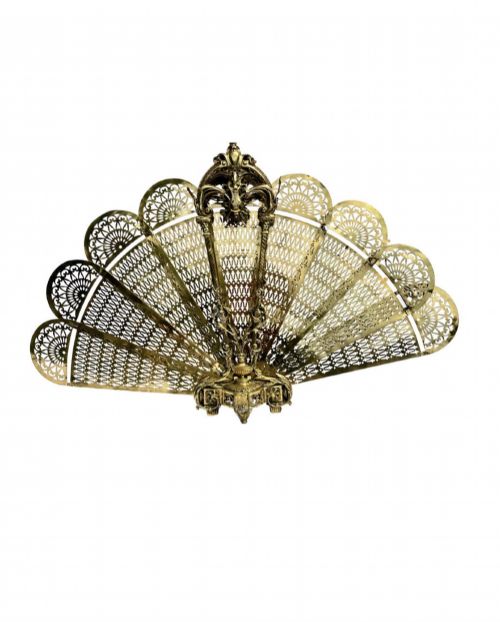
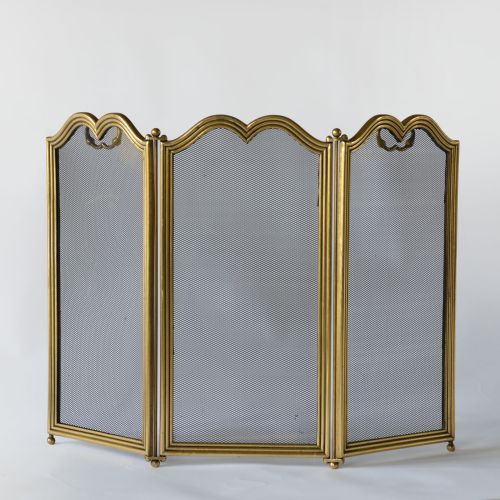
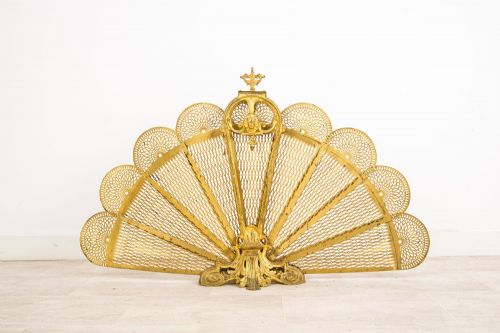
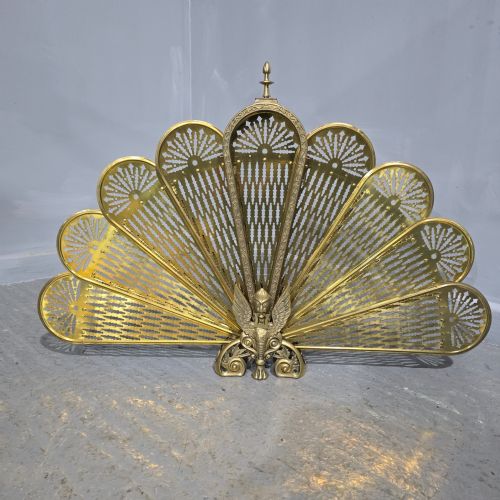
The selection ranges from Victorian brass peacock fan screens that expand outwards to French Rococo revival triple screens and four-fold black finish metal guards. Pieces span from the 19th century through the Edwardian period and into the 1920s.
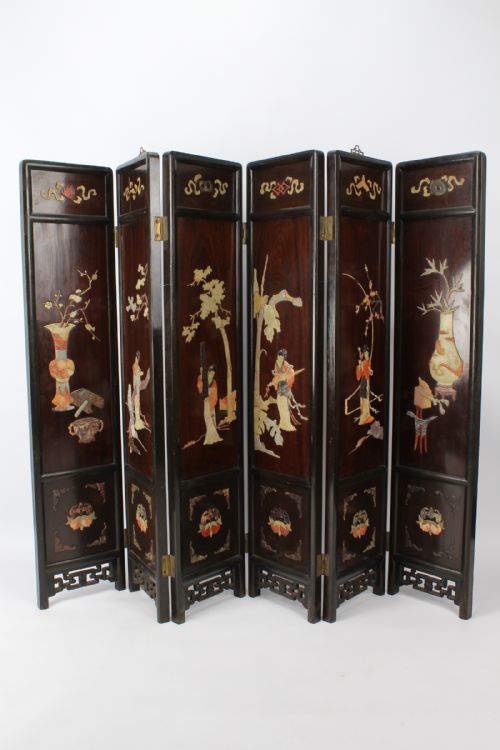
Origin and style dictate much of the variety, with French gilt bronze and ormolu examples sitting alongside simpler British brass spark guards and Arts and Crafts iron work. Some unusual items incorporate painted panels, glass, or metamorphic table functions.
Materials and construction methods
Brass and wire mesh dominate the construction, providing both the structural framework and the spark-retardant barriers needed for active hearths. Foundry work utilised cast brass and gilt bronze for decorative mounts, while iron served heavier utilitarian frames.
Artisan techniques involved delicate wire mesh weaving, hand-finishing of gilt surfaces, and hinged joinery that allowed tripartite or multi-fold sections to articulate smoothly. Glass and walnut timber appear in select pieces, requiring specialised framing and etching techniques.
Folding Fireplace Screen Retail Price Guide 2026
Typical asking prices for folding fireplace screen among the pieces listed under this phrase on Sellingantiques today, from the lower quarter to the upper quarter. They describe what is for sale here now, not the wider market.
Listings feature brass, wire mesh, glass, gilt bronze, iron, and solid walnut across Victorian, Edwardian, and 1920s periods.
Distinguishing quality across examples
Quality reveals itself in the weight and rigidity of the metal framework, particularly at the hinges where multi-fold sections meet and undergo frequent movement. Substantial cast bronze and thick brass components maintain their alignment better than lighter pressed sheet metal.
The finesse of the decorative detailing separates standard utility guards from exceptional pieces. Finely chased ormolu mounts, well-executed French revival casting, and integrated mesh without distortion indicate superior craftsmanship.
The Folding Fireplace Screen Glossary
- Ormolu
- Gilt bronze mounted on decorative metalwork. This technique was widely employed in French 19th-century hardware.
- Spark guard
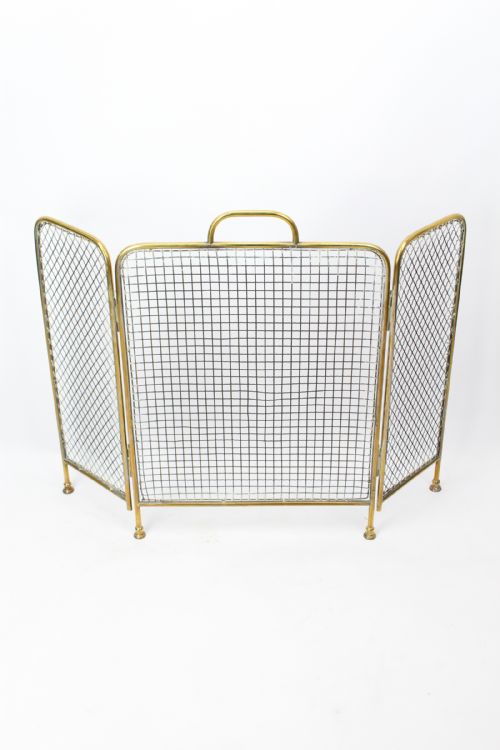
- A protective mesh barrier designed to catch flying embers from an open fire. These guards ensure safety without completely blocking the warmth.
- Peacock fan
- A folding screen design that fans out into a semicircular tail shape. These typically feature articulated brass blades.
- Tripartite
- Composed of three distinct sections or panels hinged together. This format allows the screen to angle around the hearth opening.
- Gilt bronze
- Copper alloy treated with a gold surface finish. It provides a durable metallic sheen characteristic of revival styles.
Folding Fireplace Screen: Frequently Asked Questions
How do I use a folding screen safely?
Position the folding fireplace screen securely in front of the active hearth to catch stray embers and sparks.
Ensure the panels are angled correctly to maintain stability on the hearth rug or stone floor.
Are these screens suitable for gas fires?
Many people use these decorative metal guards with gas or electric hearth setups for visual enhancement.
They add period character even when heavy spark protection is no longer strictly required.
How do I distinguish Victorian from Edwardian pieces?
Victorian examples often lean towards heavy brass, ornate French Rococo revival styling, and elaborate peacock fan configurations.
Edwardian and later 1920s pieces frequently introduce simpler lines, lighter wire mesh, and occasionally wood or glass elements.
How should I clean brass and bronze?
Dust the metal surfaces gently with a soft dry cloth to prevent the accumulation of soot and grime.
Avoid harsh chemical polishes that can strip historical patinas from antique gilt bronze and brass.