
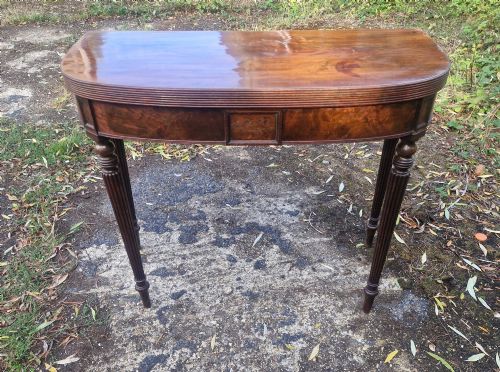
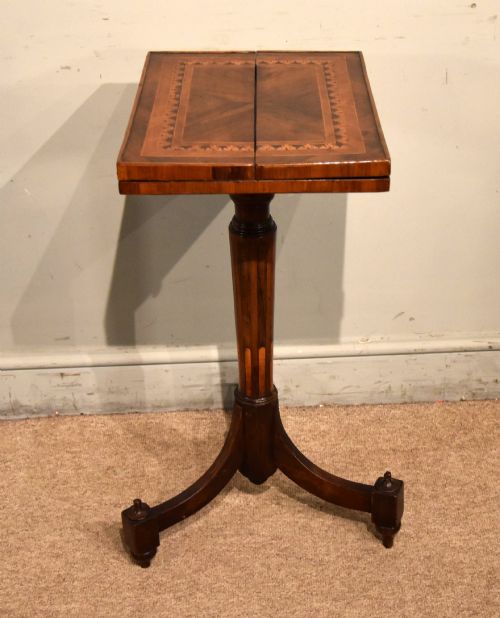
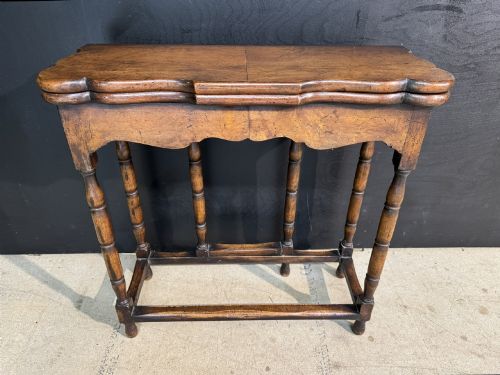
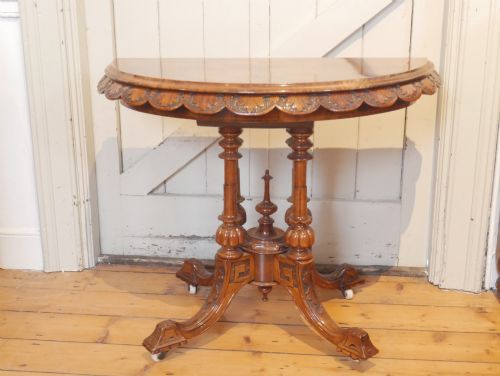
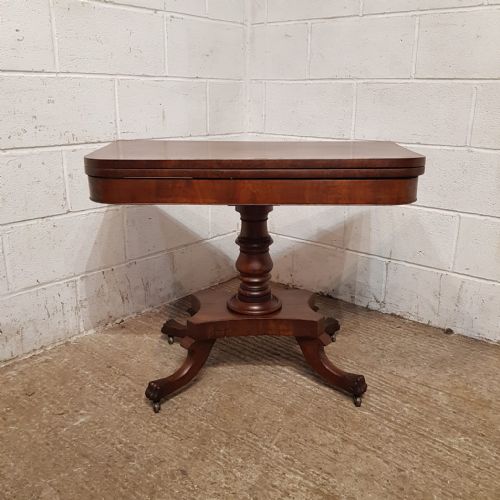


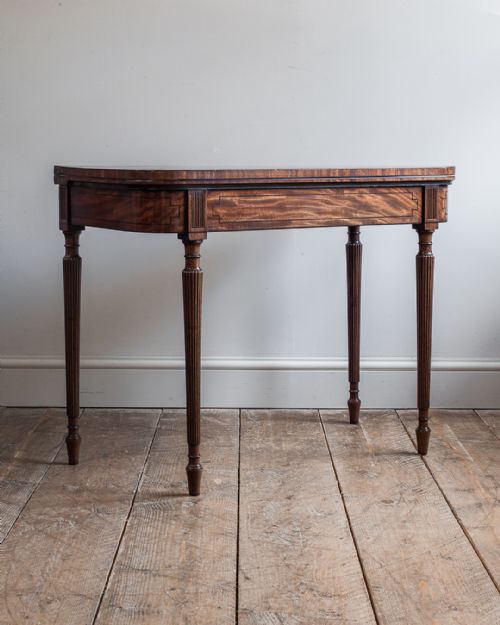
Fold Top Side Table
A fold top side table provides a versatile surface that expands for cards, tea, or games, adapting its form to suit domestic life.
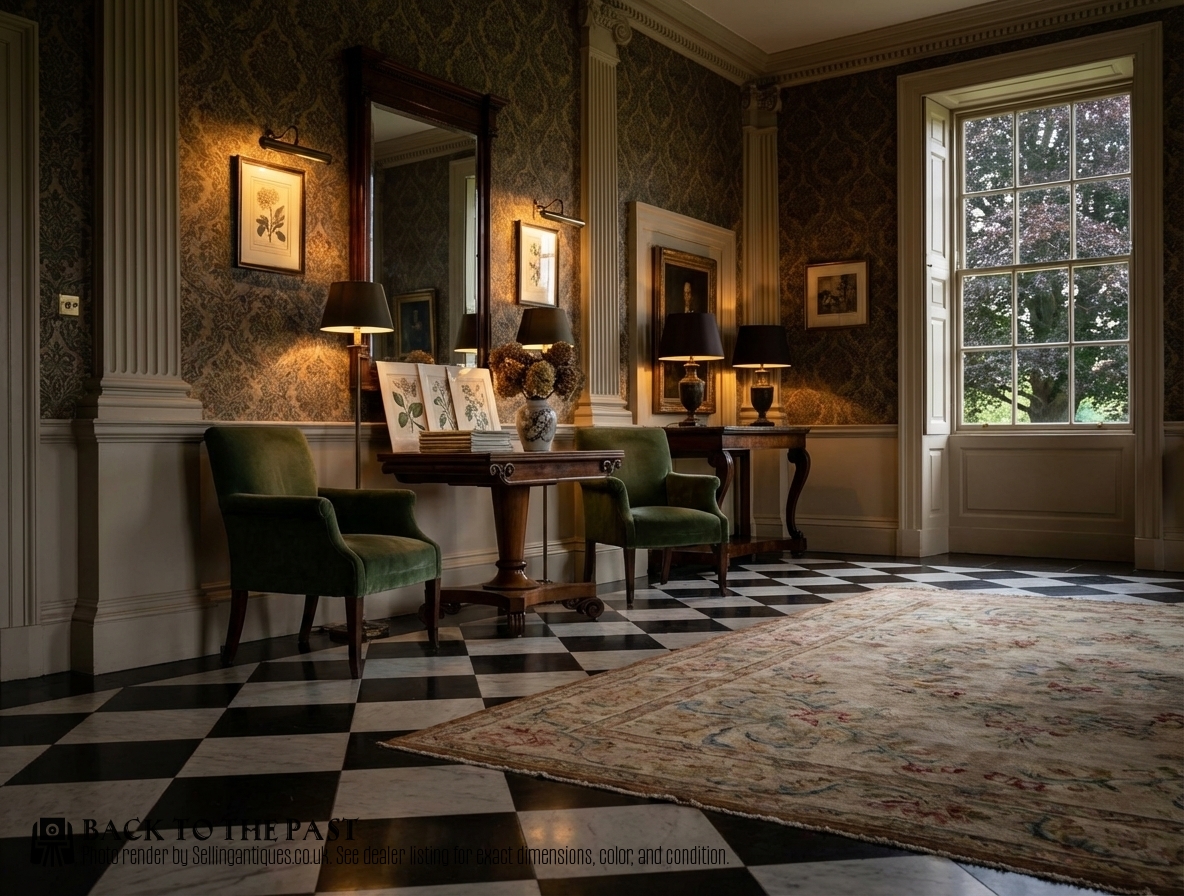
Fold Top Side Table
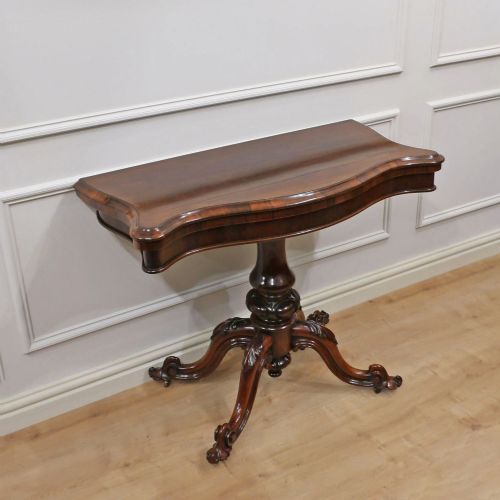
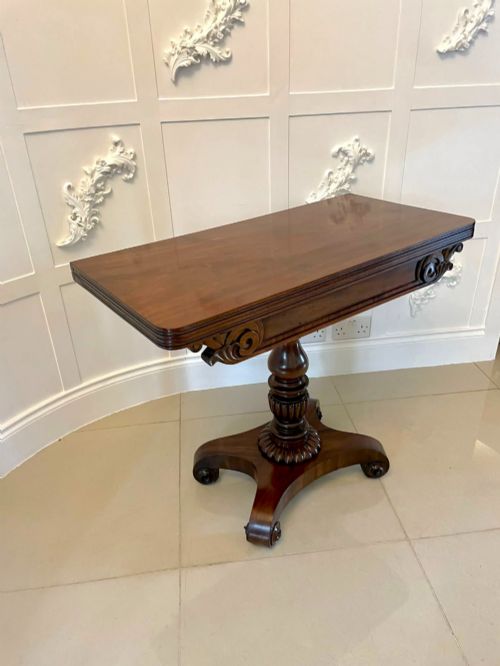
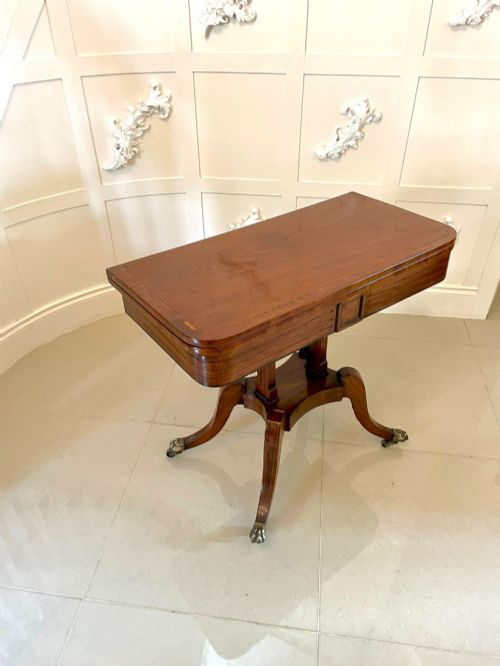
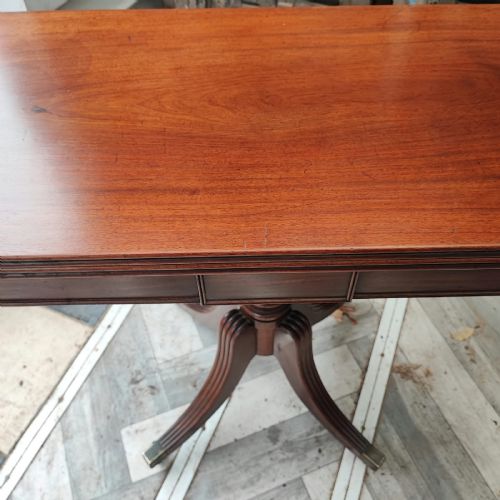
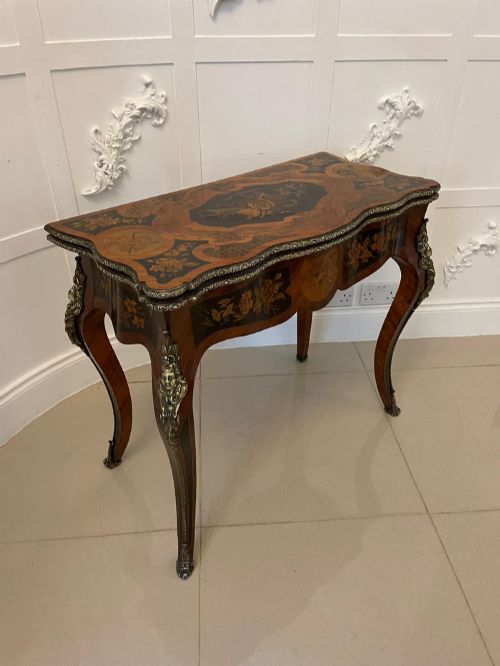
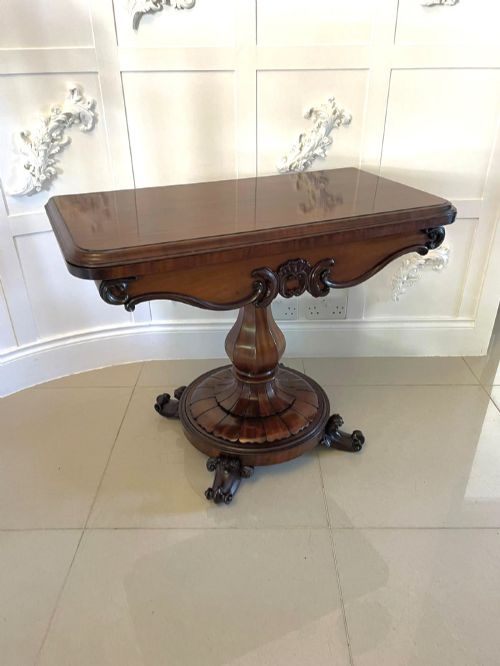
A fold top side table serves multiple functions within the home, frequently operating as a compact console before opening up into a tea, card, or games table. The selection spans the 18th, 19th, and early 20th centuries, covering Georgian, Regency, Victorian, and Edwardian periods.
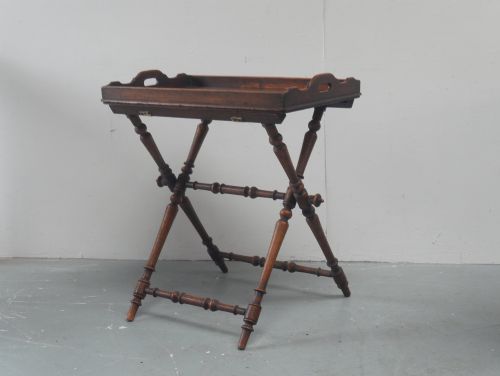
Mahogany forms the primary timber across most examples, often accompanied by rosewood, walnut, oak, and exotic veneers like amboyna or satinwood. Many pieces utilise ingenious folding mechanisms, turning actions, or removable trays placed upon separate stands.
Buyers encounter diverse regional interpretations, from British mahogany card tables to Anglo-Indian carved teak and inlaid Damascus pieces. These designs reflect changing social habits and interior fashions over three centuries of cabinet making.
Materials and Construction
Cabinet makers built these tables using solid primary timbers and carefully selected veneers, applying mahogany, walnut, and rosewood over supportive secondary woods. Timber grain was chosen deliberately to create decorative panels on the fold-over top.
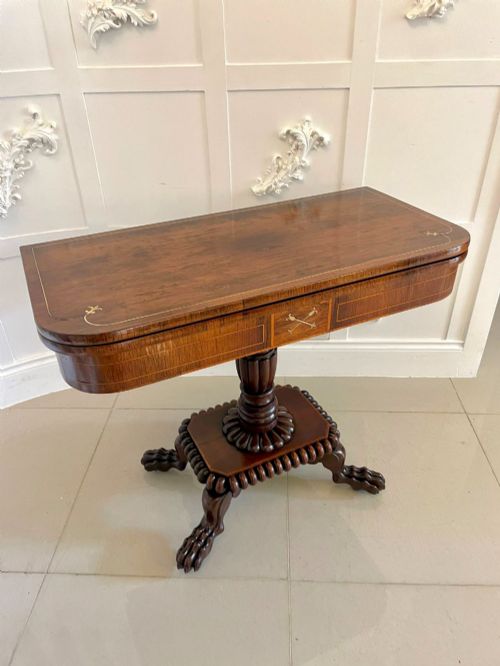
Inlay and marquetry added ornamental detail, utilising brass stringing, satinwood, ebony, and mother of pearl to enrich the surfaces. Joinery techniques ensured that the hinged leaves operated smoothly without warping the underlying structure.
Assessing Quality and Execution
Superior execution shows in the precision of the hinge mechanisms and the alignment of the timber grain when the top is open. Cabinet makers who selected finely figured veneers created surfaces that retain deep visual character.
Carved details, such as sabre legs, paw feet, or ormolu mounts, separate standard production from exceptional examples. The stability of the folding mechanism when bearing weight determines how successfully the table combines decorative appeal with practical use.
The Fold Top Side Table Glossary
- Fold over top
- A hinged surface that doubles the table area when unfolded for dining, cards, or tea. This clever mechanism allows a slim console to transform into a functional table.
- Card table
- A specialist table designed with a baize-lined interior for playing card games. These typically feature folding leaves supported by a swing leg or rotating mechanism.
- Tea table
- A small table intended for serving tea, popularised during the 18th century. They often incorporate raised edges or smooth folding surfaces to hold china securely.
- Marquetry
- The art of applying decorative pieces of veneer to a structure to form intricate patterns. Craftsmen used various coloured woods and shell to create elaborate motifs.
- Demi lune
- A half-moon shape common in console and card tables designed to sit flush against a wall. This profile saved space while offering an expandable surface.
Fold Top Side Table: Frequently Asked Questions
How were fold top side tables used originally?
These tables sat against a parlour or drawing-room wall until needed for evening entertainment, tea service, or card games. The hinged top swung or folded open to provide a stable surface when guests arrived.
Once the gathering ended, the leaf folded back down, returning the furniture to its compact footprint as a side console or occasional table.
What is the difference between a card table and a tea table?
Card tables typically feature an interior lined with baize, felt, or leather to dampen the sound of dice and prevent cards from slipping. They often include small corner recesses for holding coins or counters.
Tea tables usually feature plain wooden surfaces designed to hold porcelain tea sets safely without risking damage to textile linings.
How do I identify the period of a table?
Stylistic clues such as leg shapes, timber choices, and inlay techniques point towards specific eras like Georgian, Regency, or Victorian. Regency examples frequently showcase brass inlay and sabre legs, while Georgian pieces favour rich mahogany.
Examining the construction methods underneath and inside the frame confirms the period of manufacture and distinguishes original work from later adaptations.
Where should I place a fold top table at home?
A hallway, living room, or study makes an ideal location, placed flat against a wall in its closed position. This arrangement showcases the figured timber top without obstructing everyday movement.
When extra surface space is required for entertaining, the table moves easily into the room and unfolds to accommodate guests.