

Fold Over Console
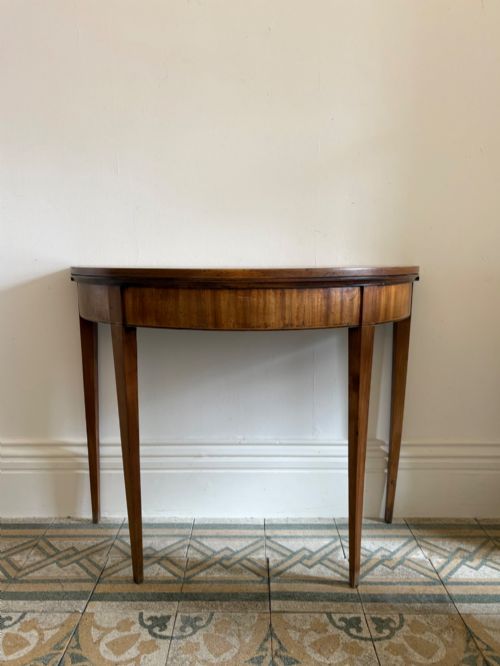
A fold over console offers the practical footprint of a side table with the hidden capacity for cards or tea.
Fold Over Console
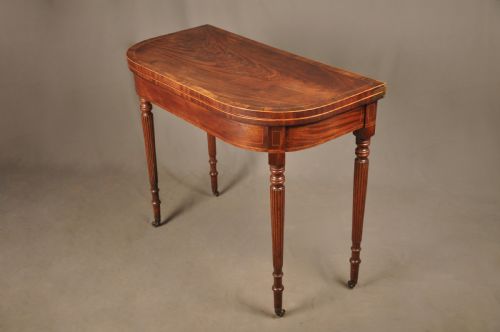
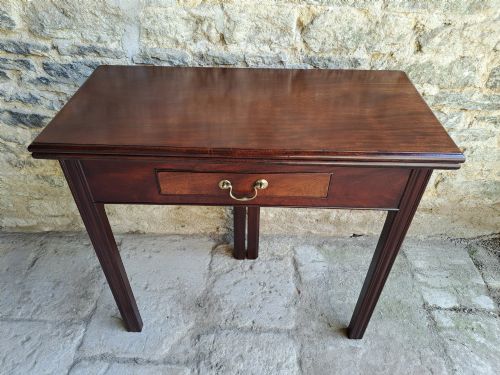
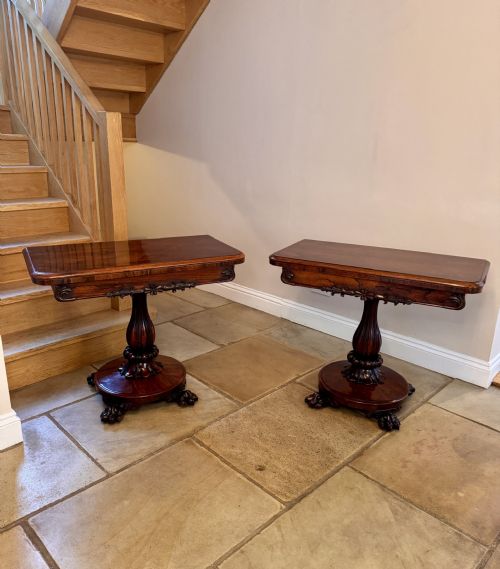
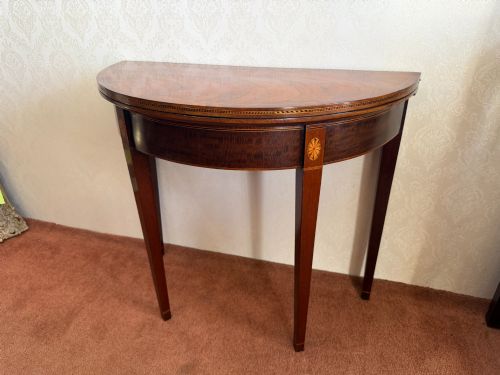
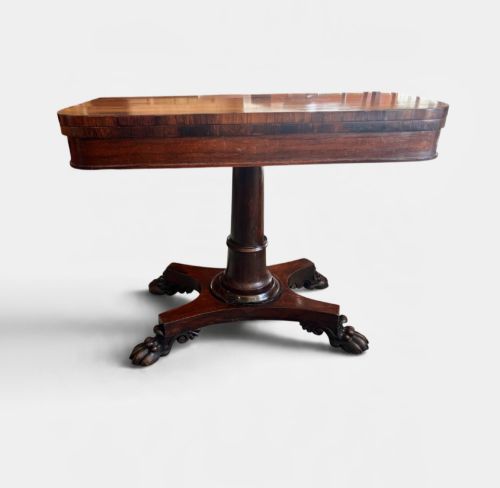
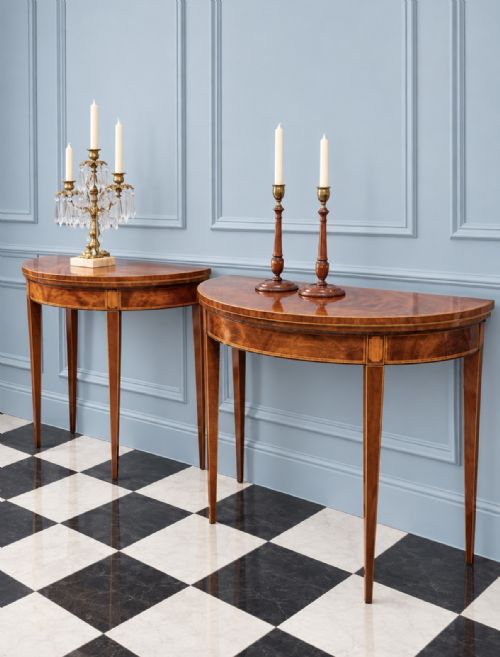
A fold over console is essentially a versatile piece designed to sit flush against a wall before opening out to reveal a larger surface for dining, writing or card games. When you search for a fold over console, you encounter forms that double their top area by swinging or pivoting the secondary leaf into position.
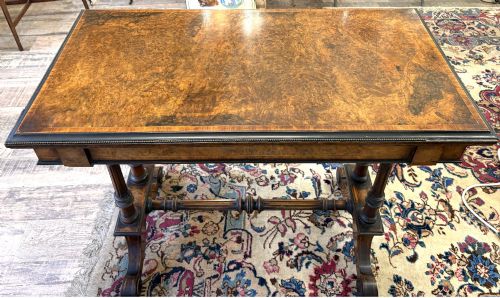
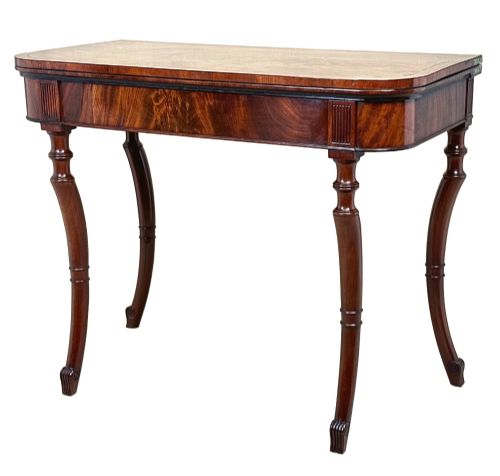
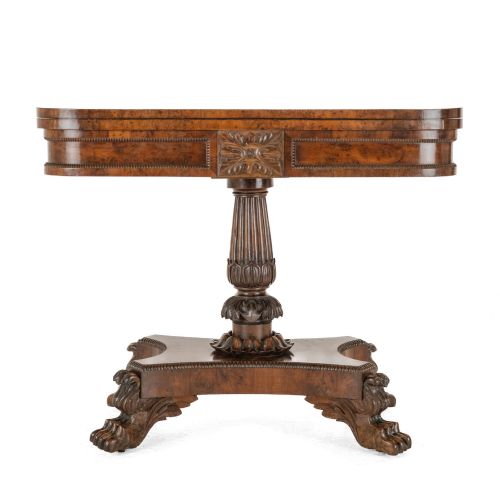
The versions most frequently met on this page span the Georgian, Regency and Victorian eras, executed primarily as card tables, tea tables or games tables. Cabinetmakers of the eighteenth and nineteenth centuries engineered these hinged surfaces to transform a narrow hallway or drawing-room pier table into a functional centrepiece.
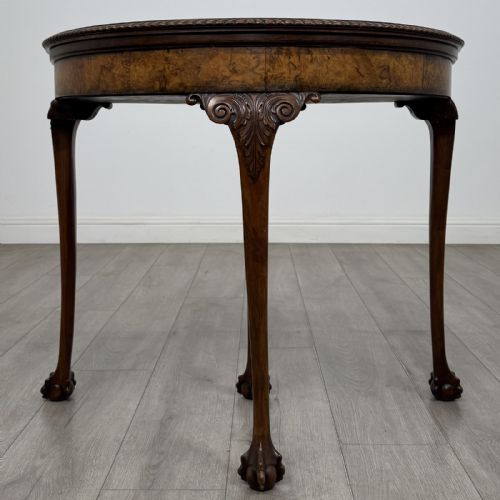
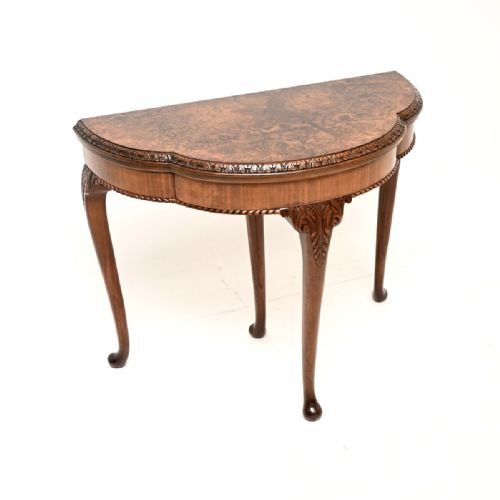
Woods such as mahogany, rosewood and burr walnut dominate the selection, often shaped into demi-lune or rectangular silhouettes. These adaptable pieces served social functions in period homes, functioning as quiet decorative consoles by day and gaming surfaces by night.
Materials and construction
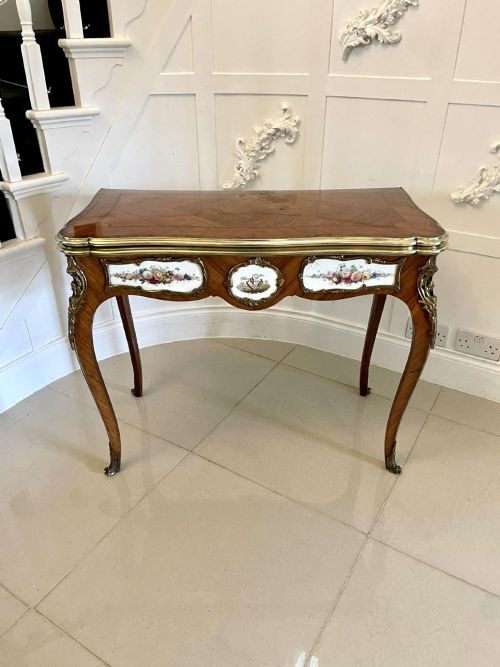
Craftsmen utilised solid timbers and choice veneers, laying rich cuts of mahogany, rosewood and burr walnut over secondary woods to catch the light. Marquetry inlay, brass stringing and gilt ormolu mounts frequently accent the primary surfaces, particularly on Regency and Victorian examples.
The mechanical action relies on clever pivoting wooden gates, concertina frames or sliding wooden arms that support the heavy weight of the unfolded top leaf. Joinery demands precise tolerances so that the folded surfaces align cleanly when closed and sit level when opened for use.
Fold Over Console Retail Price Guide 2026
Typical asking prices for fold over console among the pieces listed under this phrase on Sellingantiques today, from the lower quarter to the upper quarter. They describe what is for sale here now, not the wider market.
The listings span the Georgian, Regency, William IV and Victorian periods, utilising mahogany, rosewood, burr walnut and satinwood.
Assessing quality and execution
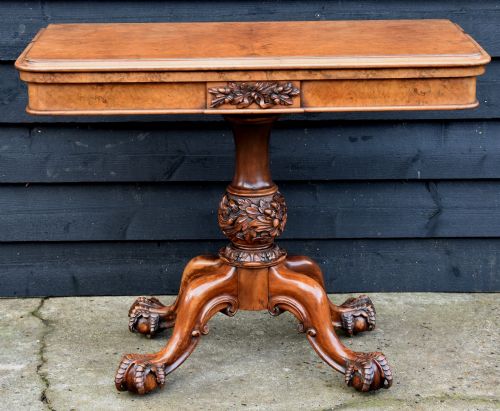
Quality rests in the figure of the wood veneer, the crispness of the hand-carved mahogany foliage, and the integration of brass inlay or ormolu mounts. Finer examples display symmetrical grain patterns that mirror across the fold, showing deliberate selection by the cabinetmaker.
Structural integrity of the pivoting mechanism separates standard production from exceptional pieces, as a well-fitted hinge and sturdy support gate ensure the top remains flat over decades of opening. Cabinetmakers who invested time in secondary framing and crisp carving achieved longevity that lesser workshop pieces lack.
George Bullock
The Fold Over Console Glossary
- Demi-lune
- Half-moon shape, used to describe tables designed to stand flat against a wall.
- Marquetry
- Decorative patterns formed by inserting pieces of coloured wood, shell or ivory into a veneered surface.
- Ormolu
- Gilt bronze ornamentation applied to furniture, popular in French-influenced nineteenth-century designs.
- Stringing
- Thin lines of contrasting wood or brass inlaid into the surface of a piece to create geometric borders.
- Concertina action
- An expanding framework that stretches open to support the secondary leaf of a fold-over table.
Fold Over Console: Frequently Asked Questions
What is a fold over console?
A fold over console is a dual-purpose piece of furniture featuring a hinged top leaf that doubles the surface area when unfolded.
They function as narrow side tables against a wall and open up for dining, tea, or card games.
How were they used historically?
In Georgian and Victorian drawing rooms, these tables saved valuable floor space by remaining closed against the wall until guests arrived.
They provided an instant surface for evening card games, tea service, or social gatherings before being folded away again.
How do I tell periods apart?
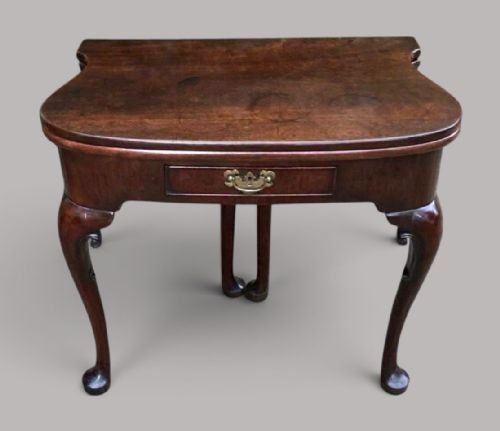
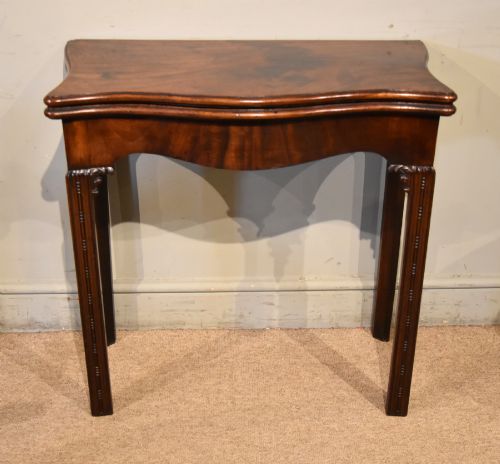
Georgian pieces often display clean mahogany lines and subtle stringing, while Regency tables frequently incorporate brass inlay and rosewood.
Victorian iterations lean towards heavy burr walnut veneers, elaborate carved pedestal bases, and applied ormolu mounts.
How do I live with one?
Place the table against an entrance hall or living room wall where it occupies minimal depth in its closed position.
Pull it out into the room and unfold the top when you need a temporary dining surface or a table for entertaining.