
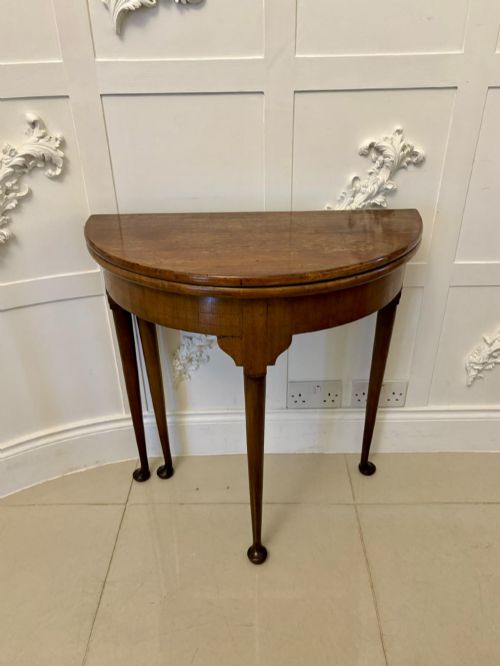
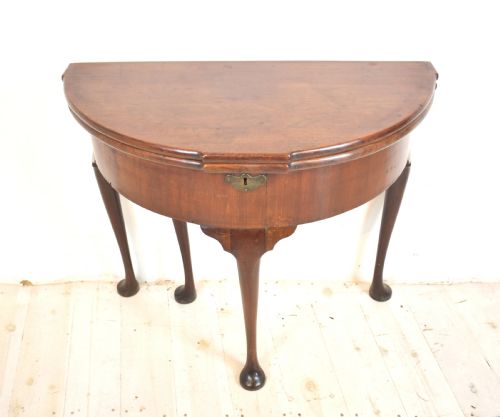


Fold Down Console Table
A fold down console table provides clever surface area with hinged leaves that open for dining or games and fold back against the wall when space demands.
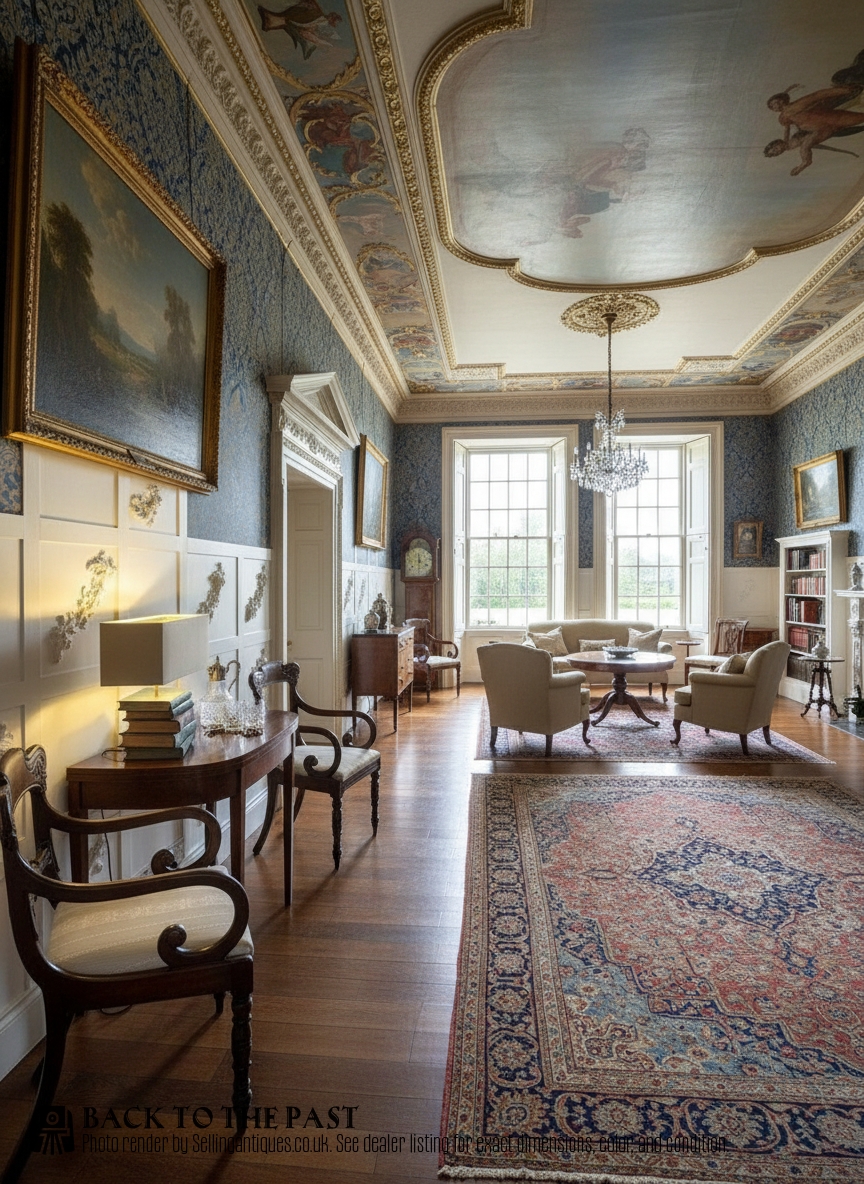
Fold Down Console Table
When you search for a fold down console table, you are looking at dual-purpose furniture designed to adapt its footprint to the room. The selection spans the eighteenth, nineteenth, and early twentieth centuries, encompassing Georgian, Regency, and Victorian eras.
Most examples you meet here take the form of card tables, tea tables, and sofa tables with hinged tops that rotate or fold over. These adaptable pieces served social functions in drawing rooms and parlours, transforming quickly from slim console shapes into wider surfaces.
Origins range from early eighteenth-century pieces through to Edwardian interpretations, demonstrating how cabinetmakers continually refined the mechanism for domestic convenience. Mahogany and rosewood dominate the types encountered, frequently paired with satinwood or walnut veneers.
Materials and construction methods
Makers utilised solid timbers and figured veneers, selecting dense woods like mahogany, rosewood, and burr walnut to construct the hinged tops and supporting frames. Flame mahogany and satinwood provided striking grain patterns and contrasting inlay work across the surfaces.
Brass fittings and ceramic elements frequently appeared in the hardware and castors, supporting the pivoting mechanisms and folding flaps. Joinery relied on precise turning for legs and stable framing beneath the fold-over leaves to bear the weight of the extended top.
Mahogany and rosewood dominate the listings, frequently appearing alongside burr walnut and satinwood across Georgian and Victorian periods.
Judging the quality of these tables
Superior execution shows in the choice of timber, where the grain matching across the fold-over leaves demonstrates careful preparation by the cabinetmaker. Finely carved rosewood or crisp inlay in satinwood separates standard production from the finer examples.
The smoothness of the action in the folding mechanism and the stability of the legs when extended dictate the grade of the piece. Well-balanced proportions and refined secondary timbers reveal the maker's dedication to structural integrity.
Gillow
The Fold Down Console Table Glossary
- Fold-over leaf
- A hinged top section that swings or flips open to double the surface area of the table. This ingenious mechanism allowed compact console tables to transform into full-sized gaming or dining surfaces.
- Card table
- A specialist table designed for social gaming, usually featuring a green baize or inlaid playing surface beneath the fold-down top. They frequently include small wells inside the frame for counters and coins.
- Tea table
- A small occasional table intended for the serving of tea, popularised during the eighteenth century. The folding top protected the polished wood when not in use.
- Sofa table
- A rectangular piece traditionally placed against the back of a sofa, featuring drop leaves on either side. These tables often incorporate under-tiers or small drawers for storage.
- D-shaped
- A description of a table top whose straight edge sits against the wall, forming a semi-circle when closed. When the leaves open, the surface forms a complete circular or oval shape.
Fold Down Console Table: Frequently Asked Questions
Where should I place a fold down console table?
These pieces suit narrow hallways, living rooms, and dining spaces where floor space fluctuates according to the occasion. Placed flat against a wall with the leaves folded down, they act as slim side tables holding lamps or decorative objects.
Pulling the table into the centre of the room and opening the leaves transforms the piece into a functional surface for dining or card games. Keep them away from direct heat sources and strong sunlight to protect the fragile mahogany and rosewood veneers.
What is the difference between a tea table and a card table?
Tea tables generally feature polished wooden tops designed to display porcelain tea services, occasionally possessing raised edges or birdcage pedestals. Card tables are purpose-built for gaming, housing baize cloths, chip wells, and candle corners within the folding leaf compartment.
Both share the versatile fold-down mechanism, but their internal construction reflects their distinct domestic uses. Card tables place greater emphasis on sturdy swing legs to support leaning players, whereas tea tables prioritise stability for serving liquids.
How do I care for antique mahogany and rosewood?
Maintain the timber by dusting regularly with a soft, dry cloth and applying natural beeswax sparingly to nourish the grain. Avoid modern silicone sprays and liquid polishes, which build up a sticky film and degrade antique French polish finishes.
Keep the room humidity stable to prevent the solid woods and delicate veneers from warping or cracking along the glued joints. Use coasters and felt pads beneath objects placed on the surface to protect the polish from moisture and scratches.