
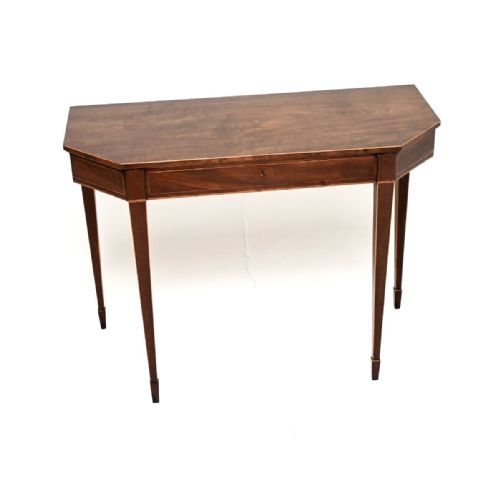
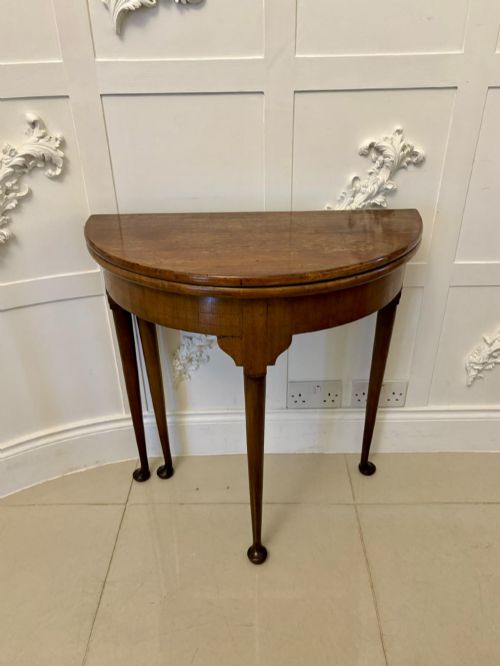
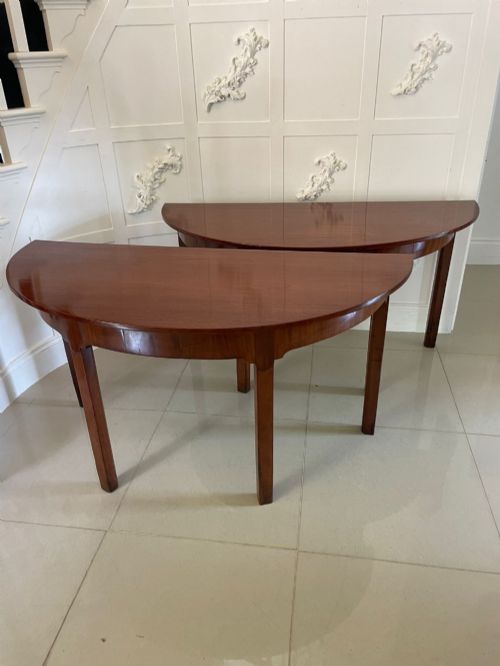

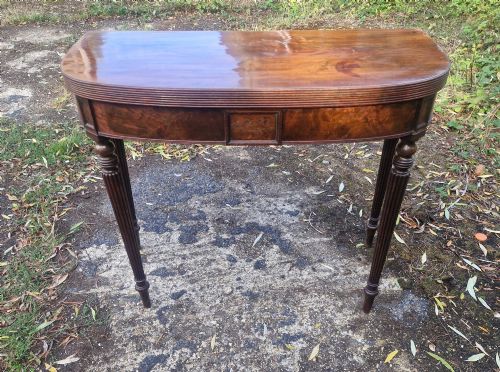
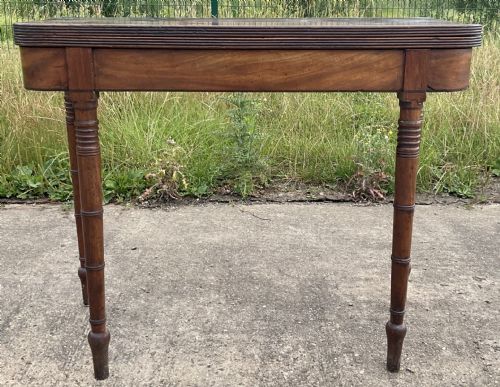

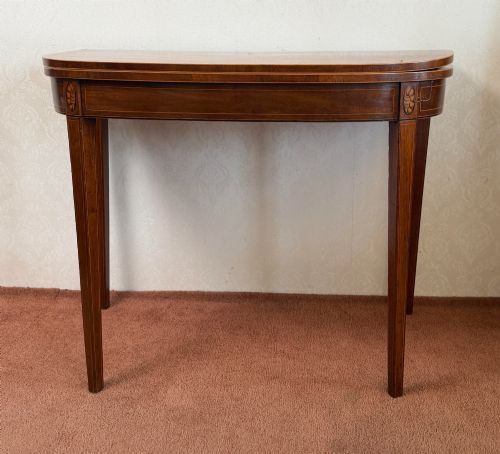
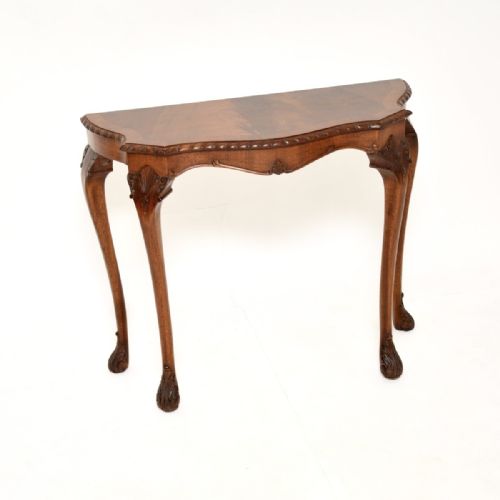
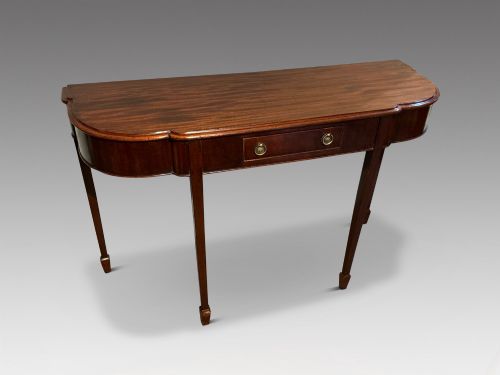
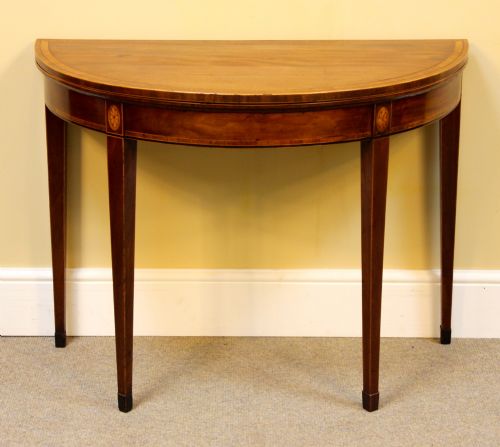
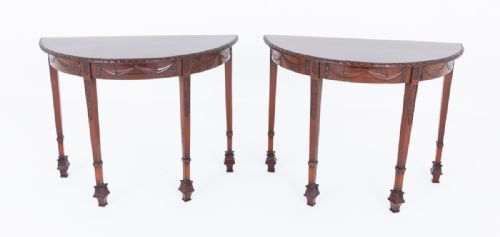
Mahogany Demilune Side Table
A mahogany demilune side table brings half-moon elegance to a hallway, utilising curved timber to fit snug against a wall.
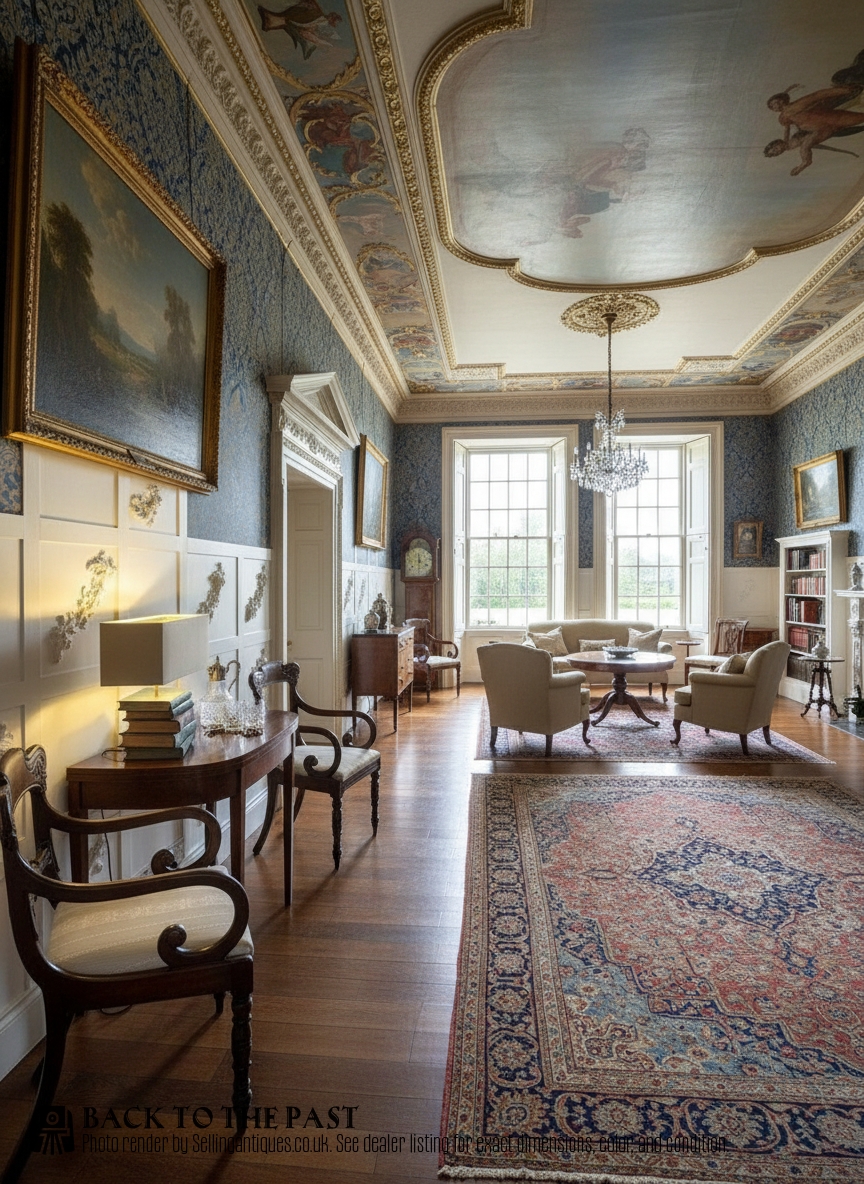
Mahogany Demilune Side Table
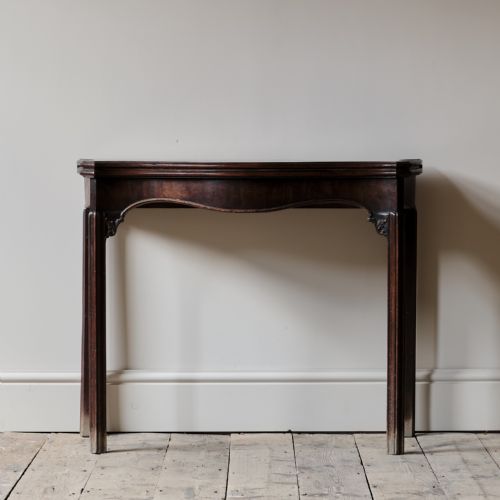
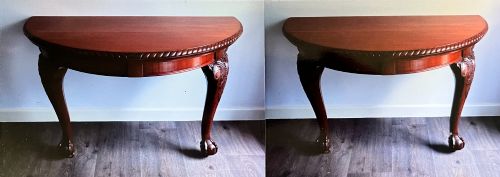
A mahogany demilune side table is a semicircular console or tea table designed to stand flat against a wall, frequently appearing in pairs. When you search for this phrase, you will encounter pieces spanning the Georgian, Regency, and Victorian periods, alongside later Edwardian and 1930s revivals.
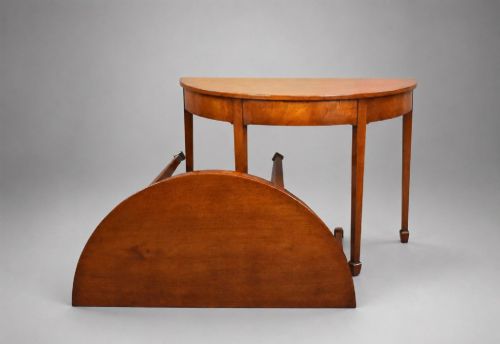
The form often doubles as a card table with a folding top, or operates simply as a hall or console table. Timbers range from standard mahogany to figured grain varieties, sometimes complemented by satinwood, boxwood, and marble.
How They Were Made
Cabinet makers built these tables using solid mahogany or applied fine mahogany veneers over secondary timbers, often shaping the curved tops from carefully selected planks. Figured wood and Honduras mahogany provided distinctive surface patterns on the best examples.
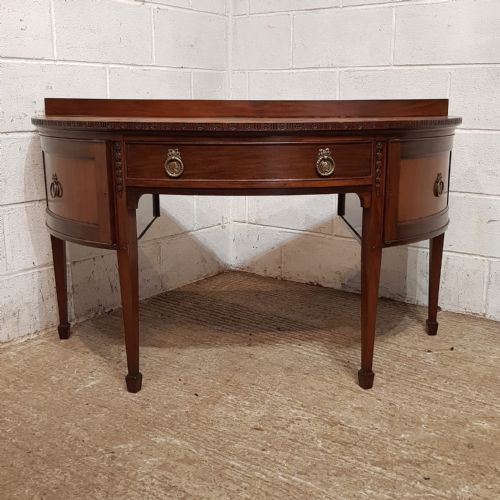
Inlaid decoration utilised contrasting materials like boxwood and satinwood to create geometric or neoclassical motifs. Some iterations incorporated brass hardware and marble tops, particularly among Victorian and later pieces.
Some demilune tables hide clever folding actions, transforming from flat wall consoles into full circular card tables with concealed wells for counters.
What Varies in Quality
The distinction between ordinary and superior pieces rests in the choice of timber and the dexterity of the cabinet work. Highly figured mahogany tops and crisp, intricate boxwood inlay mark out the finest examples from standard production.
Proportion and structural integrity also separate the grades. Finely turned or tapered legs, precise pivoting mechanisms on foldover tops, and well-matched veneer panels indicate higher workshop standards.
Gillows
The Mahogany Demilune Side Table Glossary
- Demilune
- A half-moon shape used to describe tables with a flat back and a curved front edge. This configuration allowed furniture to sit flush against a wall whilst saving floor space.
- Console table
- A table supported by wall brackets or legs, designed to stand against a vertical surface. These often function as decorative side pieces in halls and reception rooms.
- Satinwood
- A durable, yellowish timber native to India and Sri Lanka, utilised for contrasting stringing and inlay work. Cabinet makers favoured it for bright decorative details against dark mahogany.
- Veneer
- A thin slice of superior wood applied over a base timber to create decorative surfaces. Figured mahogany veneer allowed workshops to display striking grain patterns economically.
- George III
- The period of British design spanning from the mid to late eighteenth century, known for refined classical proportions. Pieces from this era frequently feature neat inlay and elegant tapered legs.
Mahogany Demilune Side Table: Frequently Asked Questions
What is a demilune table?
A demilune table is a semicircular piece of furniture with a flat straight edge meant to sit against a wall. The form includes console tables, card tables, and tea tables.
These pieces served functional and decorative roles in historic homes, offering a surface for lamps, ornaments, or card games.
How do I identify a Georgian demilune table?
Georgian examples typically display clean classical proportions, subtle boxwood inlay, and straight or slightly tapered legs. The timber often shows a rich, deep patina built up over centuries.
Later Victorian and Edwardian pieces often feature heavier construction, different veneer patterns, or added elements like marble tops.
Were these tables used for dining?
Many demilune tables function as card tables or tea tables with folding leaves rather than dining tables. When folded, they occupy minimal space against a wall.
Unfolded, the hinged top opens to reveal a baize-lined surface for card playing or an extended top for serving tea.
How do I care for a mahogany table?
Keep mahogany furniture away from direct sunlight and heat sources to prevent the wood and veneer from drying out. Polish the surface occasionally with appropriate traditional wax.
Avoid placing wet glasses or hot items directly onto the polished timber to protect the historic finish.