
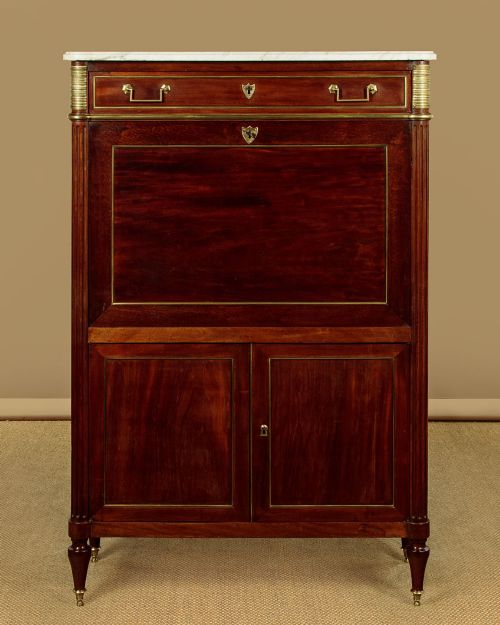


Fluted Marble Columns
These fluted marble columns bring architectural proportion and classic stone to a room, turning everyday spaces into formal displays.
Fluted Marble Columns
When buyers search for fluted marble columns, they look for architectural supports and display pedestals shaped from stone. The pieces appearing here include serpentine marble columns and vertical supports spanning the nineteenth century.
How they were made
The makers of these stone works utilised solid marble, shaping the mineral blocks into cylindrical forms with vertical channels known as flutes. Stonemasons employed manual turning and chiselling techniques to achieve the precise parallel grooves running the length of each shaft.
Support components and decorative mounts incorporate secondary materials such as bronze and ormolu. These metal additions provide structural stability and ornamental capitals that complete the classical column design.
Listings on this page feature nineteenth-century pieces incorporating marble, bronze, and ormolu materials.
What varies in quality
Quality rests upon the purity and selection of the marble itself, distinguishing uniform mineral grains from heavily flawed stone. Superior examples display consistent veining and precise, crisp channel cutting along the shaft.
The refinement of the surface polish and the execution of any attached metalwork dictate the upper tier of the range. Master stonemasons achieved a deep, reflective sheen that brings out the natural colour and pattern of the mineral.
The Fluted Marble Columns Glossary
- Flute
- A shallow vertical groove carved into the shaft of a column. Multiple flutes run parallel from the base to the capital.
- Capital
- The topmost member of a column that provides a decorative transition beneath the supporting load. Capitals often feature carved leaf or scroll motifs.
- Serpentine
- A mottled green mineral resembling snake skin, frequently utilised for decorative stone carving and architectural columns. It takes a high polish similar to marble.
- Ormolu
- Gilded bronze ornamentation applied to furniture and decorative objects. The technique involves fusing finely ground gold to a bronze base.
Fluted Marble Columns: Frequently Asked Questions
How do I style marble columns at home?
Place stone columns in hallways or corners to display sculptures, vases, or lamps at eye level. Their vertical lines draw the eye upward and add architectural structure to plain rooms.
Ensure the floor beneath is level to support the weight of the stone safely. Pair them with period furnishings or keep them freestanding to let the carved details stand out.
Are these columns solid marble throughout?
The columns consist primarily of natural stone, though exact construction methods vary by period and maker. Some nineteenth-century examples utilise solid blocks, while others incorporate internal support structures.
Inspect the weight and joinery points where the shaft meets the base and capital to understand the build. Most nineteenth-century pieces combine heavy stone sections with secure metal fittings.
How do I clean antique marble?
Dust the fluted channels regularly with a dry, soft cloth to prevent grime buildup in the grooves. Avoid harsh chemical cleaners or acidic substances that etch the polished surface of the stone.
Use mild, pH-neutral soap and warm water sparingly if deeper cleaning is required, then dry immediately. Protecting the surface preserves the original nineteenth-century polish.
How can I tell the period of a stone column?
Examine the precision of the channel cutting and the style of the capital for clues to the date of manufacture. Nineteenth-century pieces often reflect French Empire or classical revival design influences.
Look closely at the tooling marks on the underside or hidden joints for evidence of period hand-working techniques. Comparing the marble type and patination with known nineteenth-century examples helps confirm the era.