
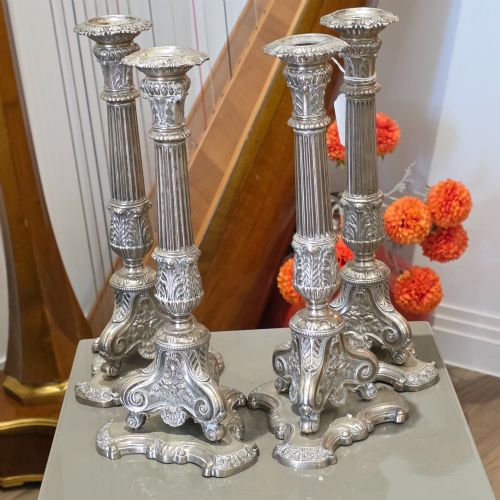
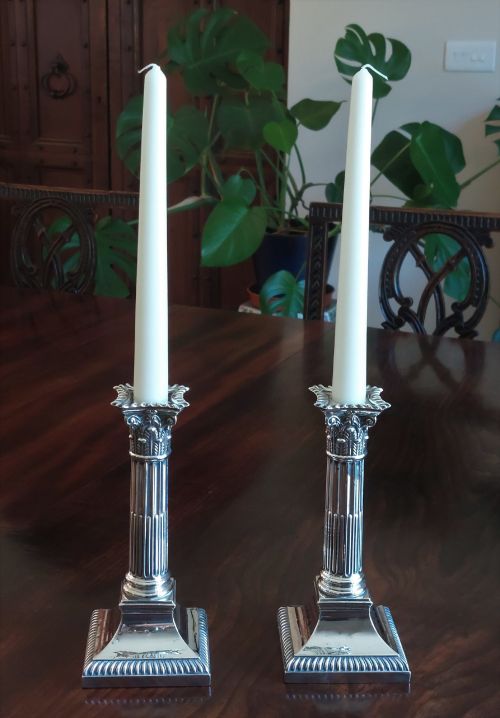
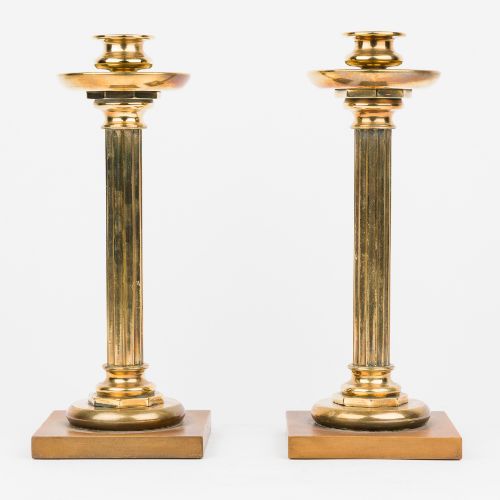
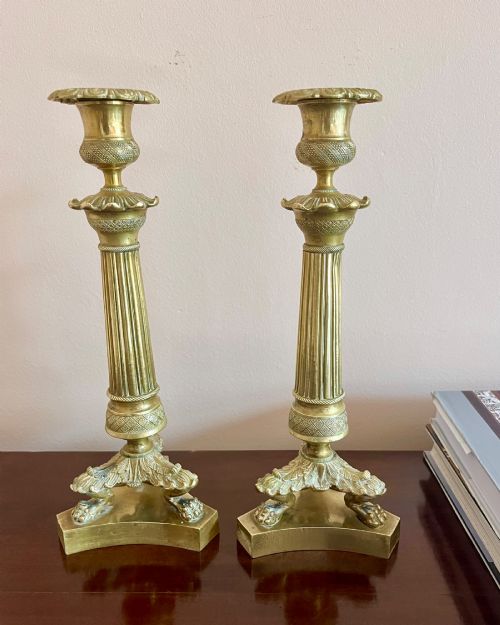
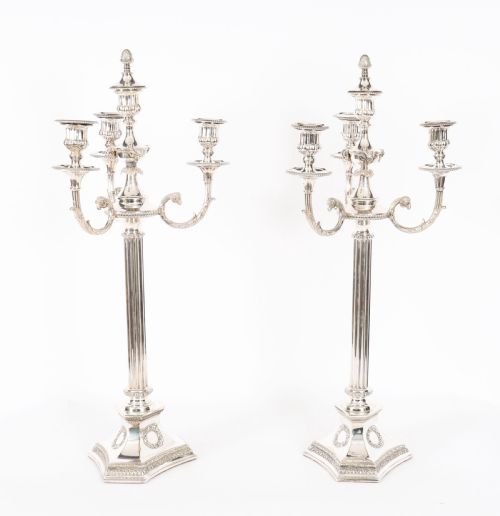
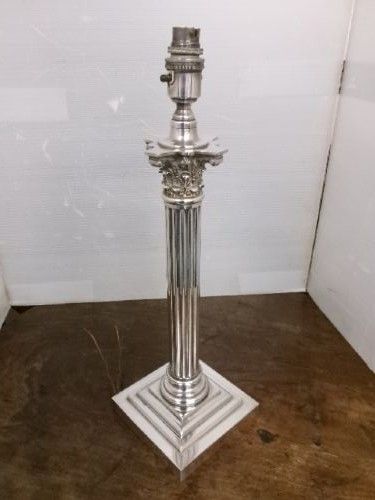
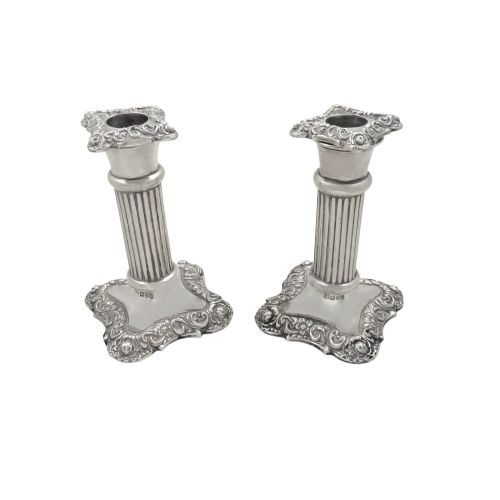
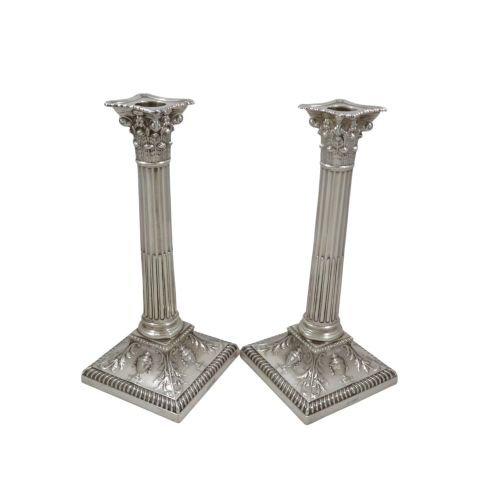

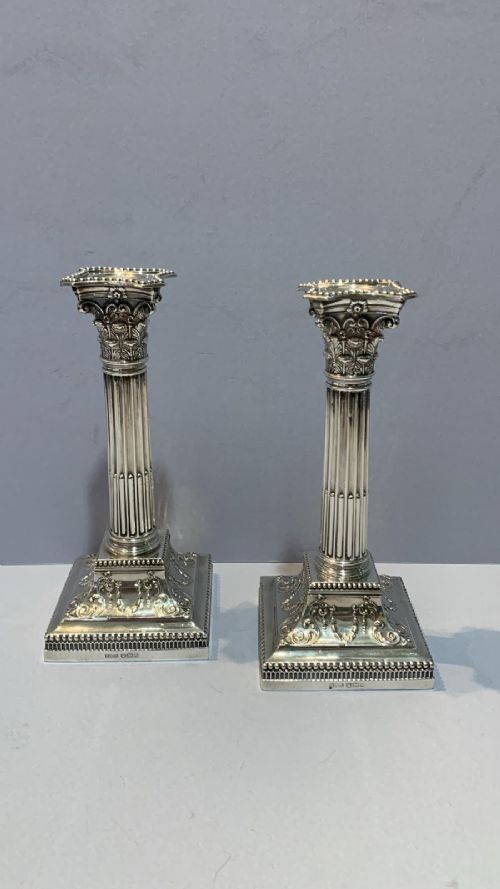
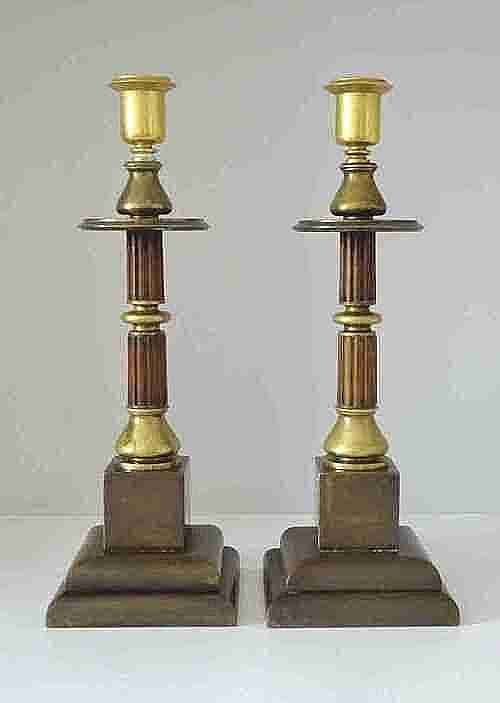
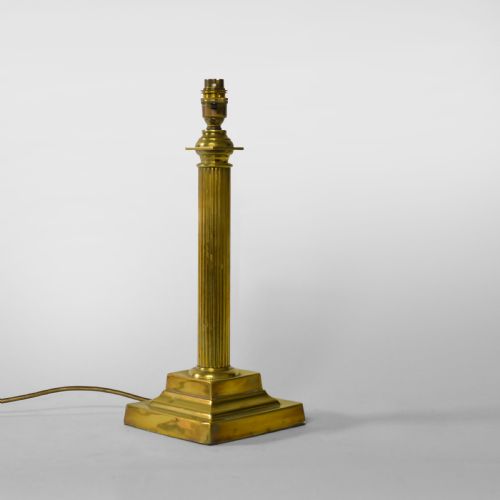
Fluted Column Candlesticks
Fluted column candlesticks bring classical proportion and refined vertical lines to a room, drawing on centuries of architectural design.
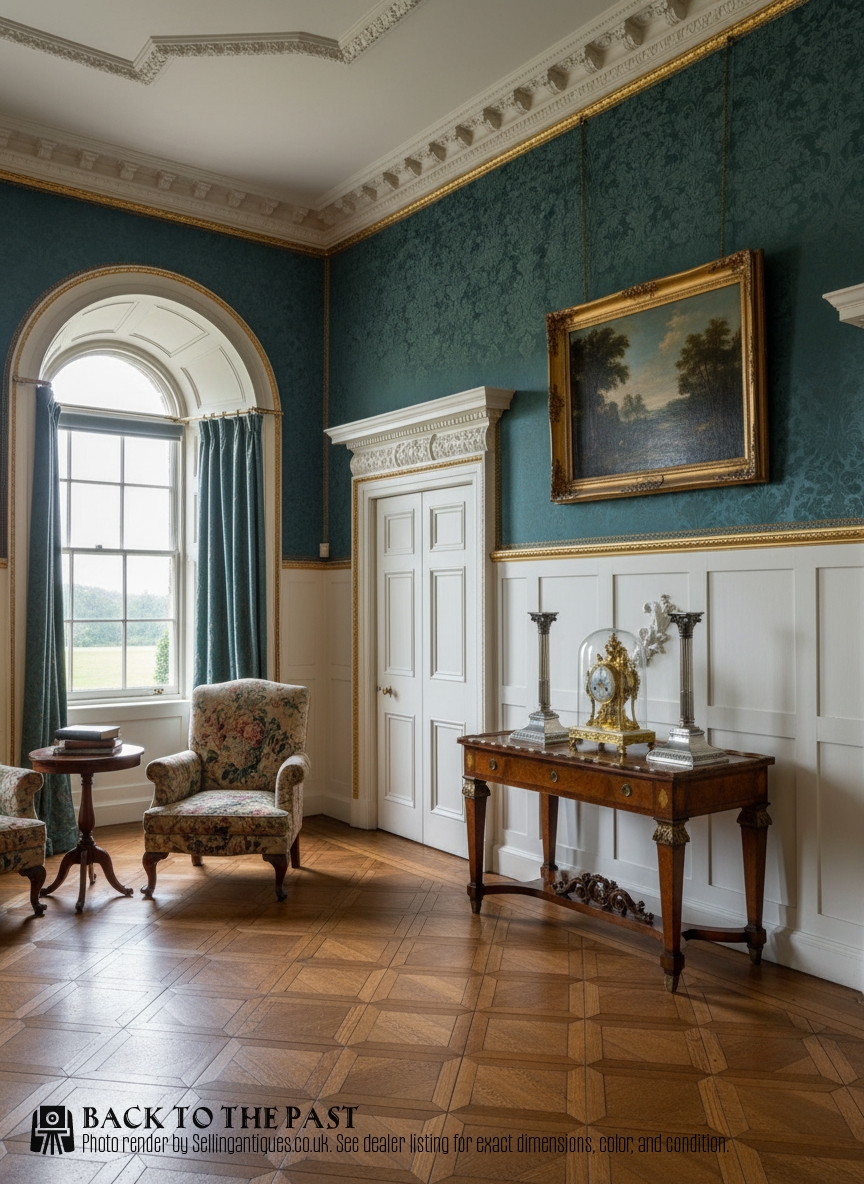
How They Were Made
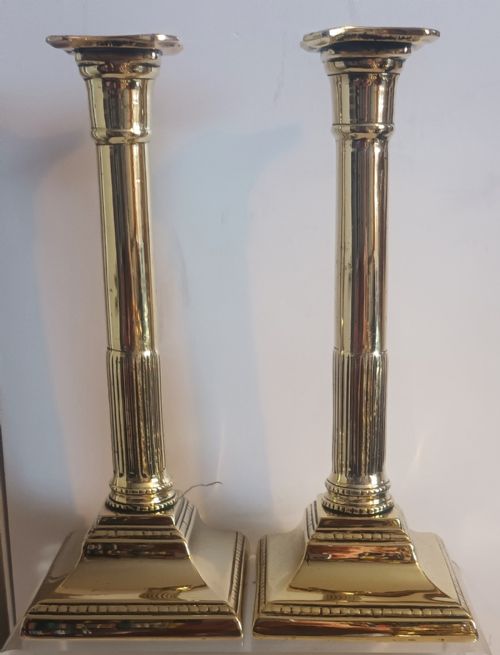
Metals such as brass, bronze, and copper form the structural core of many pieces, shaped through casting and turning on a lathe. Silver plate and Old Sheffield Plate apply a thin layer of silver over a base metal foundation.
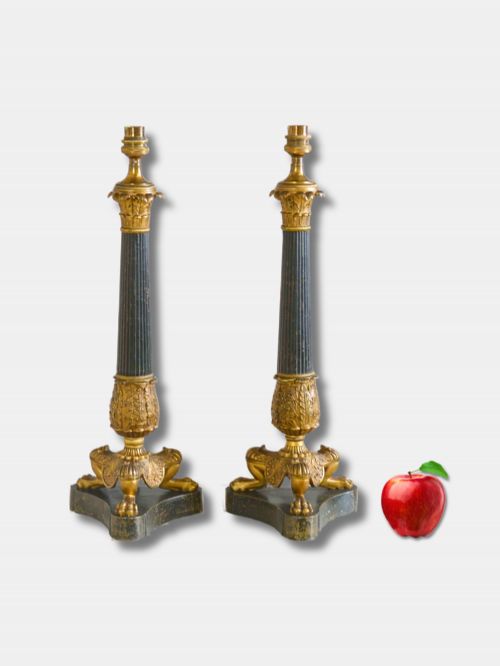
Sterling silver items utilise solid precious metal sheets shaped and soldered together, often weighted internally for stability. Ormolu employs a mercury gilding technique on bronze, producing a bright golden finish seen on French classical examples.
What Varies in Quality
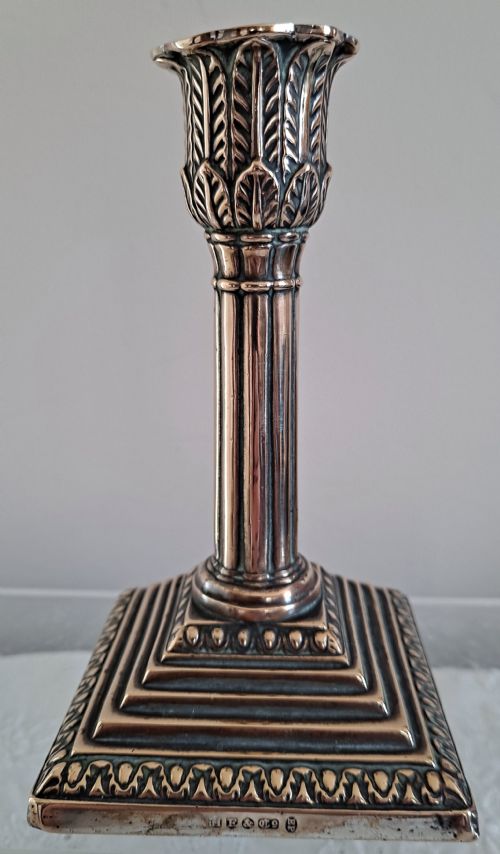
The crispness of the fluting and the definition in the capital dictate the visual strength of the piece. Crisp, deep channels show careful hand-chasing or precise casting, whereas softer details suggest worn moulds or mass production.
Weight and balance distinguish superior examples from lighter alternatives. A well-proportioned base and solid internal construction ensure the candlestick stands firmly without tipping when holding heavy candles or converted lamps.
Fluted Column Candlesticks Retail Price Guide 2026
Typical asking prices for fluted column candlesticks among the pieces listed under this phrase on Sellingantiques today, from the lower quarter to the upper quarter. They describe what is for sale here now, not the wider market.
Listings feature items from the Georgian period through to the Art Deco era, encompassing brass, silver plate, and bronze.
Conrad Eduard Mappe·Garrard and Co·Goldsmiths
The Fluted Column Candlesticks Glossary
- Capital
- The topmost member of a column, situated directly beneath the candle socket. It often follows the Corinthian, Ionic, or Doric architectural orders.
- Fluting
- A series of shallow, vertical parallel grooves cut into the shaft of a column. This technique adds visual rhythm and light reflection to the metal surface.
- Sconce
- A detachable metal tray or ring fitted into the top of a candlestick to catch melting wax. Removable sconces make cleaning easier.
- Old Sheffield Plate
- An early method of fusing a thin sheet of silver to a thicker copper ingot by heat and pressure. This technique predates electroplating and leaves a distinctive edge where copper shows through.
- Ormolu
- Finely ground high-carat gold applied to a bronze base using mercury. The resulting surface gives a rich, matte yellow lustre typical of French Empire pieces.
Fluted Column Candlesticks: Frequently Asked Questions
How do I date a brass candlestick?
Examine the construction methods, base formation, and wear patterns on the underside of the piece. Georgian and early examples often feature cast components with distinct seams and hand-finished surfaces, while later Victorian items show more uniform machine production.
Compare the overall design style against known period revival movements. Neoclassical and Georgian pieces exhibit restrained proportions, whereas later Edwardian and Art Deco items introduce different weight distributions and base decorations.
Were these candlesticks converted to lamps?
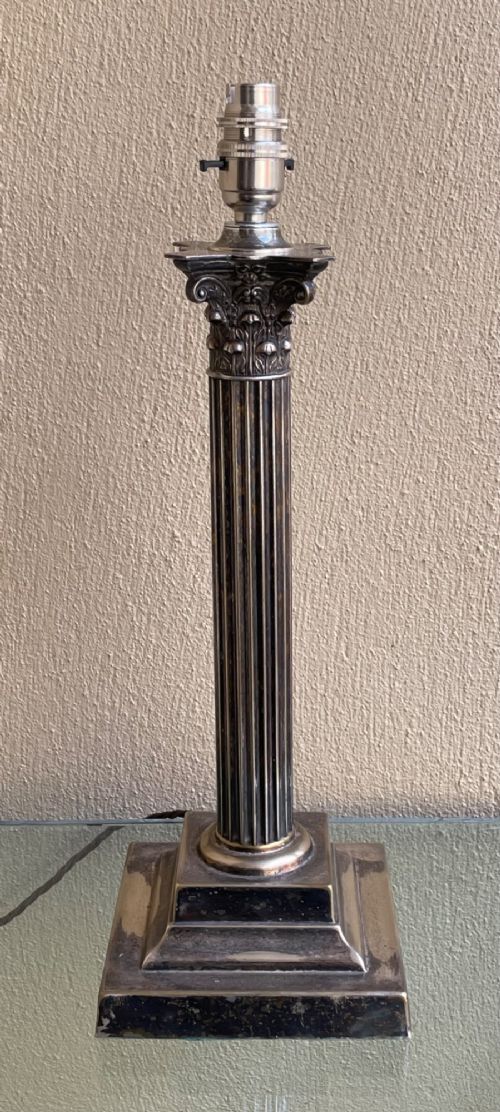
Many tall column candlesticks were adapted for electricity during the twentieth century to serve as table lamps. These conversions often involve running a cord through the centre shaft and modifying the top socket.
Check whether the conversion remains reversible if you prefer original candle use. Unaltered examples retain their original sconces and wax pans intact.
How should I clean silver plated candlesticks?
Use a soft microfibre cloth and a mild, non-abrasive silver polish formulated for plated items. Avoid aggressive rubbing that can wear through the thin silver layer down to the base metal underneath.
Clean around the fine grooves of the fluted columns gently with a soft-bristled brush to remove accumulated dust and polish residue.
What is the difference between Corinthian and Doric columns?
Corinthian capitals feature ornate decoration with carved acanthus leaves and scrolls at the top of the column. They offer a highly decorative appearance suited to formal dining rooms and parlours.
Doric and ionic columns present a simpler profile without the elaborate leaf carving. They provide a cleaner, more austere classical silhouette.