
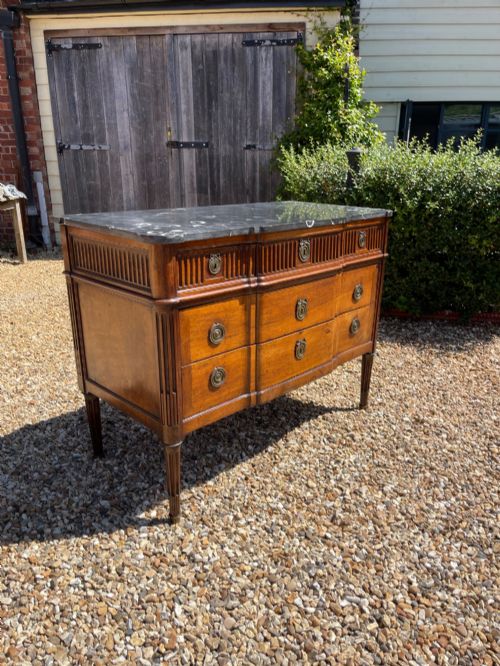

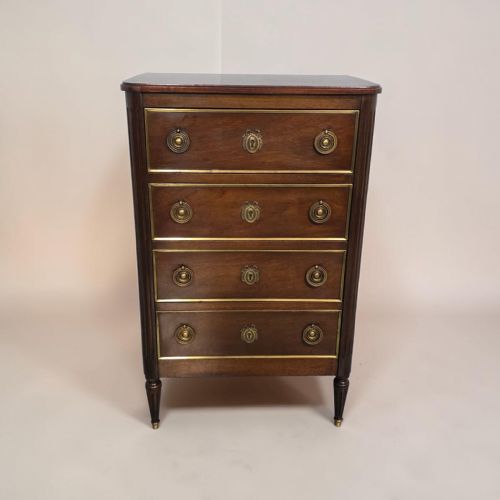
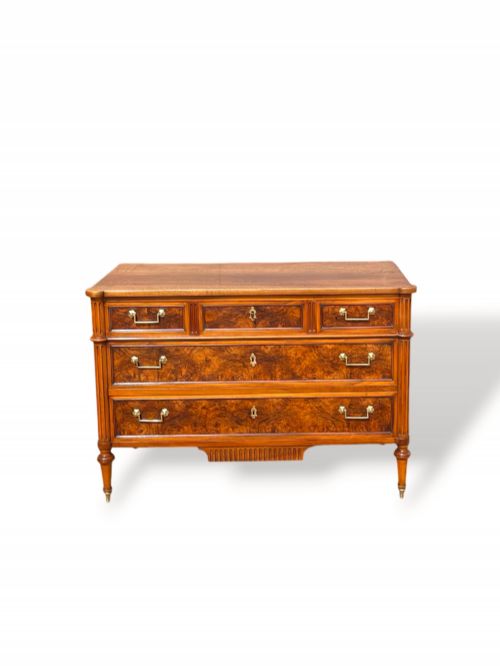
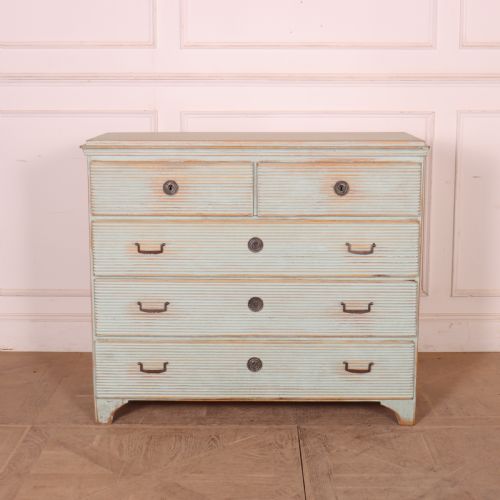

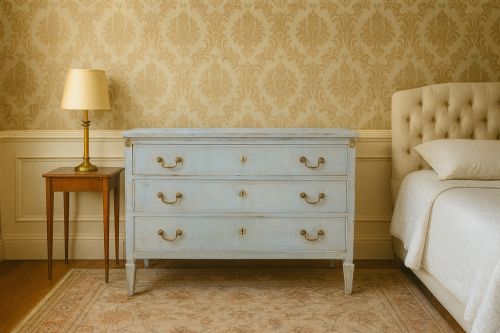


Fluted Chest of Drawers
These fluted chest of drawers pieces bring classical architectural reeding and channelled detail to storage, offering structural rhythm and historic utility.
Fluted Chest of Drawers
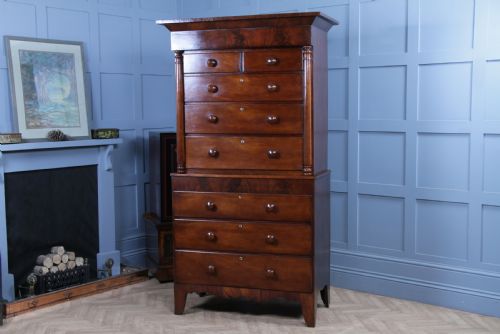
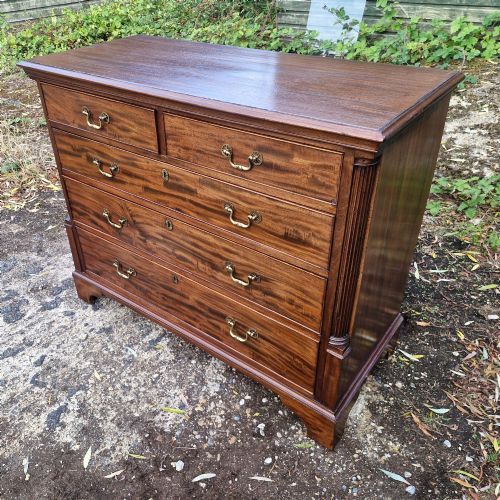
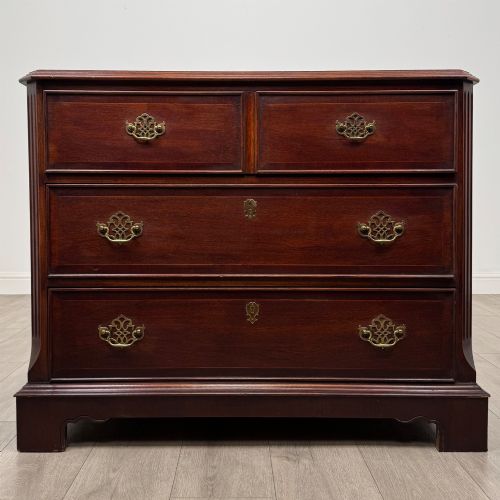
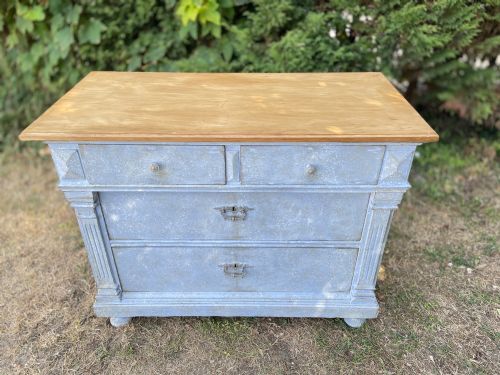
A fluted chest of drawers incorporates vertical concave grooves carved or applied across drawer fronts, pilasters, or legs, adding formal texture to timber storage pieces. When searching this phrase, buyers encounter examples ranging from eighteenth-century Swedish commodes to Georgian mahogany tallboys and nineteenth-century French walnut designs.
The aesthetic stretches across multiple continental and British workshops, taking shape in painted pine, figured mahogany, burr elm, and cherrywood. Pieces often feature marble tops or brass hardware that complement the linear carving of the drawer fronts.
Materials and construction
Cabinetmakers worked primarily in solid hardwoods such as mahogany, oak, walnut, and cherrywood, alongside painted pine for continental pieces. Surfaces frequently incorporated figured wood veneers, while structural elements relied on sturdy dovetail joints for drawer construction.
Carvers cut parallel concave channels directly into timber or applied moulded strips to create the characteristic fluting. Marble slabs in grey or white sat atop French and Dutch commodes, paired with cast brass handles and escutcheons.
Some Swedish commodes wear their original paint like a sturdy winter coat, weathering centuries of domestic life with quiet Scandinavian resilience.
Quality and craftsmanship
The precision of the carved flutes distinguishes finer examples, where channels maintain exact depth and spacing along the drawer fronts or framing pillars. Superior execution is also evident in the selection of figured mahogany, burr elm, or dense walnut veneers that wrap harmoniously around the carcass.
Structural integrity reveals itself in the drawer mechanics and timber stability, alongside the quality of auxiliary woods used in secondary framing. Original marble tops, intact brass mounts, and well-preserved painted surfaces elevate the standing of a piece within its period.
The Fluted Chest of Drawers Glossary
- Fluting
- Vertical parallel concave grooves carved into a furniture surface. This decorative technique originates in classical architecture and provides texture to drawer fronts or legs.
- Commode
- A low chest of drawers or cabinet developed in France during the eighteenth century. These pieces often feature marble tops and sophisticated veneer work.
- Tallboy
- A tall chest of drawers made in two sections, typically a chest on chest arrangement. Georgian examples provide substantial vertical storage capacity.
- Gustavian
- The Swedish neoclassical furniture style spanning the late eighteenth and nineteenth centuries. Pieces usually incorporate pale paint finishes and restrained classical motifs.
- Escutcheon
- A protective plate surrounding a keyhole, frequently cast in brass. These details complement the hardware and timber tones of period storage furniture.
Fluted Chest of Drawers: Frequently Asked Questions
Where should I place a fluted chest of drawers?
These storage pieces work well in bedrooms, hallways, or living spaces where the linear carved detail can catch ambient light and add architectural interest to a wall.
Consider the height and depth of the piece relative to surrounding furniture, particularly if the design includes an overhanging marble top or tall proportions.
How do I care for antique timber and marble?
Dust surfaces regularly with a soft, dry cloth and apply occasional natural wax to nourish exposed mahogany, walnut, or oak timbers without building up residue.
Marble tops benefit from prompt wiping of spills to prevent staining, avoiding harsh chemical cleaners that can etch the polished stone surface.
What defines Gustavian style furniture?
Gustavian design reflects Swedish neoclassical interpretation of French Louis XVI aesthetics, characterised by lighter proportions and restrained decorative carving.
Pieces from this tradition frequently feature soft grey, white, or cream painted finishes over pine or birch timbers, suiting bright interior schemes.
How do Georgian chests differ from continental commodes?
Georgian pieces from Britain emphasise rich natural timber grains such as mahogany, often utilising clean architectural lines and bracket or ogee feet.
Continental commodes from France, Sweden, and the Netherlands more frequently incorporate painted finishes, marble surfaces, and distinct serpentine or bombe profiles.