



Fluted Bronze Lighting
Fluted bronze lighting brings classical elegance and warm illumination to interiors through carefully shaped metal columns and bases.
Fluted Bronze Lighting
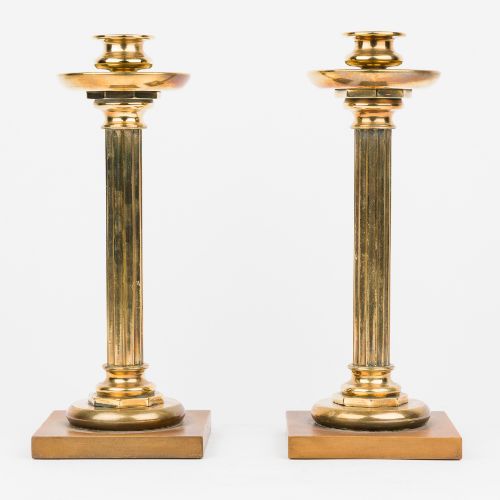
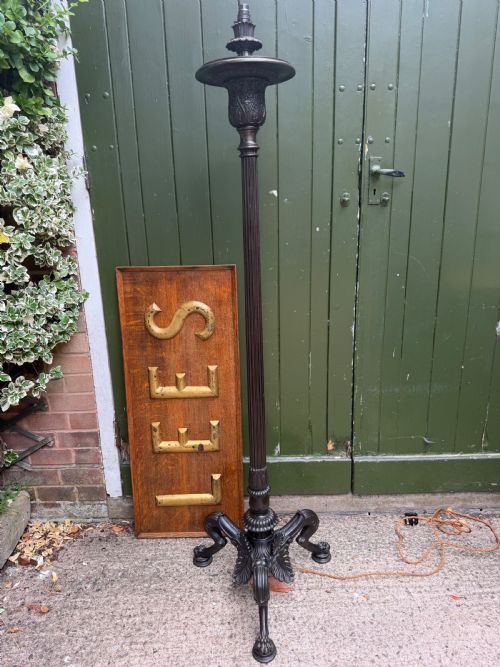
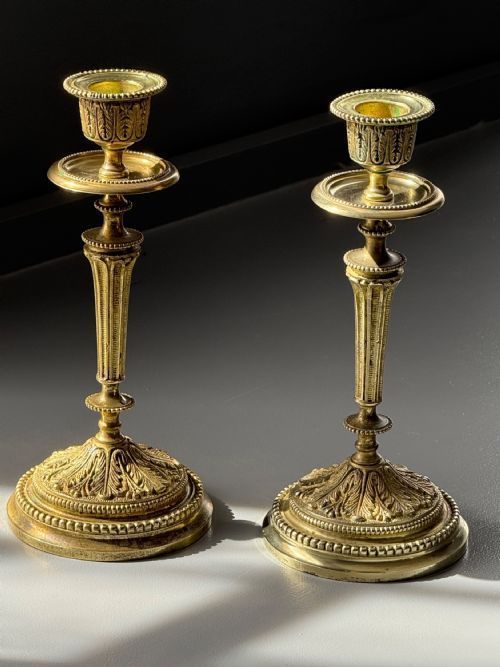
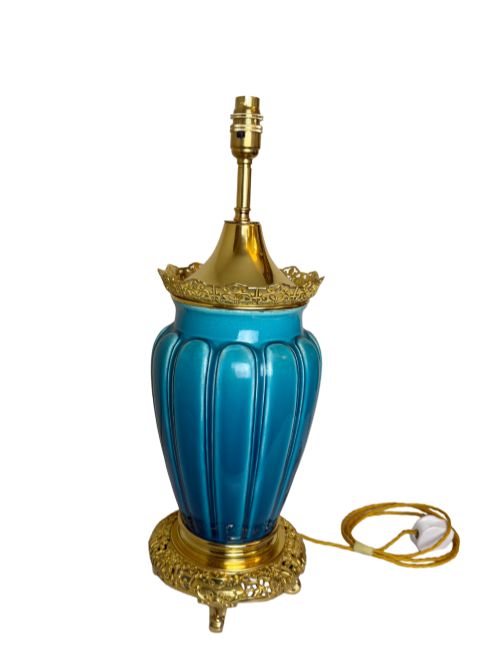
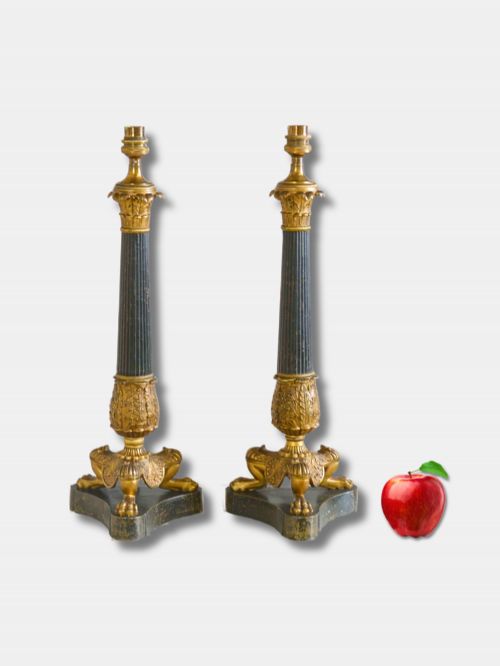
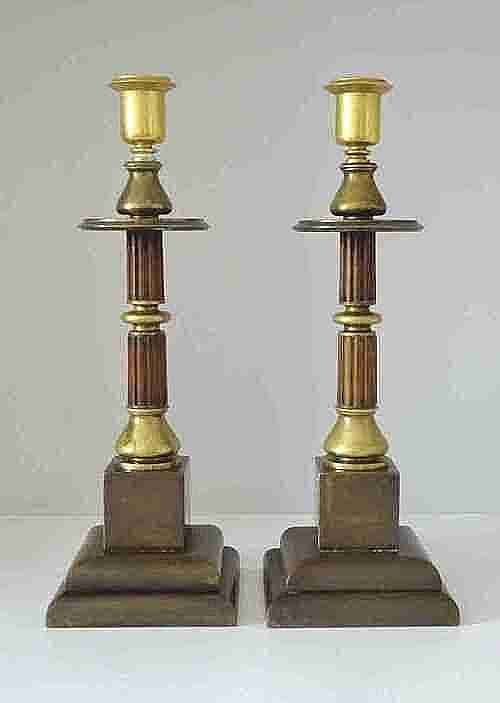
Fluted bronze lighting comprises candlesticks, table lamps, floor standards, and chandeliers shaped with vertical grooves known as flutes. These pieces draw heavily on classical architecture, echoing the columns of ancient temples.
Buyers will most frequently encounter nineteenth-century interpretations on this page, alongside earlier eighteenth-century examples and twentieth-century Art Deco variations. Forms range from simple candlesticks adapted for electricity to grand standard lamps.
Originating largely from French and British workshops, these fixtures incorporate styles such as Neoclassical, Louis XVI, and French Empire. The channelled surfaces catch and reflect ambient light, adding subtle texture to a room.
Assessing craftsmanship and finish
Quality rests upon the crispness of the casting and the precision of the hand-chasing along each flute. Superior examples retain sharp architectural lines and deep, even patination rather than soft, blurred transitions.
The integration of secondary materials defines the upper tier of pieces, where mercury gilding, carved marble plinths, and solid brass mounts display exceptional weight and structural integrity. Finer items also show meticulous hand-assembly rather than mass-produced uniformity.
Humphrey Hopper·Joseph Hinks
The Fluted Bronze Lighting Glossary
- Ormolu
- A technique of applying finely ground high-carat gold to a bronze object using a mercury amalgam. This creates a durable, luminous golden finish characteristic of French luxury goods.
- Fluting
- Shallow, concave grooves running vertically along the shaft of a column or lamp base. The design derives from classical Greek and Roman architecture.
- Patinated bronze
- Bronze that has been treated with chemicals or heat to alter its surface colour. This process yields rich brown, green, or near-black tones.
- Pricket candlestick
- A candlestick featuring a sharp metal spike at the top to secure a candle, rather than a socket. These often appear on earlier altar-style pieces.
- Torchere
- A tall, slender stand or floor lamp designed to hold a light source high above the floor. They frequently feature classical tripod bases and decorative finials.
Fluted Bronze Lighting: Frequently Asked Questions
How do I wire an antique lamp?
Rewiring requires running modern braided flex through the central channel of the bronze column, ensuring the internal components meet current electrical standards without damaging the antique metalwork.
Professional electricians can usually preserve original switch mechanisms and weighted bases while updating the internal lamp holders for safety.
Are these lamps French or British?
Many examples originate from French workshops, particularly those following Neoclassical and Empire design traditions. British makers also produced similar classical column lamps during the same periods.
Distinguishing between them often depends on the specific casting style, chasing quality, and associated design motifs rather than the material itself.
How do I clean patinated bronze?
Dusting gently with a soft, dry cloth is the best way to maintain patinated bronze surfaces. Avoid abrasive cleaners or metal polishes that can strip away the historic patina.
If the piece has an ormolu finish, warm soapy water on a damp cloth helps remove grease without harming the underlying gold layer.
What is the difference between ormolu and bronze?
Bronze is an alloy of copper and tin used as the structural base metal for these lighting fixtures. Ormolu refers specifically to the gilded surface coating applied to that bronze.
Many pieces combine both, showing dark patinated bronze alongside bright gilded ormolu details to create contrast.