

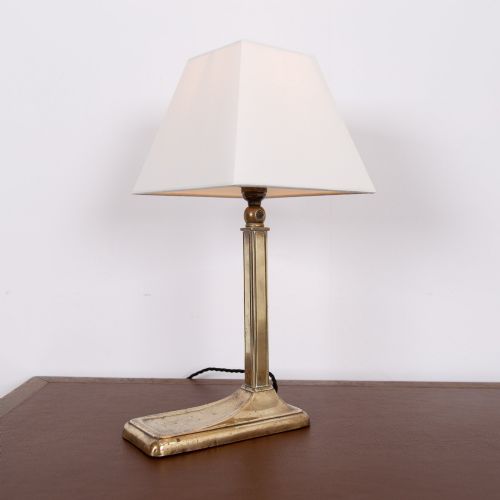
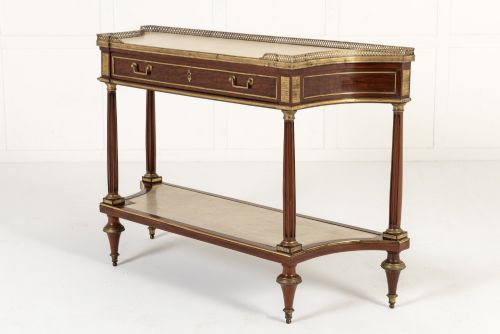
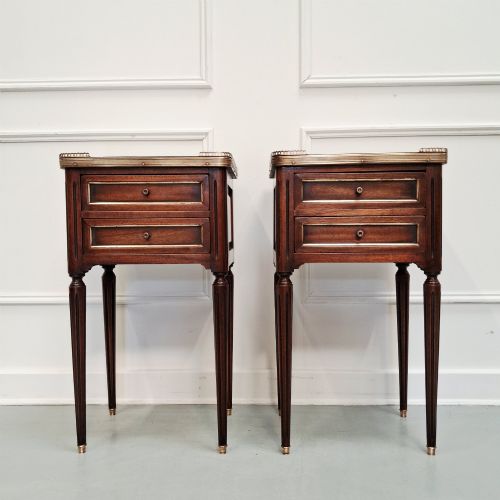
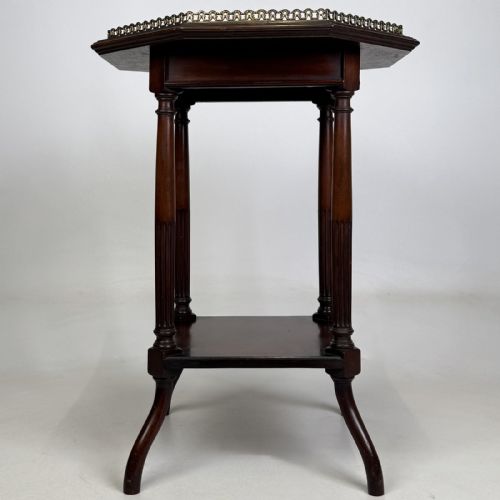
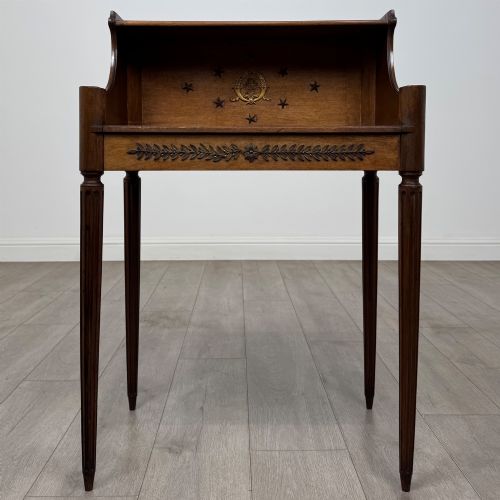
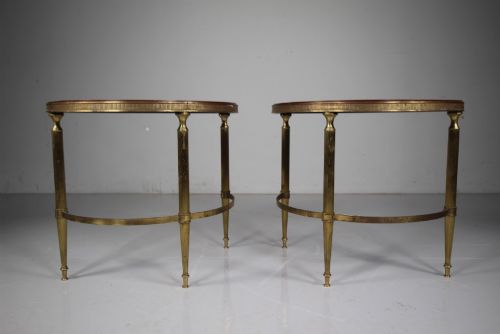
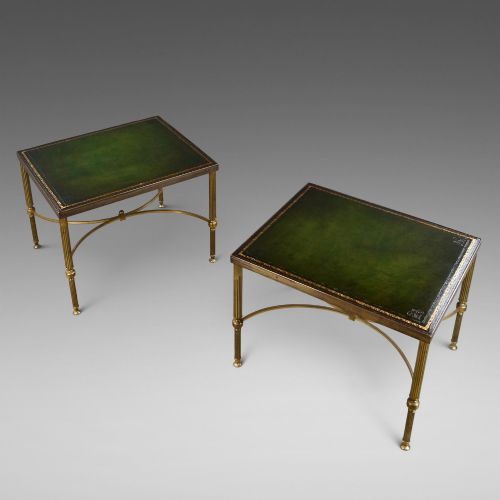
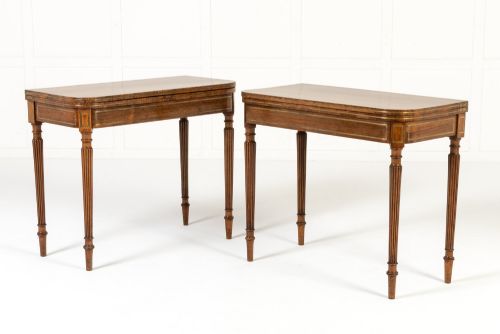


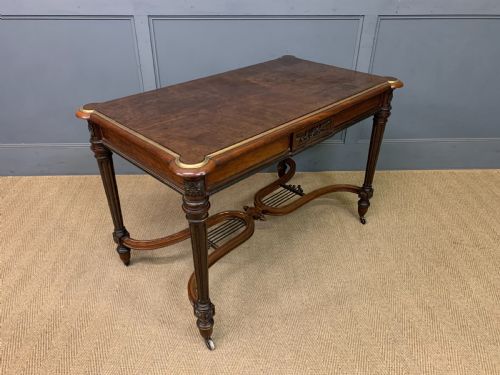
Fluted Brass Side Table
These pieces bring a metallic edge and architectural form to a room, offering a compact surface suited to traditional and modern spaces alike.
Fluted Brass Side Table
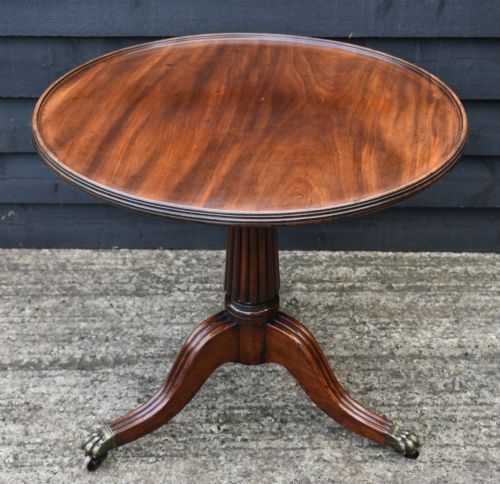
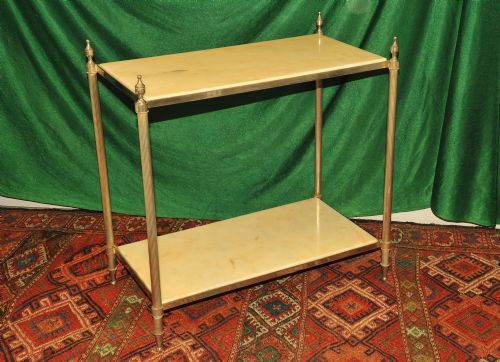
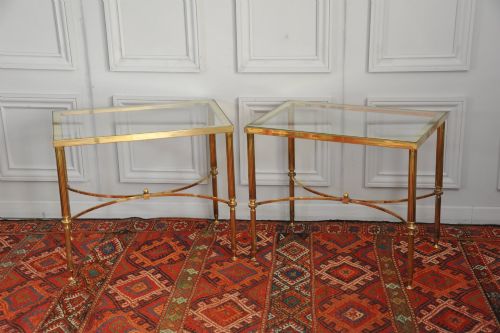
A fluted brass side table combines structural metalwork with classic proportions, serving as a compact surface for lamps and ornaments. Buyers searching for a fluted brass side table encounter forms influenced by Regency, Edwardian, and Neoclassical styles, often incorporating contrasting materials such as marble or mahogany.
The selections span the nineteenth century through the mid-twentieth century, including French and English workshops. Many examples rely on brass for frames, galleries, and columnar supports, frequently paired with inlaid wooden tops or stone surfaces.
What varies in quality
The distinction between tiers rests on the precision of the cast metalwork and the grade of the timber or stone used in construction. Finer pieces demonstrate crisp chasing on ormolu and brass mounts, alongside well-figured mahogany or perfectly fitted marble tops.
Proportion and the integrity of the joinery dictate the overall standard, separating standard production items from bespoke pieces produced by notable workshops.
Fluted Brass Side Table Retail Price Guide 2026
Typical asking prices for fluted brass side table among the pieces listed under this phrase on Sellingantiques today, from the lower quarter to the upper quarter. They describe what is for sale here now, not the wider market.
Listings incorporate materials ranging from brass, mahogany, and marble to rosewood, walnut, and ormolu.
Maison Jansen·A. Beurdeley·Gillows
The Fluted Brass Side Table Glossary
- Ormolu
- Gilded bronze or brass applied as a decorative mount to furniture and lighting. This technique was widely utilised in French Neoclassical and Empire styles.
- Marquetry
- The art of applying pieces of veneer to a structure to form decorative patterns. It frequently appears on the wooden tops of centre and side tables.
- Gueridon
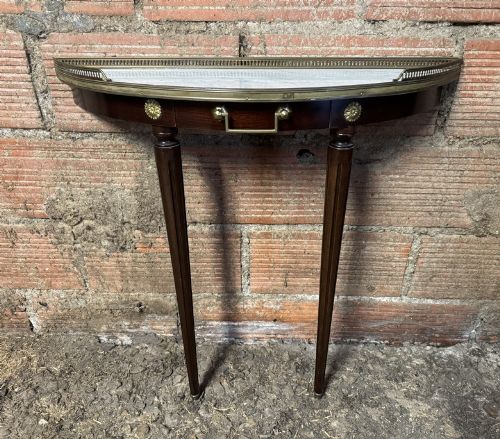
- A small circular table supported by one or more columns, often featuring a marble top and brass gallery. Originating in seventeenth-century France, the form persisted into the twentieth century.
- Demi lune
- A half-moon shape characteristic of console and side tables designed to sit flush against a wall. This profile saves floor space while maintaining a formal surface.
Fluted Brass Side Table: Frequently Asked Questions
Where should I place a side table?
These compact pieces fit easily beside seating arrangements or against hallway walls where surface space is needed without blocking circulation.
They function well as lamp tables or bedside stands, bringing metallic warmth and functional surface area to smaller corners.
How do I clean brass and marble?
Dust metal frames regularly with a soft cloth and avoid harsh chemical cleaners that might strip the protective finish or damage the underlying alloy.
Marble tops require gentle wiping with a damp cloth to prevent staining, particularly from acidic liquids or oils.
What periods do these tables come from?
The available selection spans the nineteenth century through to the mid-twentieth century, capturing aesthetic shifts from Regency formality to Edwardian and later revival styles.
Earlier pieces often showcase heavier timber construction with restrained brass detailing, while mid-century examples lean into lighter metal and glass combinations.
Are marble tops original?
Many tables retain their original fitted stone or marble inserts, which were chosen for their durability and classical appearance in French and English designs.
Checking the fit and edge finish helps determine whether a stone top corresponds to the period of the base frame.