


Floral Wool Flatweave Rug
A floral wool flatweave rug brings warmth and botanical pattern to a floor through flat textiles from the nineteenth and early twentieth centuries.
Floral Wool Flatweave Rug
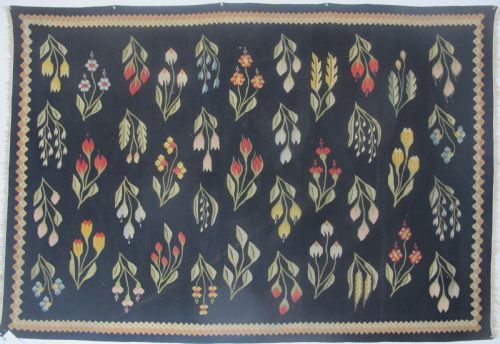
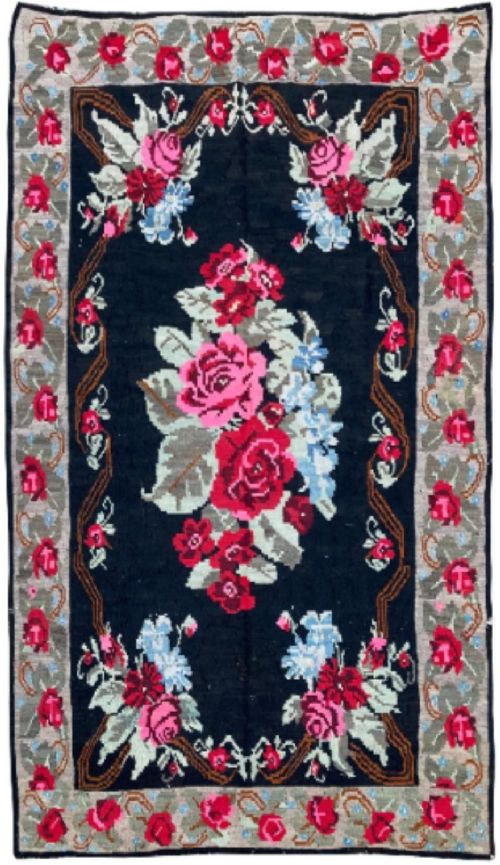
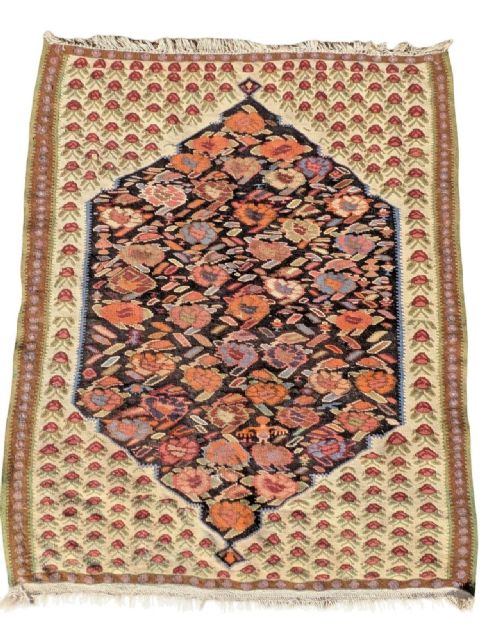
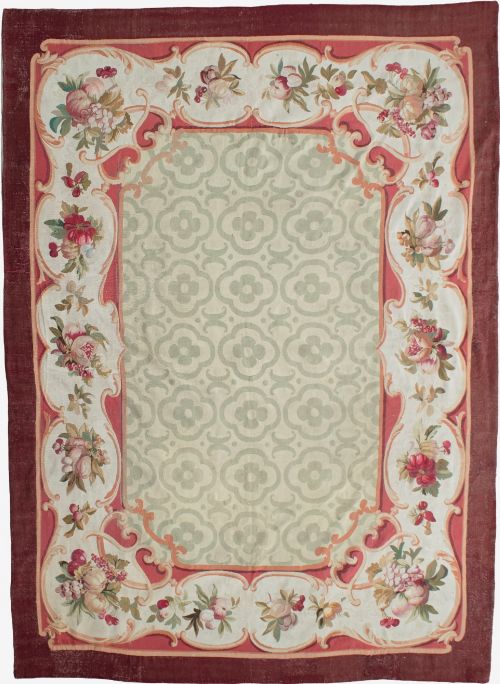
A floral wool flatweave rug encompasses flat-surfaced carpets, kilims, and tapestries featuring botanical and floral motifs across various international traditions. You will most frequently encounter antique Bessarabian kilims and French Aubusson carpets amongst the selections available on this page.
The objects span from the mid-nineteenth century up through the nineteen-forties, originating from diverse regions including Eastern Europe, Persia, Portugal, and France. Formats range from small area rugs and saddle-bags to large floor carpets and wall-hanging textiles.
What varies in quality
The distinction between standard examples and the finest pieces lies in the crispness of the botanical drawing and the nuance of the colour palette. Master weavers achieved greater depth and naturalism in floral arrangements through careful shading of wool yarns.
Structural integrity also separates individual pieces, where tightly woven flatweaves and well-preserved needlepoint foundations retain their original scale and sharp outlines better over decades of use.
Nomadic weavers occasionally smuggled secret flora into geometric borders, letting wild field flowers outgrow strict traditional rules.
The Floral Wool Flatweave Rug Glossary
- Kilim
- A flatweave carpet or rug produced without a pile, traditionally created by tightly interweaving warp and weft strands. This technique results in a thin, durable textile with a smooth surface.
- Aubusson
- A style of French carpet and tapestry originating from the town of Aubusson, known for classical floral designs and botanical compositions. These pieces are woven on a vertical or horizontal loom without a pile.
- Chain Stitch
- An embroidery technique forming a looped stitch that resembles a chain, utilised in decorative wool rugs to build curved floral lines. It creates a textured, raised path across the flat textile.
- Needlepoint
- A type of canvas work where yarn is stitched through a stiff open-weave canvas ground to cover the entire foundation completely. This method permits precise geometric and floral pictorial detailing.
- Flatweave
- A general category of textile constructed by interlocking warp and weft threads directly without knotting tufts of wool. These rugs lie very flat upon the floor.
Floral Wool Flatweave Rug: Frequently Asked Questions
Where should I place a floral wool flatweave rug?
These flat textiles suit rooms with moderate foot traffic where a low profile is desirable under furniture or doorways. Their lack of pile makes them practical for dining areas and hallways.
Protect them from direct, harsh sunlight to preserve the natural dyed wool colours over time. Underlays help prevent slipping on smooth wooden or stone floors.
How do I clean a flatweave rug?
Gentle suction vacuuming without a rotating brush roll removes everyday surface dust safely from the wool flatweave structure. Avoid vigorous shaking or beating which can stress antique warp threads.
Professional specialist cleaning is recommended for historical textiles to prevent dye bleeding or shrinkage. Spot cleaning should be approached with extreme caution.
How can I tell a Bessarabian kilim from an Aubusson?
Bessarabian kilims typically display rich, dark grounds with bold, naturalistic floral bouquets influenced by Eastern European folk art traditions. They are flatwoven textiles without a pile.
Aubusson carpets generally reflect French Rococo or chateau aesthetics with lighter pastel palettes, architectural borders, and classical floral medallions. They are frequently woven as fine tapestries or needlepoint pieces.
Are these rugs suitable for everyday use?
Nineteenth and early-to-mid twentieth-century flatweaves are robustly constructed from wool and cotton, designed originally for domestic interiors. Their flat structure withstands normal walking when treated with care.
Heavily fragile needlepoint or aged tapestries function better in lighter-use spaces or as wall hangings. Rotating the rug periodically ensures even wear across the surface.