



Vintage Flat Weave Rug
A vintage flat weave rug brings texture, tribal geometry and centuries of nomadic weaving craft directly onto the floor.
Vintage Flat Weave Rug
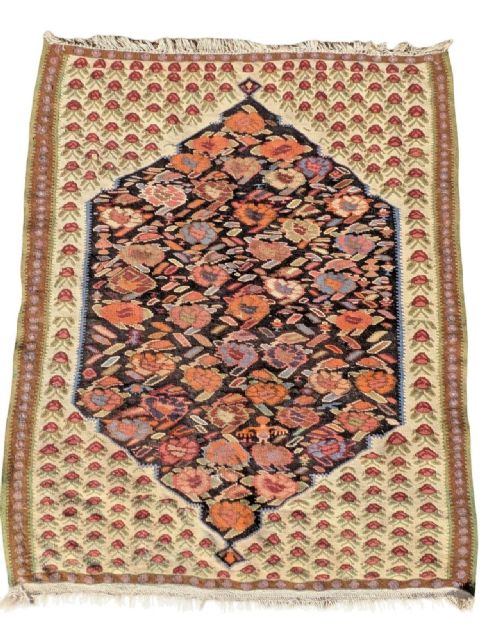
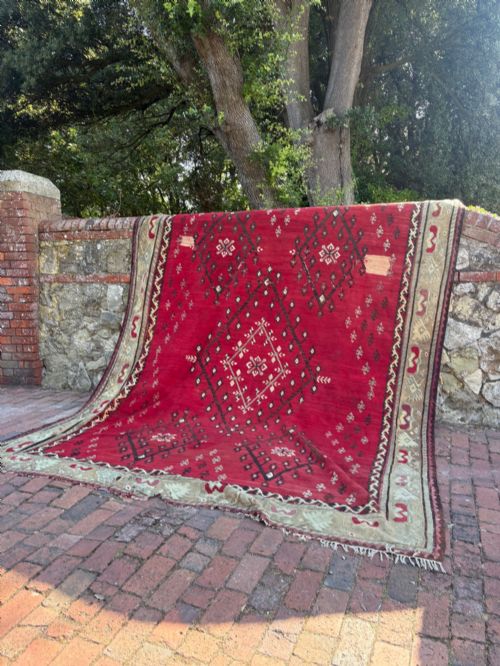
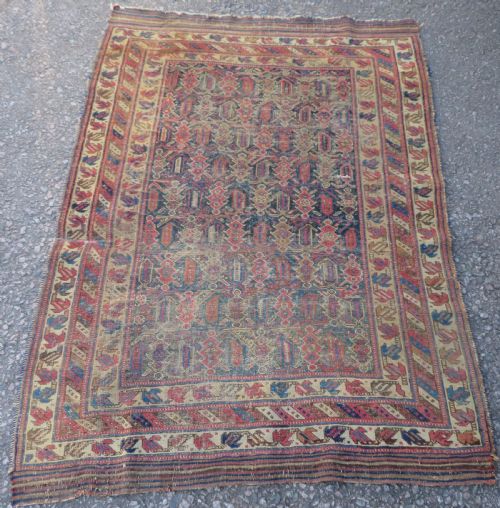
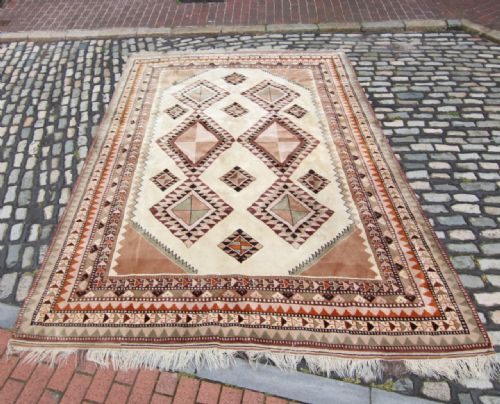
A vintage flat weave rug encompasses durable pileless textiles created by nomadic and village weavers across Anatolia, Persia, the Caucasus, and Eastern Europe. These pieces include large carpets, runner rugs, and smaller household items like cushions and bread sofreh transformed for modern interiors.
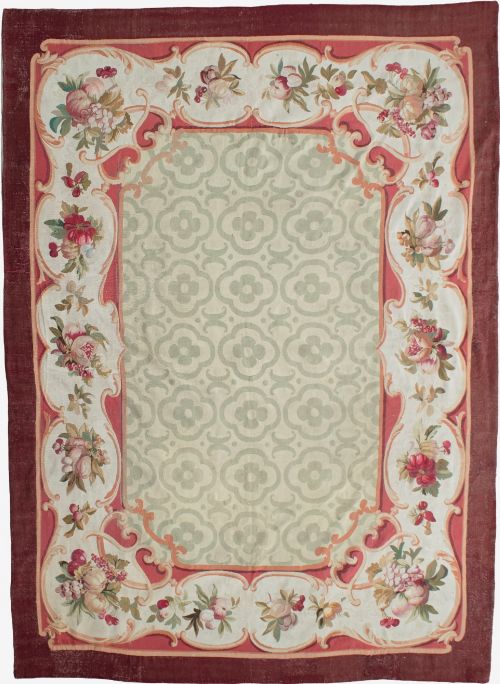
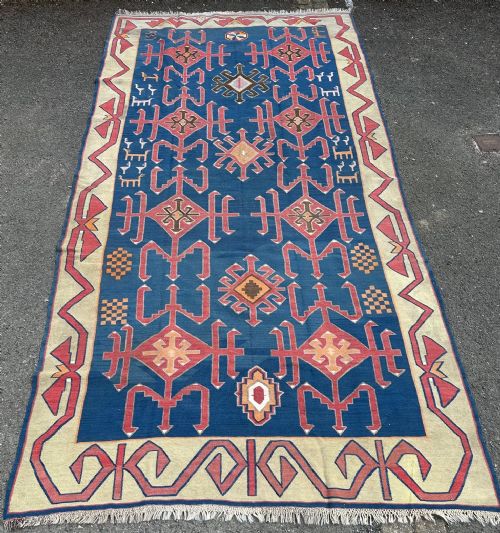
The selection ranges from striking geometric Caucasian Shirvan kilims to floral Bessarabian examples and intricately patterned Turkmen tribal pieces. Visitors will encounter textiles spanning from the mid-nineteenth century through the interwar years, reflecting distinct regional weaving traditions.
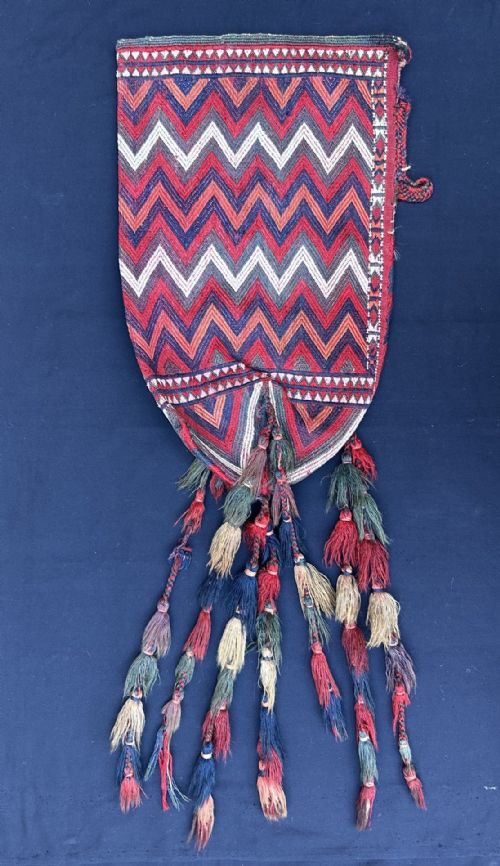
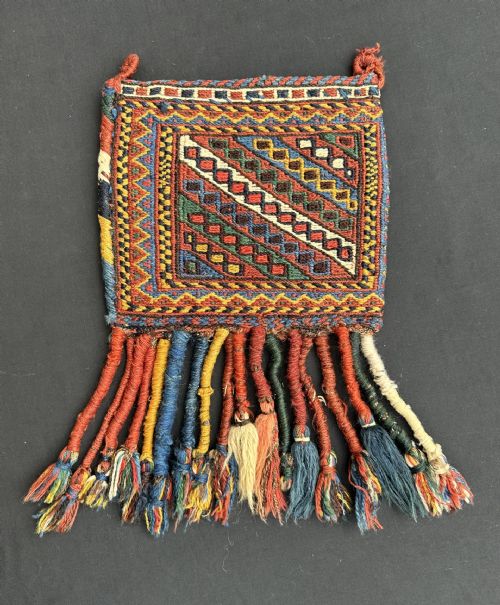
Most items arrive from specific tribal groups such as the Afshar, Yomut, and Shahsavan, demonstrating the rich heritage of flat-woven floor coverings and utilitarian bags. Each piece functions as a historical record of the loom, constructed without the deep pile of standard knotted carpets.
Materials and construction
These textiles rely predominantly on hand-spun wool and cotton, worked together on upright or horizontal looms to create a flat, durable surface. Weavers utilised natural dyes to achieve the soft colour palettes and bold graphic designs seen across Anatolian and Central Asian pieces.
Techniques range from standard slit-weave kilim construction to complex Soumak wrapping and needlepoint methods seen in European examples like Portuguese and Aubusson pieces. The absence of a knotted pile allows the structural weave itself to form the pattern.
Listings feature wool and cotton materials shaped into styles from Anatolian Tribal to Bessarabian and Caucasian.
Assessing the craftsmanship
Quality rests in the tightness of the weave, the clarity of the geometric or floral motifs, and the complexity of the dye work. Tighter, finer structures command attention for their durability and the precision required from the weaver.
The sophistication of the tribal design and the integrity of the original wool yarn distinguish standard domestic pieces from masterworks created by nomadic groups.
The Vintage Flat Weave Rug Glossary
- Kilim
- A flat-woven carpet or rug produced in countries of the former Ottoman Empire, Persia and Central Asia. They are made by tightly interweaving warp and weft strands.
- Soumak
- A flat-weave technique utilising a wrapping stitch that creates a textured, ribbed surface on the face of the textile and loose threads on the reverse. This method adds structural strength to tribal bags and rugs.
- Sofreh
- A spreading cloth used for eating bread or making dough, woven by nomadic groups such as the Afshar with striking geometric field designs.
- Chuval
- A large tent bag used by Turkmen tribes for household storage, frequently featuring traditional guls and rich madder-dyed wool.
- Khorjin
- A traditional double saddlebag woven by tribal groups for transport on animals, often preserved today as smaller decorative panel fragments or cushions.
Vintage Flat Weave Rug: Frequently Asked Questions
What is a flat weave rug?
A flat weave rug is a textile created on a loom without knotting a pile, resulting in a thin, flexible floor covering. These pieces rely on the interlacing of warp and weft threads to form patterns.
Traditional examples were made by nomadic and village weavers across the Middle East, Caucasus, and Eastern Europe for practical daily use.
How do I care for a vintage flat weave?
Care involves gentle vacuuming without a rotating brush and regular rotation to ensure even wear across the surface. Professional cleaning tailored to antique wool is recommended for deeper maintenance.
Keeping the textile out of direct, harsh sunlight preserves the natural dyes used by the original weavers.
Where were these rugs made?
The pieces originate from diverse regions including Anatolia, the Caucasus, Persia, and parts of Eastern Europe like Bessarabia and Ukraine. Each geographic area developed distinct tribal motifs and weaving techniques.
Nomadic groups and settled village communities alike contributed to this rich tradition of flat-woven textiles.