


Floral Painted Dessert Dish
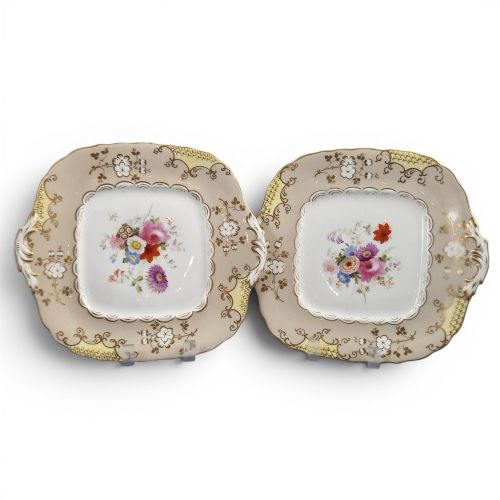
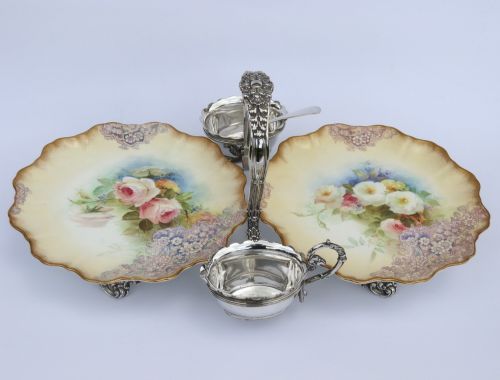
A floral painted dessert dish brings botanical colour and porcelain craft directly to the dining table from Georgian, Regency, and Victorian dining rooms.
Floral Painted Dessert Dish
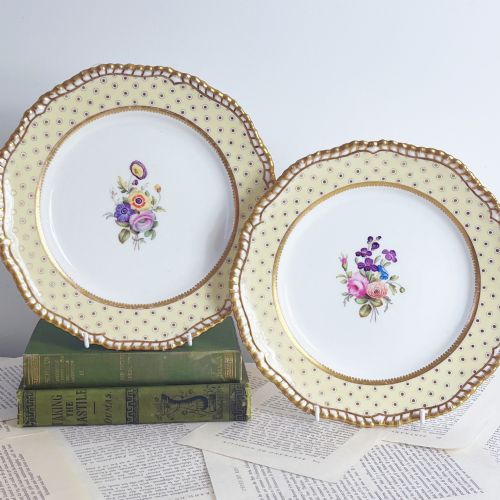
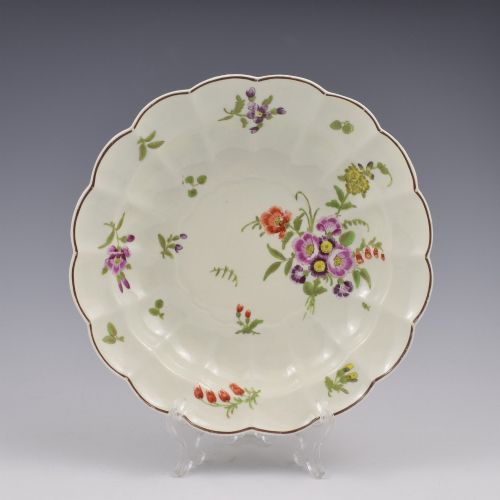
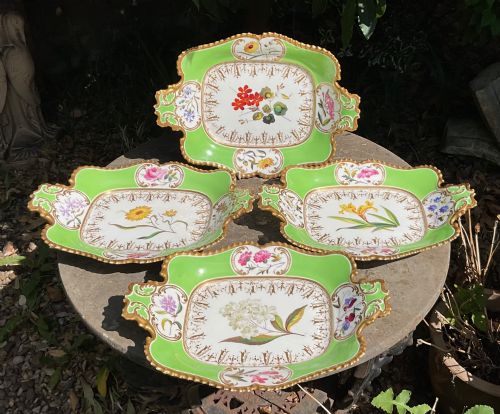
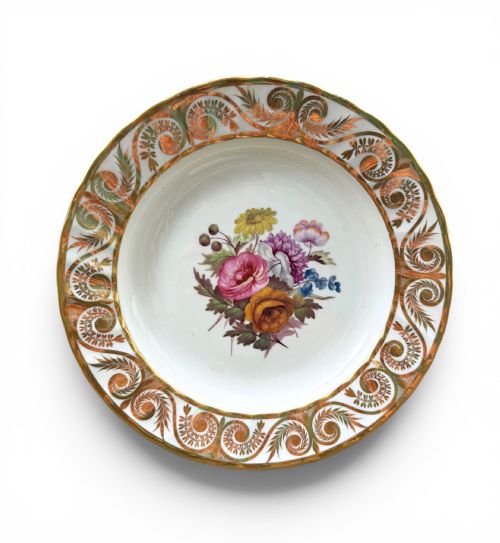
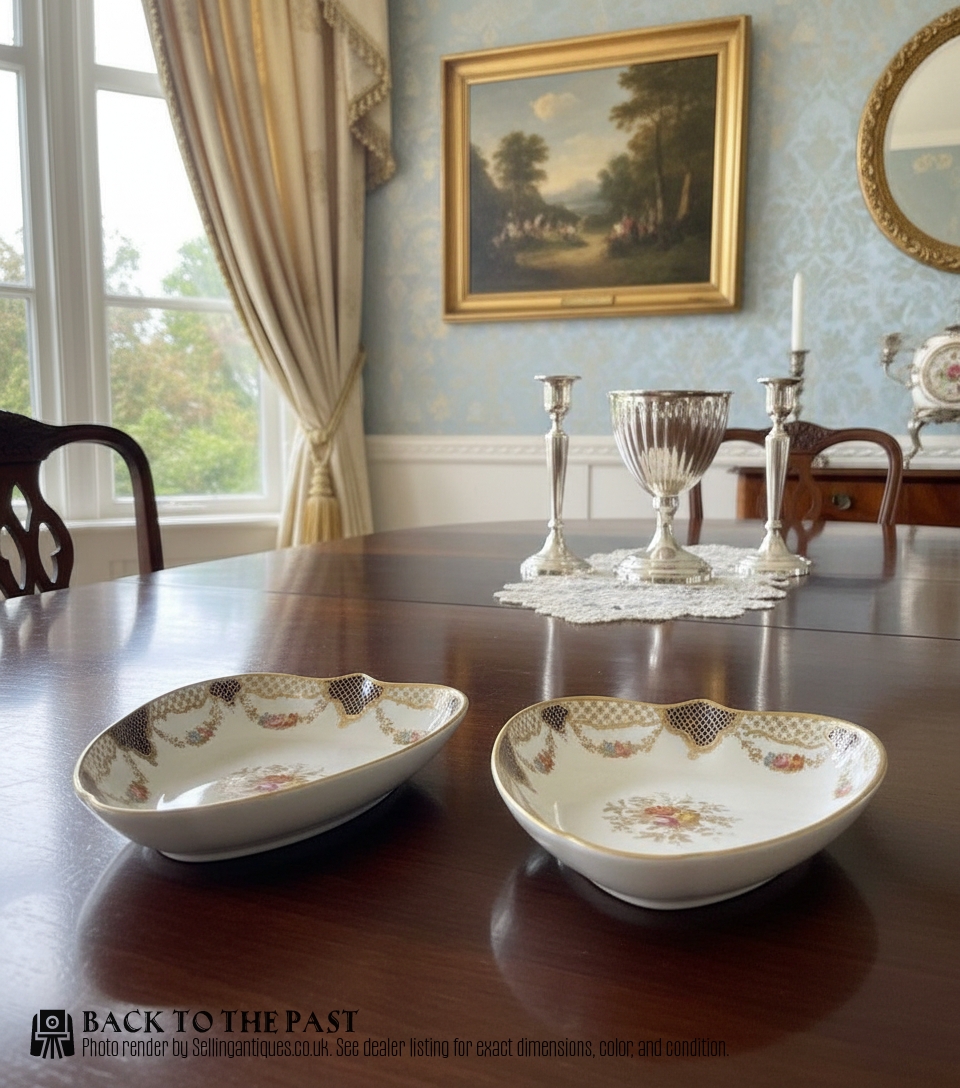
A floral painted dessert dish serves fruit and sweet courses at the conclusion of formal meals across the eighteenth and nineteenth centuries. These pieces appear as individual plates, shaped serving dishes, lobed bowls, and complete part services spanning Georgian, Regency, and Victorian periods.
Makers configure these items in porcelain, bone china, and soft-paste porcelain, frequently embellished with gilt and gold leaf accents. The forms range from basketweave moulded edges to botanical serving dishes painted with naturalistic flower studies.
Buyers encounter products originating from prominent factories like Worcester, Coalport, Minton, and Wedgwood. The category includes individual cabinet plates alongside matching pairs and larger dessert services.
Assessing quality and craftsmanship
Quality separates through the precision and delicacy of the hand-painted floral decoration rather than the mere presence of colour. Superior examples display botanical accuracy, subtle shading, and confident brushwork executed by skilled factory artists.
The sophistication of the porcelain body and the crispness of moulded details, such as basketweave textures or Rococo scrollwork, define the tier of production. Intact, burnished gilding and well-preserved enamel colours maintain the visual impact of each piece over centuries.
Early painters occasionally hid tiny beetles among the rose leaves, slipping secret wildlife into formal dining rooms.
Spode Felspar·Chamberlains Worcester·Moses Webster·Coalport·Doulton Burslem·John Ridgway·Rockingham Pottery·Minton Porcelain·Flight Barr And Barr·Wedgwood·Mason's Patent Ironstone·Bloor Derby·Royal Crown Derby
The Floral Painted Dessert Dish Glossary
- Bone china
- A type of porcelain incorporating bone ash to create a strong, bright white body suitable for intricate moulding and fine painting. This material underpins many nineteenth-century dessert services.
- Soft-paste porcelain
- An artificial porcelain composition fired at lower temperatures than hard-paste, common in eighteenth-century English works. It yields a warm, slightly creamy glaze that absorbs enamel colours effectively.
- Gilding
- The application of gold leaf or powdered gold to ceramic surfaces, used to line rims and highlight relief moulding. On better pieces, this gold layer is hand-burnished to achieve a bright finish.
- Enamel
- Opaque glass-based paints fused onto the glazed ceramic body during low-temperature kiln firings. These pigments provide the vibrant floral hues seen across dessert plates and serving dishes.
- Cabinet plate
- A decorative ceramic plate intended primarily for display in a cabinet rather than functional table use. These items frequently showcase superior hand-painted botanical art.
Floral Painted Dessert Dish: Frequently Asked Questions
What were dessert dishes used for?
These dishes held fruit, nuts, and sweetmeats served at the conclusion of a formal dinner. They formed part of an elaborate tablescape designed to impress guests.
Hostesses utilised matching services or mixed sets to display seasonal produce and confectionery at the end of the meal.
How do I care for antique porcelain?
Hand wash these pieces gently in warm water using mild soap, avoiding dishwashers and harsh abrasive sponges. Protect the delicate enamels and gold leaf from chemical cleaners.
Store them securely in cabinets or use padded dividers if stacking plates to prevent rim chipping and surface scratching.
Can I use them for serving food?
Historic porcelain remains usable for serving dry foods and fruit, provided the glaze is intact and free from heavy wear. Many collectors prefer to reserve them for light modern use or decorative display.
Avoid exposing antique soft-paste bodies to sudden thermal shocks, such as microwave heating or boiling liquids.
How are different factory periods identified?
Makers marked their wares with printed or painted symbols, script, and factory names on the underside. Reference books link these specific ciphers, crowns, and banners to exact manufacturing dates.
Stylistic cues like paste composition, moulding style, and enamel palettes also help narrow down the production era.