


Flight Barr Barr Dish
A flight barr barr dish brings the finest Worcester porcelain of the Regency and Georgian periods straight to your table.
Flight Barr Barr Dish
A flight barr barr dish represents the pinnacle of early nineteenth-century Worcester ceramics, encompassing cabinet plates, dessert dishes, baskets, and sauce tureens. You will most frequently encounter finely painted dessert plates and topographical dishes dating from the Regency and Georgian eras.
These pieces served wealthy households for formal dining and dessert courses, often forming part of large armorial or landscape services. Surviving examples showcase handpainted botanical studies, mythological patterns like the dragon in compartments, and topographical views of British landmarks.
How they were made
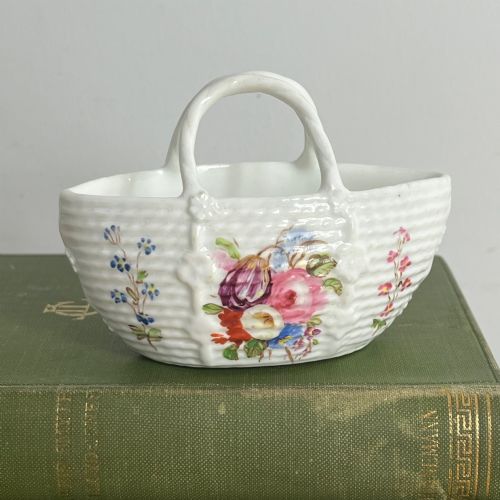
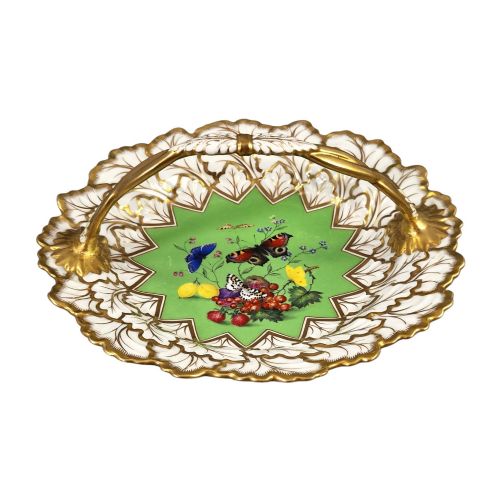
Potters shaped fine porcelain and soft-paste porcelain into intricate forms including shell-shaped dishes, oval dessert dishes, and woven baskets. Artisans applied rich gilding, gold leaf, and enamel details by hand to accent the central motifs.
Specialist painters decorated the surfaces with detailed landscapes, butterflies, flowers, and armorial bearings, sometimes signing or attributing work to noted hands such as Samuel Astles.
Listings include porcelain, soft-paste porcelain, enamel, gold leaf, and gilt across Regency and Georgian periods.
What varies in quality
The distinction between ordinary and exceptional pieces lies in the ambition and execution of the handpainted decoration. Top-tier examples feature complex topographical scenes, intricate Imari patterns, or detailed botanical studies rather than standard floral repeats.
The crispness of the porcelain moulding, the preservation of the delicate gold leaf and gilding, and the presence of named topographical views or armorial crests elevate individual items significantly.
Flight Barr And Barr·Barr Flight And Barr
The Flight Barr Barr Dish Glossary
- Soft-paste porcelain
- A type of ceramic body composed of clay and glass-like frit fired at lower temperatures, producing a warm glaze texture seen in early Worcester pieces.
- Imari
- A decorative style inspired by Japanese export wares, utilising iron red, underglaze blue, and generous gold leaf gilding.
- Armorial
- A ceramic service or individual dish decorated with a family crest or coat of arms, commissioned by landed gentry.
- Topographical
- A painted view depicting a specific real-world location, such as Binstead Cottage or Aberystwyth Castle.
- Sauce tureen
- A covered ceramic vessel designed for serving sauces or gravies at formal dining tables, often supplied with matching stands.
Flight Barr Barr Dish: Frequently Asked Questions
What periods do these pieces come from?
The pieces originate primarily from the Regency and Georgian eras, spanning the late eighteenth century through the early nineteenth century.
Most dated items cluster around the years between eighteen hundred and eighteen thirty, corresponding to the height of the Worcester factory under Flight, Barr and Barr.
How were these dishes used originally?
Wealthy households used these porcelain pieces during formal dining and dessert courses to serve sweet dishes, fruit, or sauces.
Larger baskets and centrepieces sat as ornamental focal points on the table before guests partook from matching plates and dessert dishes.
How do I identify a Flight Barr Barr piece?
Look for fine porcelain bodies paired with distinct handpainted motifs such as exotic birds, shells, landscapes, and Japanese-inspired dragon patterns.
Many items feature rich gilding and specific forms like shell-shaped dishes, oval dessert plates, or woven porcelain baskets typical of the Worcester manufactory.
Can I use these antique dishes for food?
These fragile porcelain antiques are generally intended for display and collection rather than daily dining use.
Gentle handling and careful handwashing preserve the delicate enamel colours and gold leaf gilding applied over two centuries ago.