


Regency Porcelain Dessert Dish
A regency porcelain dessert dish brings botanical painting and armorial crests to the table, offering a glimpse of grand nineteenth-century dining.
Regency Porcelain Dessert Dish
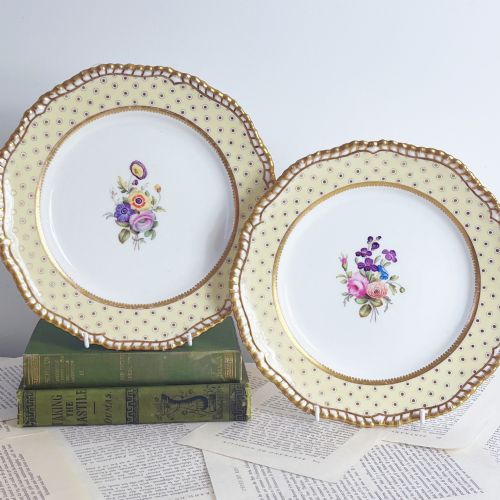
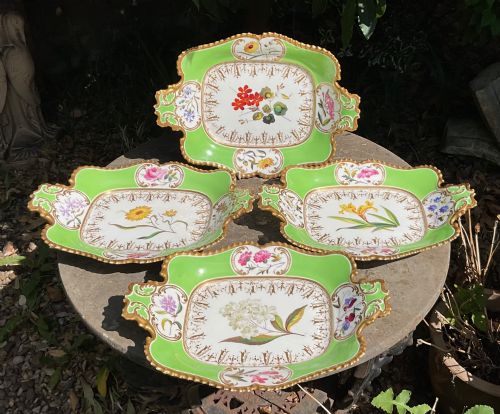
A regency porcelain dessert dish forms part of a grand service intended for the final course of a formal meal. These pieces appear as individual plates, shaped serving dishes, or porcelain baskets designed to hold fruit and sweetmeats.
The versions most common on this page date from the early nineteenth century during the Georgian and Regency periods. Makers produced these wares in shapes ranging from round plates to moulded oval dishes and shell forms.
English manufactories such as Worcester, Derby, and Coalport dominate the selection. Their output displays a shift from classical botanical painting to rich armorial decoration and Imari patterns.
Materials and manufacture
Potters utilised fine porcelain, ironstone, and earthenware bodies to shape these dessert wares. Ironstone provided a heavier, robust alternative to standard porcelain for busy dining rooms.
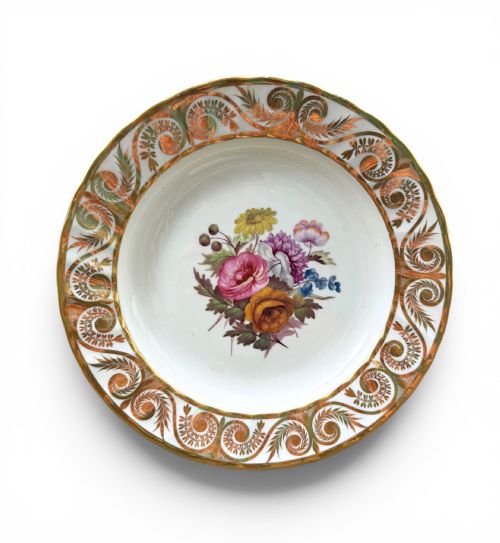
Decoration relied heavily on hand painting, particularly for botanical studies and topographical scenes. Artisans applied gold leaf and gilding to highlight borders, rims, and moulded motifs.
Listings feature porcelain, ironstone, and earthenware alongside decorative applications of gold leaf, gilding, and enamel across the Regency and Georgian periods.
Assessing quality and craftsmanship
The distinction between standard production and the finest work rests on the execution of the painting. Pieces painted by named artists or featuring detailed botanical and armorial subjects sit at the upper end of the scale.
Moulding and gilding further separate the tiers of manufacture. Crisp relief moulding, such as acanthus leaves, combined with heavy burnished gold leaf indicates superior workshop practice.
Spode Felspar·Chamberlains Worcester·Bloor Derby·Flight Barr And Barr·Masons Patent Ironstone
The Regency Porcelain Dessert Dish Glossary
- Armorial
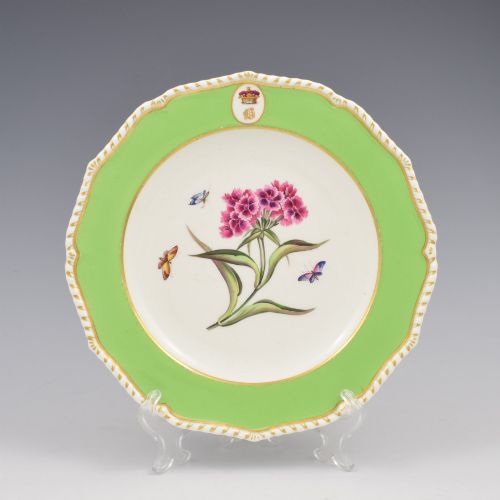
- Bearing a coat of arms or crest. These bespoke commissions identified elite families across Britain.
- Felspar
- A type of porcelain body introduced by Spode. It incorporated feldspathic rock to improve durability and whiteness.
- Imari
- A decorative style inspired by Japanese export wares. It typically employs a palette of underglaze blue, iron red, and gold gilding.
- Ironstone
- A durable earthenware patented by Mason. It offered a strong alternative to porcelain for heavy domestic use.
Regency Porcelain Dessert Dish: Frequently Asked Questions
How were these dishes used at the table?
These dishes formed part of the dessert course, which followed the main dinner. They held fruits, sweetmeats, and confections at the conclusion of formal meals.
Servants presented them down the centre of the table as both functional tableware and decorative display items.
Can I use them for serving food today?
While these pieces remain structurally sound, modern dishwashers and microwaves will damage the historic glaze and gilding. Hand washing in warm water is essential for their preservation.
Many collectors prefer to display them on plate stands or use them only for dry presentation rather than daily dining.
How do I distinguish Regency pieces from later ceramics?
Regency ceramics display specific paste characteristics, such as the translucent body of contemporary porcelain or the heavy weight of early ironstone. Hand-painted botanical subjects and specific factory marks from this era help confirm the date.
Stylistic cues like acanthus moulding and specific pattern numbers connect the pieces directly to the early nineteenth century.
What does an armorial crest indicate?
An armorial crest signifies that the service was custom-ordered for a landed family or peer. These bespoke commissions often featured the owner's coat of arms painted centrally or on the rim.
Such details elevate the historical importance of the individual dish within a service.