


Antique Green Rim Plate
An antique green rim plate brings rich colour and historic character to a table, offering a striking display piece for collectors of fine ceramics and glass.
Antique Green Rim Plate
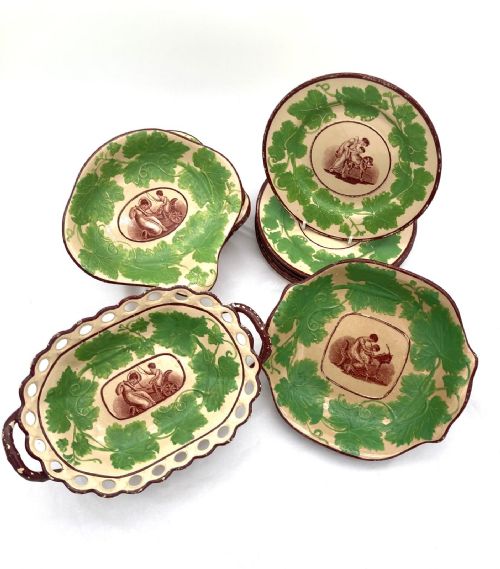
An antique green rim plate comprises serving wares, cabinet dishes, and display plates produced across various centuries. These pieces encompass porcelain, bone china, earthenware, and vaseline glass, often featuring distinct green borders.
The selections span extensive periods, ranging from pre-sixteenth century celadon bowls to eighteenth-century faience and twentieth-century porcelain. The primary forms encountered include cabinet dishes, dessert service items, and decorative bowls.
Makers and origins vary from English porcelain houses like Royal Doulton and Bloor Derby to French faience by Veuve Perrin and continental silver-plated tablewares. Each item demonstrates the specific stylistic preferences of its era, from rococo revival to art nouveau.
How they were made
Ceramic pieces utilise porcelain, bone china, and earthenware, shaped and fired before receiving hand-painted or bar-printed decorations in enamel and gilt. Faience methods employ tin-glazed earthenware painted directly onto the raw glaze.
Glass and metal combinations involve green vaseline glass paired with silver-plated mounts and centrepiece frames. These mixed-media items require specialised metalworking alongside glass pressing or blowing techniques.
Listings feature items spanning from pre-sixteenth century Asian ceramics to twentieth-century English porcelain, utilising materials from gilt and enamel to vaseline glass.
What varies in quality
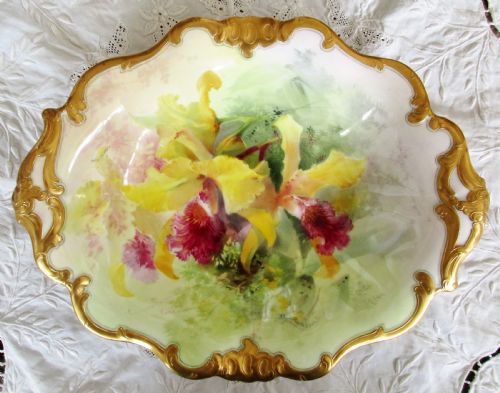
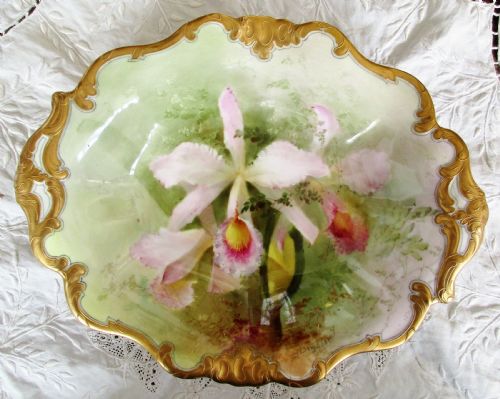
The precision of hand-painted botanical details, such as named orchid studies by specific artists, distinguishes finer cabinet porcelain from standard production. The clarity and depth of the green glaze, whether on celadon or vaseline glass, dictate visual appeal.
The preservation of delicate gilt highlights, gold leaf, and enamel work determines the surviving integrity of each dish. Additionally, the quality of the silver plating and the structural stability of mounting frames influence overall execution.
Royal Doulton·Bloor Derby·Royal Crown Derby·Veuve Perrin·David Dewsberry·WMF
The Antique Green Rim Plate Glossary
- Cabinet dish
- A decorative plate intended for display in a cabinet rather than for regular dining use. These often feature elaborate hand-painted subjects.
- Vaseline glass
- A type of glass containing uranium dioxide, which produces a characteristic yellowish-green colour and glows under ultraviolet light. It frequently appears in Edwardian tablewares.
- Faience
- Tin-glazed earthenware produced in continental Europe, notably in France, featuring opaque white glazes painted with coloured enamels.
- Celadon
- A term for ceramics denoting a pale green jade-like glaze originating in East Asia, seen on early wares with foliate rims.
- Dessert service
- A matching set of plates and serving dishes specifically designed for the final course of a formal meal.
Antique Green Rim Plate: Frequently Asked Questions
How are antique green rim plates displayed?
Cabinet plates and dishes are traditionally shown using wire wall hangers or dedicated display stands within glass-fronted furniture. This keeps them safe from accidental knocks while allowing the painted rims and central motifs to be appreciated.
Open serving bowls and centrepieces suit dining tables or sideboards, where their green glass or ceramic tones complement surrounding interior decor.
Can these plates be used for serving food?
Most antique cabinet dishes and hand-painted earthenwares are intended primarily for display or light dessert service rather than daily dining. Historic glazes and delicate enamels can wear down with frequent cutlery contact or harsh dishwashing.
Gentle hand washing in lukewarm water with mild soap is recommended for pieces that see occasional use on the table.
What periods do these plates come from?
The available selection spans from pre-sixteenth century East Asian celadons through eighteenth-century French faience up to early twentieth-century English porcelain. Each era utilises distinct manufacturing methods and stylistic conventions.
Nineteenth-century pieces frequently showcase transfer printing alongside hand-painted highlights, reflecting changing industrial capabilities.
What is vaseline glass?
Vaseline glass is a transparent or translucent glass made with trace amounts of uranium to produce a distinctive yellow-green hue. It gained popularity during the late Victorian and Edwardian periods for decorative bowls and centrepieces.
When exposed to ultraviolet light, the glass emits a bright green fluorescence.