


Green Porcelain Dessert Plate
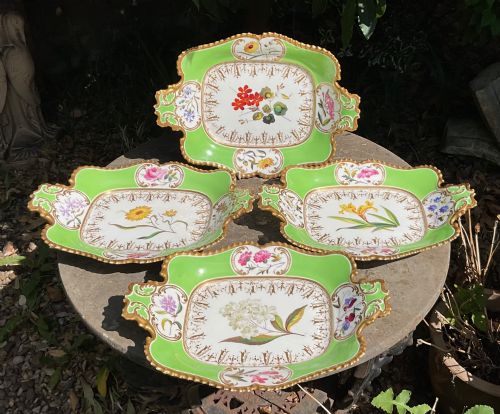
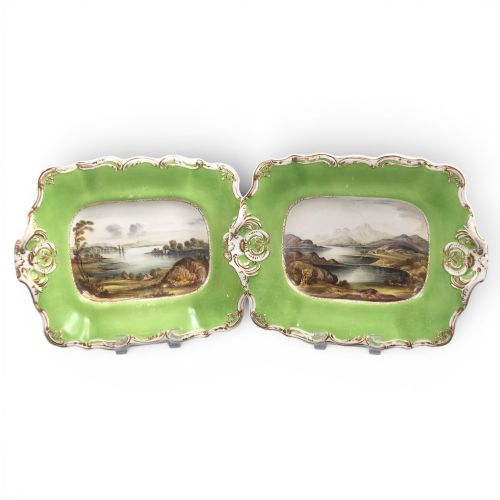
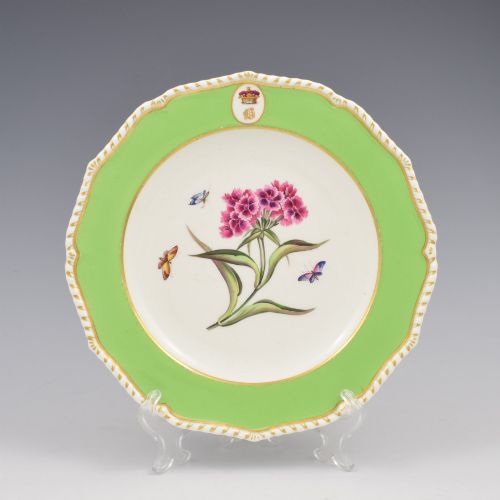
These green porcelain dessert plates bring bright botanical colour and gilded Regency form straight to the table.
Green Porcelain Dessert Plate
A green porcelain dessert plate sits at the formal end of nineteenth century dining, designed specifically for the final course of a meal. These pieces range from cabinet plates meant purely for display to usable dessert service dishes carrying botanical studies and armorial crests.
Most examples met on this page belong to the Regency, Georgian, and early Victorian periods. Makers from Worcester, Derby, Stoke, and Yorkshire shaped these items into circular and shaped plates alongside matching serving dishes.
The dominant aesthetic pairs apple green borders with hand-painted floral reserves and heavy gilding. Buyers frequently encounter individual plates as well as matched pairs and surviving service components.
How they were made
Potters relied on fine porcelain and bone china bodies, shaped on wheels or pressed into moulds to create standard dessert plates and shaped serving dishes. Kiln firing fixed the hard paste body before artists applied coloured enamel grounds.
The characteristic green ground, often described as apple green, was hand-painted around central white reserves. Artisans then added botanical painting and details in gold leaf and liquid gilding before a final glaze firing.
Sweet William and roses bloom permanently on these porcelain borders, allowing owners to enjoy a summer garden indoors regardless of the weather.
What varies in quality
Quality rests in the precision of the hand-painting and the depth of the gilding. Botanical plates featuring named flowers show superior artistic skill compared to simple monochrome borders.
The crispness of the porcelain moulding and the richness of the green enamel ground distinguish standard production from premier factory output. Armorial crests and raised gold work indicate high status commissions.
Chamberlains Worcester·Copeland and Garrett·Bloor Derby·Spode·Minton·Rockingham·Royal Crown Derby
The Green Porcelain Dessert Plate Glossary
- Armorial
- Bearing a heraldic coat of arms. These personalised crests mark pieces commissioned for specific aristocratic families.
- Botanical plate
- A dish painted with accurate studies of flowers and plants. Popular in the Regency period, they often name the specimen on the reverse.
- Gilding
- The application of gold leaf or gold powder to ceramic surfaces. Rich burnished gilding marks higher quality nineteenth century tableware.
- Reserve
- A panel left white within a coloured border. Painters filled these spaces with floral sprays or landscape views.
- Soft paste porcelain
- An early ceramic composition fired at lower temperatures than hard paste. It possesses a warm glaze and slight translucency.
Green Porcelain Dessert Plate: Frequently Asked Questions
What were dessert plates used for?
These plates served the final course of a grand meal, which typically consisted of fruit, sweetmeats, nuts, and small iced cakes. They remained on the table after the main service was cleared away.
Because they carried delicate fruit and confectionery, they did not face the heavy use of dinner plates. This survival explains why many retain bright enamel colours and crisp gilding.
How do I date a green porcelain plate?
Dating relies on factory marks printed or painted on the reverse, alongside the style of the green ground and floral painting. Regency pieces often feature bright apple green with naturalistic botanical studies.
Shape and paste composition also offer clues, as early nineteenth century bodies differ noticeably from later Victorian or 1930s equivalents. Comparing the pattern number helps narrow the year of manufacture.
Can I use antique dessert plates today?
While these pieces were made for dining, most collectors treat them as decorative cabinet plates or display items. Hand-painted enamels and delicate gold leaf can fade or wear with modern washing.
If used for occasional dining, hand washing in warm soapy water without soaking is essential. Microwave use and dishwashers will permanently ruin the historic glaze and gilding.
Why are some plates marked with flower names?
Makers like Derby produced botanical dessert services where each plate displayed a different named flower specimen. This reflected Georgian and Regency fascination with botany and garden cultivation.
Painters copied illustrations from contemporary botanical magazines, ensuring accuracy. Finding the plant name handwritten on the reverse adds significant interest for collectors.