
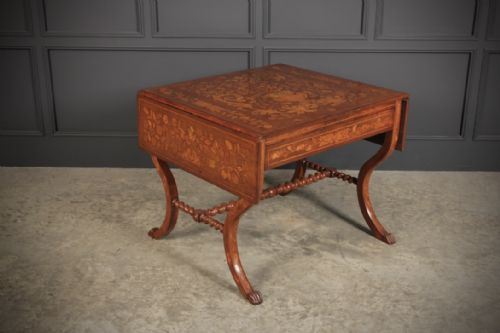


Floral Marquetry Occasional Table
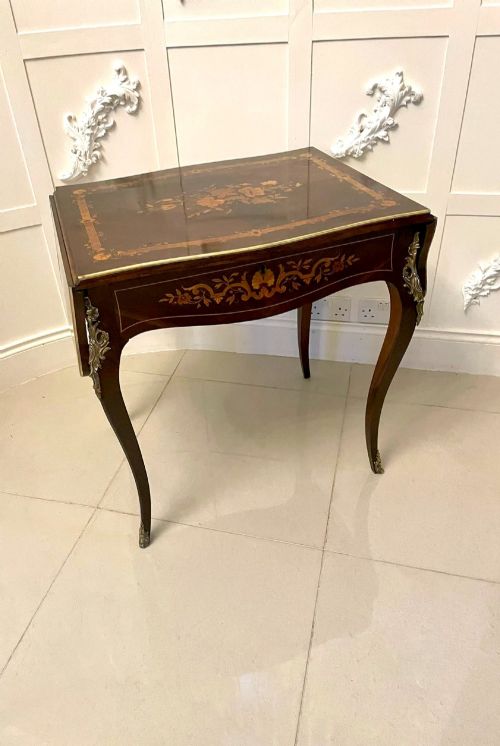
A floral marquetry occasional table brings patterned veneers and varied timber tones into a room, offering a small surface designed for display or daily use.
Floral Marquetry Occasional Table
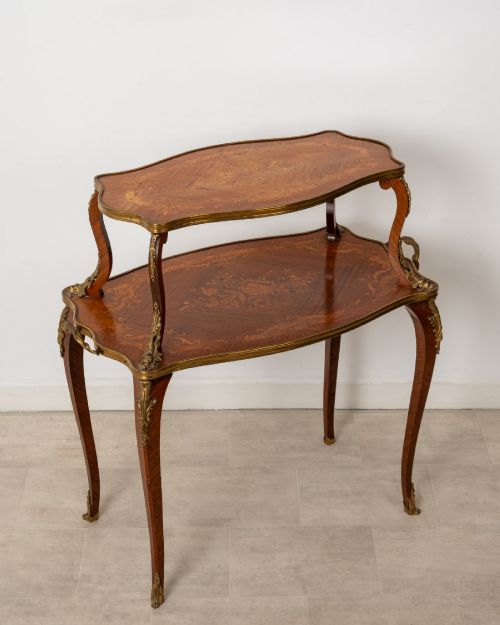
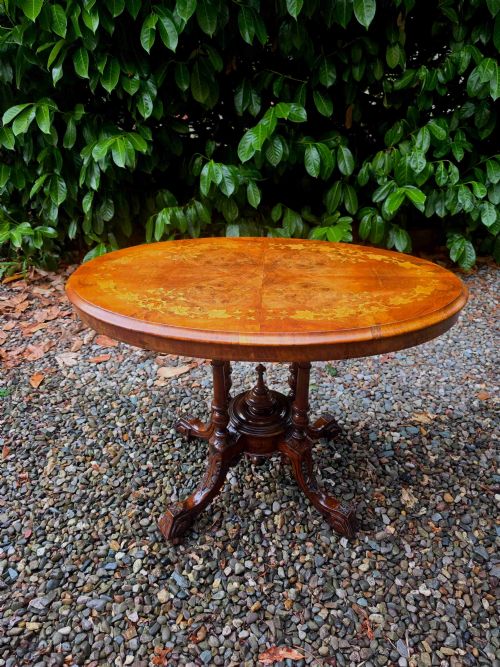
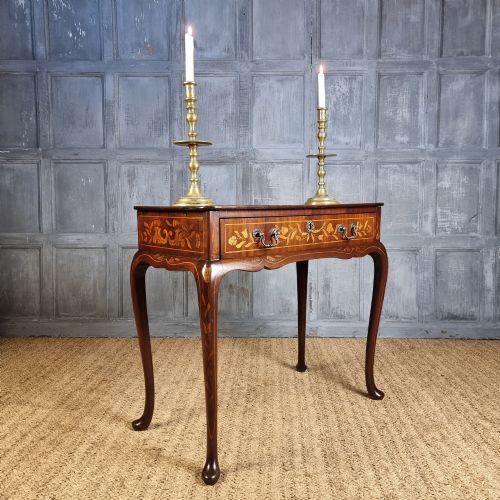
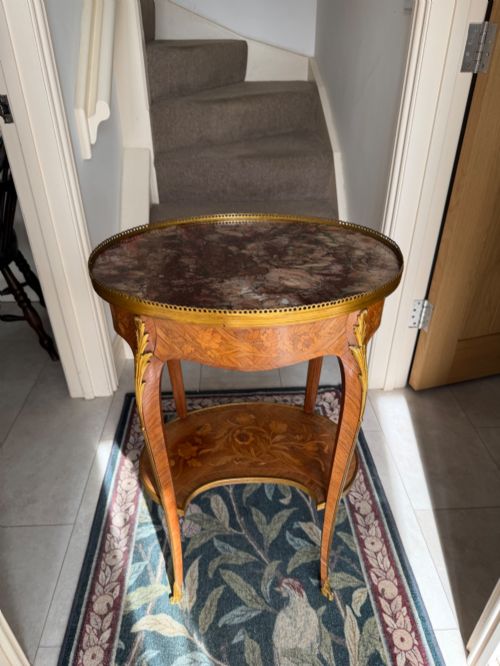
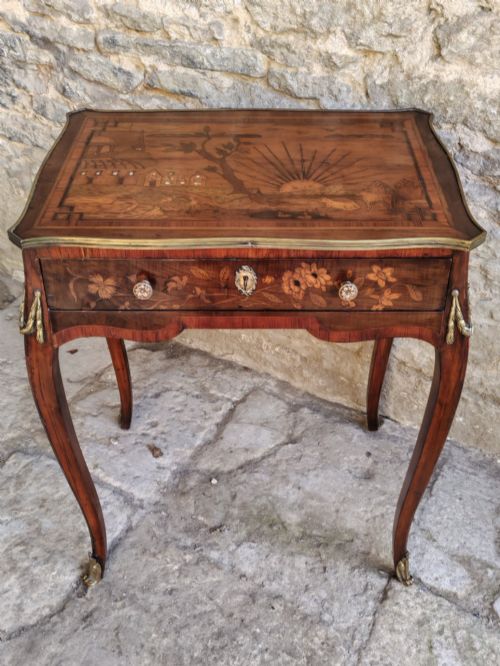
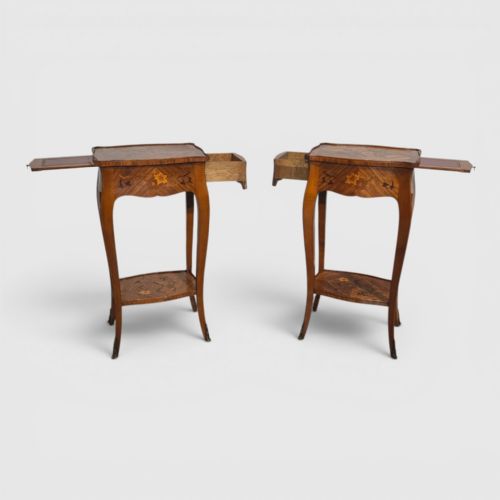
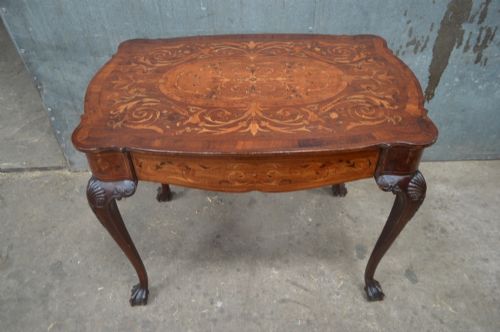
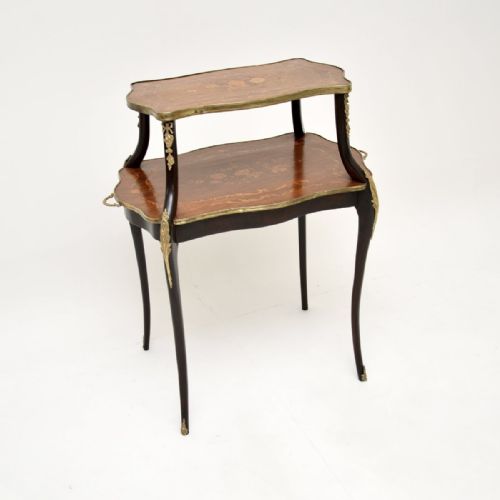
A floral marquetry occasional table is a small, decorative piece designed for flexibility of placement within a room, appearing frequently in Victorian and French revival guises. When searching for a floral marquetry occasional table, buyers encounter forms ranging from simple lamp tables and two-tier étagères to larger centre tables, sofa tables, and nests of tables. The construction spans the eighteenth, nineteenth, and early twentieth centuries, with French and Dutch pieces dominating alongside domestic Victorian examples.
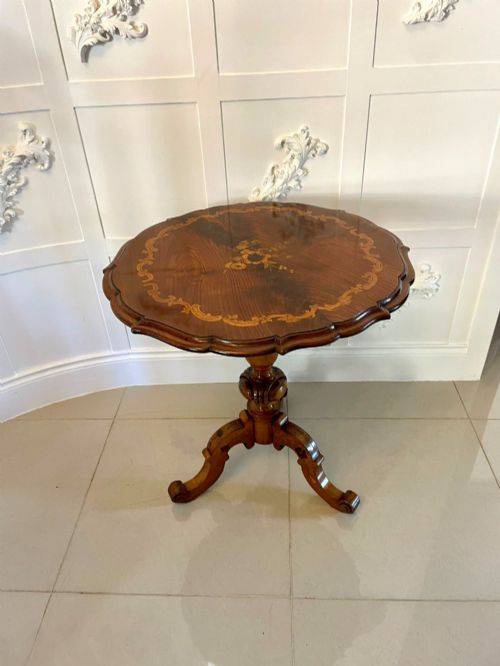
These tables serve as functional display surfaces, often positioned beside seating or in reception rooms to hold lamps, small ornaments, or books. The structural typology varies widely, taking the form of oval Sutherland tables, drop-leaf surfaces, pedestal stands, and kidney side tables. Originating across different European centres, they reflect changing tastes from eighteenth-century provincial work to ornate nineteenth-century revivals.
What Varies in Quality
The distinction between tiers of quality rests heavily on the crispness and complexity of the wood inlay. Superior examples display tightly fitted floral motifs with a rich variety of natural timber tones, whereas lesser pieces rely on simpler, repetitive geometric or floral arrangements with less tonal nuance.
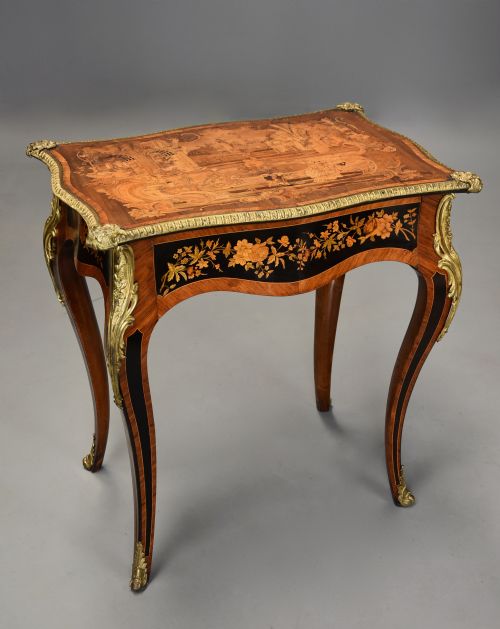
The quality of the secondary framing materials, such as heavy ormolu mounts, finely cast brass galleries, and robust structural joinery, elevates a piece significantly. Cabinetwork that maintains stability across delicate legs, drop leaves, or multiple tiers without sagging demonstrates superior nineteenth-century or earlier craftsmanship.
The listings on this site record floral marquetry occasional tables spanning the eighteenth, nineteenth, and early twentieth centuries, constructed in walnut, rosewood, kingwood, and mahogany.
Edwards & Roberts
The Floral Marquetry Occasional Table Glossary
- Marquetry
- A decorative technique of applying thin veneers of wood and other materials to a structural ground to form pictorial or floral patterns. This forms the primary visual identity of the pieces listed.
- Kingwood
- A dense, heavy tropical timber with dark violet-brown and golden stripes, frequently utilised in fine French cabinetwork. It provides a rich, contrasting border for floral inlays.
- Ormolu
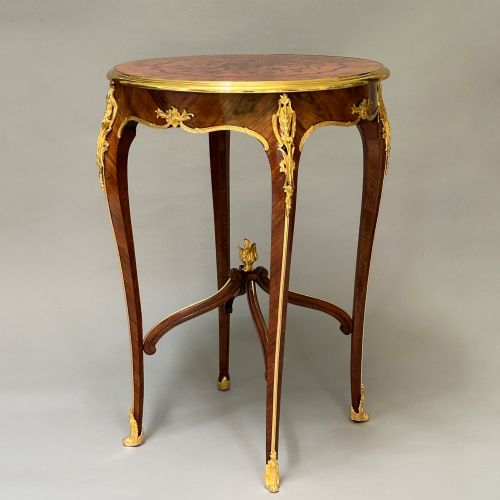
- Gilt-bronze mounts applied to furniture for decorative effect, commonly seen on French revival pieces. It frames the marquetry panels and reinforces structural corners.
- Étagère
- A small open shelving unit or multi-tiered occasional table designed for display. These pieces often feature two or three graduated tiers connected by slender uprights.
- Gueridon
- A small round occasional table supported by a central pedestal or slender legs. They frequently showcase elaborate floral table tops.
Floral Marquetry Occasional Table: Frequently Asked Questions
What is a floral marquetry occasional table used for?
These pieces function primarily as movable display or side surfaces within a drawing room or parlour. Historically, they held small lamps, decorative ornaments, writing materials, or sewing implements.
Today, owners utilise them as accent tables beside seating or as freestanding display stands where the detailed timber inlay can be viewed from above.
How do I date a floral marquetry occasional table?
Dating relies on examining the underlying secondary woods, structural joinery styles, and the prevailing decorative taste of the period. Pieces marked by nineteenth-century French revivals often mimic eighteenth-century forms through the use of kingwood and ormolu.
Victorian English examples typically employ burr walnut or mahogany carcases combined with distinct nineteenth-century turning and stretcher arrangements.
Are French and Dutch tables different?
French examples from the nineteenth century generally favour refined kingwood or rosewood grounds with restrained floral sprays, often influenced by Louis XV or Louis XVI revivals. Dutch pieces from the eighteenth and nineteenth centuries frequently feature dense, exuberant floral and bird marquetry executed across walnut or ebonised surfaces.
Dutch work also occasionally incorporates bone or ivory inlay within the floral arrangements, creating a distinct pictorial contrast.
How do I care for antique marquetry surfaces?
Maintenance requires keeping the wood away from direct sunlight and steady heat sources to prevent the thin veneers from drying or lifting. Gentle cleaning with a soft, dry cloth preserves the polished finish.
Applying a specialist wax polish sparingly helps nourish the timber grounds without dulling the contrasting inlay work.