






Sheraton Style Display Table
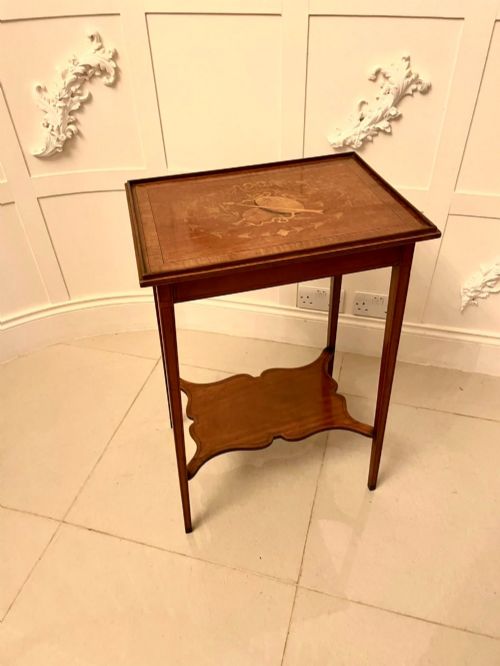
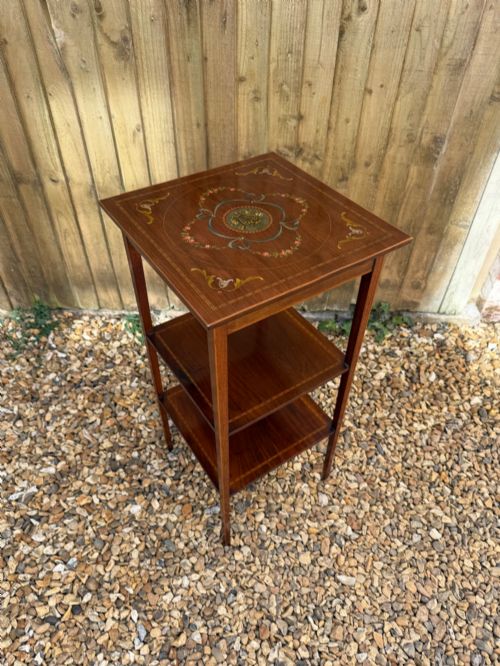
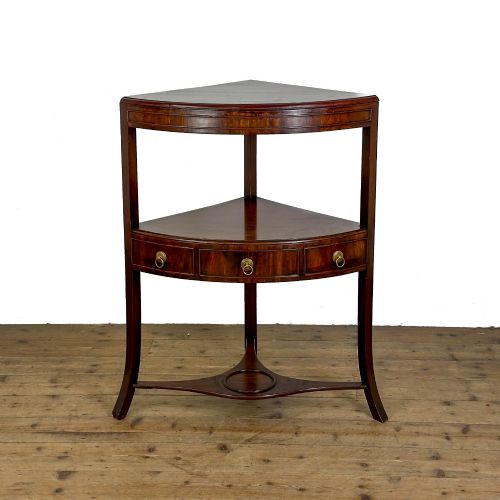
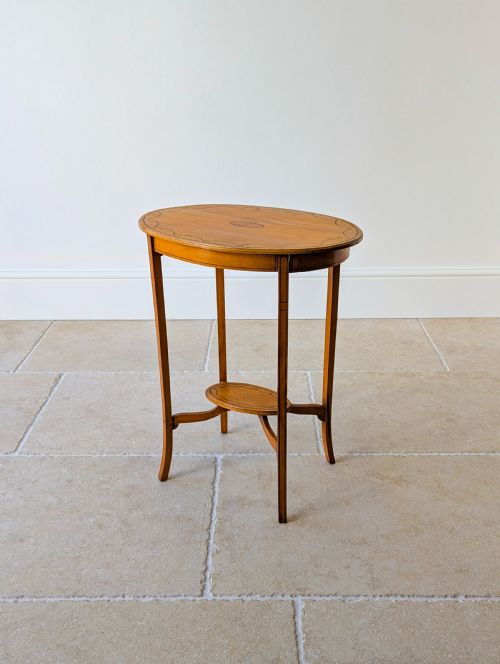
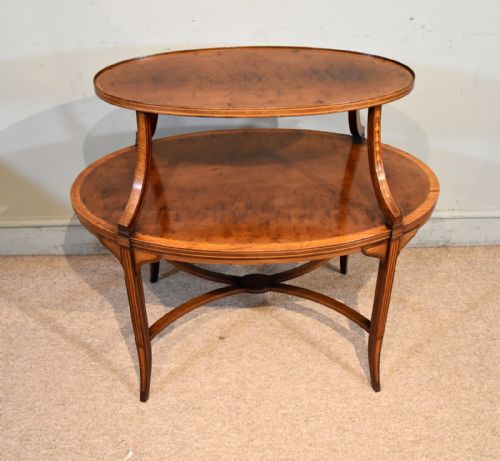
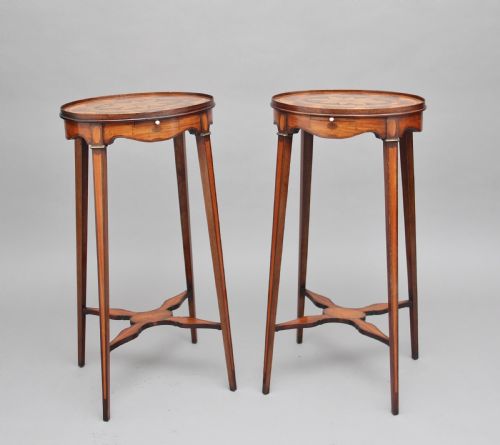
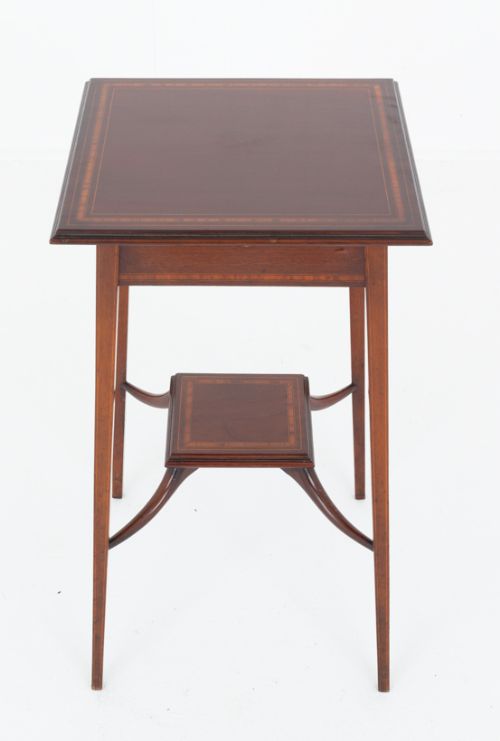
These Sheraton style display table pieces bring refined geometry and delicate inlay into a room to showcase small treasures.
Sheraton Style Display Table
A sheraton style display table encompasses forms designed to exhibit small objects while maintaining the light, classical proportions associated with late eighteenth-century design. The pieces appearing in this category span from original Georgian examples through to Edwardian revivals and later twentieth-century interpretations.
Buyers encounter forms ranging from bijouterie cabinets with glazed compartments to oval occasional tables and tiered étagères. Mahogany and satinwood predominate, frequently enhanced by contrasting boxwood inlay and marquetry motifs.
The aesthetic draws heavily on neoclassical restraint, favouring tapered legs, straight lines, and balanced geometric shapes over heavy carving. Whether built as a dedicated vitrine or a multi-tier display piece, each item is structured to lift decorative objects into view.
Materials and Construction
Cabinetmakers constructed these tables using solid mahogany or satinwood carcasses overlaid with fine veneers. Timber selection focused on grain figure and colour contrast, allowing lighter satinwood to frame darker mahogany panels.
Inlay work relied on boxwood and other contrasting woods cut into delicate lines, scrolls, and neoclassical urn motifs. Brass mounts, hinges, and glazed panels completed the construction of pieces designed for viewing internal contents.
Materials appearing across the collection include solid mahogany, satinwood veneer, brass hardware, and fitted velvet linings.
Factors Determining Quality
Quality rests on the precision of the cabinetwork and the fineness of the inlay. Crisp, tightly fitted boxwood lines and detailed marquetry distinguish superior pieces from simpler commercial output.
The choice of primary timber and secondary framing woods indicates the tier of production. Finer examples utilise well-figured satinwood and mahogany with clean joinery and intact original glazing.
Shoolbred of London·Edwards and Roberts
The Sheraton Style Display Table Glossary
- Bijouterie table
- A glass-topped table or cabinet specifically built to display small valuables, jewellery, and curiosities. The top or sides are glazed to permit inspection from above and around.
- Étagère
- A piece of furniture consisting of open shelves for displaying small objects or ornaments. These typically feature multiple tiers supported by slender uprights.
- Marquetry
- Decorative veneer work formed by fitting together small pieces of various woods, shells, or ivory to create pictorial or geometric patterns. This technique defines much of the ornamentation on revival pieces.
- Satinwood
- A hard, durable tropical timber known for its golden-yellow colour and natural sheen. It served as a primary surface wood for high-status neoclassical and revival furniture.
- Sheraton Revival
- A late nineteenth and early twentieth-century design movement that reinterpreted the light, neoclassical forms of Thomas Sheraton. Makers utilised classic motifs such as tapered legs, urns, and delicate stringing.
Sheraton Style Display Table: Frequently Asked Questions
What is a bijouterie table?
A bijouterie table is a glazed cabinet or table designed to display small decorative objects and personal treasures.
These pieces lift items into view while protecting them beneath glass tops and panels.
How do I spot Sheraton revival pieces?
Sheraton revival pieces date from the late nineteenth and early twentieth centuries, copying eighteenth-century neoclassical forms.
They combine lighter timbers like satinwood with precise boxwood inlay and slender tapered legs.
Where should I place a display table?
These tables suit drawing rooms, hallways, or reception spaces where natural light enhances the glazed display compartments.
Their compact footprints allow them to sit comfortably alongside larger seating arrangements without dominating the floor plan.
What woods were used for these tables?
Cabinetmakers primarily used mahogany and satinwood for the main carcase and veneered surfaces.
Boxwood and various contrasting timbers provided the fine stringing and marquetry details.