
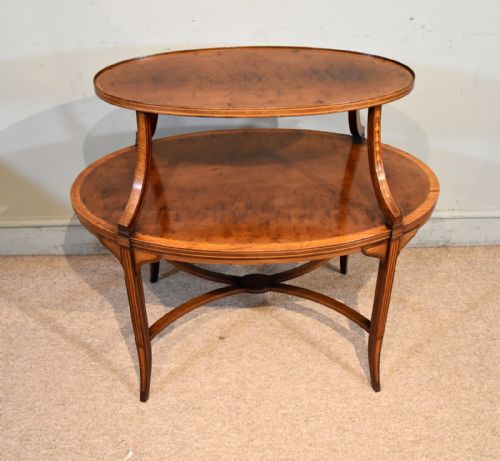


Edwardian Inlaid Etagere
An edwardian inlaid etagere brings tiered display space to a drawing room through delicate timber frames and contrasting wood decoration.
Edwardian Inlaid Etagere
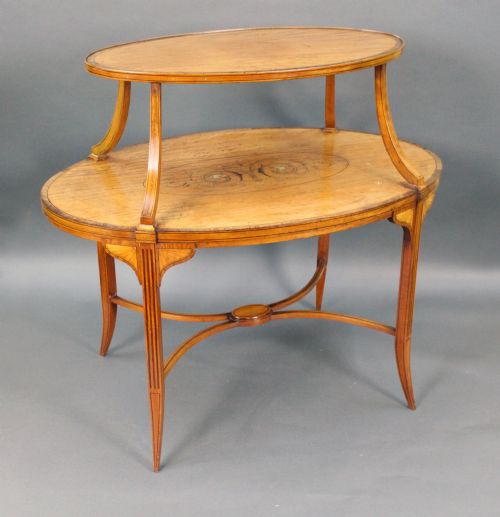
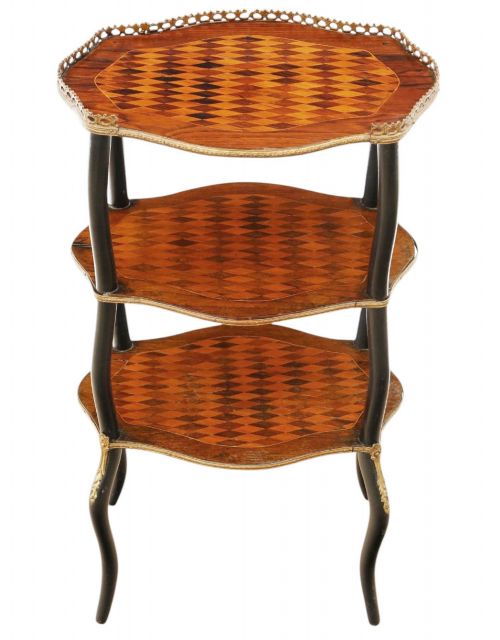
The edwardian inlaid etagere is a multi-tiered display piece designed for holding decorative objects or serving tea, merging utility with decorative display. These pieces frequently appear with two or three tiers, supported by slender uprights and constructed to stand light or occasional use.
Most examples found on this page date from the Edwardian period and the late nineteenth century, predominantly rendered in mahogany and satinwood. Alongside the classic two-tier occasional table form, buyers encounter variants featuring removable glass trays, serpentine edges, and oval or circular formats.
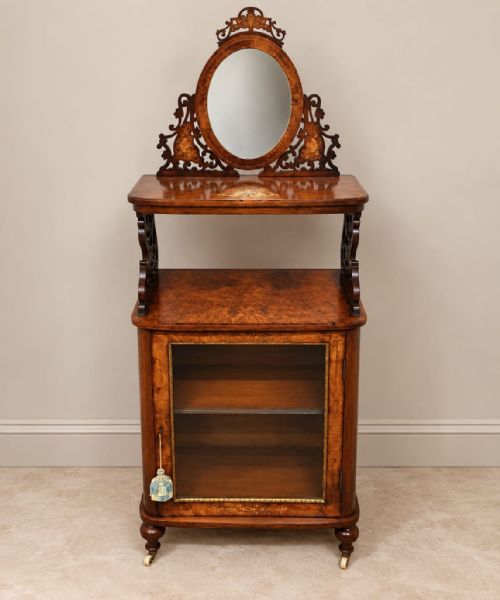
Makers of the period also adapted the form into corner whatnots and standing display cabinets, employing marquetry and satinwood inlay to ornament the surfaces. These variations reflect the diverse interior tastes of turn-of-the-century households while retaining the characteristic open tiers of the etagere.
How They Were Made
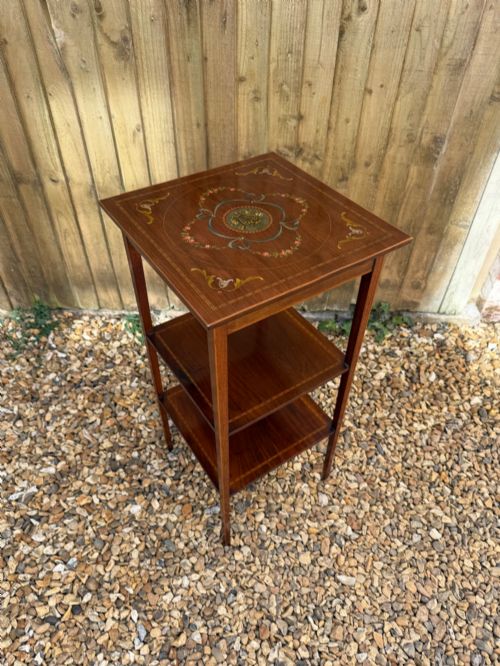
Craftsmen built these tables using solid and veneered timbers, pairing a mahogany or walnut foundation with contrasting satinwood and marquetry inlay. Artisans shaped intricate floral and geometric patterns into the wood surfaces using fine veneers, sometimes incorporating bone, ebony, or brass mounts.
Structural integrity relied on slender turned or tapered legs supporting multiple open shelves, frequently joined by lower undertiers for added stability. Certain versions incorporated brass handles or removable glass trays into the top tier to facilitate service and protect the timber underneath.
The furniture forms on this page span occasional tables, corner cabinets, and multi-tiered whatnots dating from the mid-nineteenth century to the early twentieth century.
What Varies in Quality
The refinement of the marquetry and the choice of primary timbers set superior examples apart from standard production pieces. Finely articulated satinwood stringing and complex floral inlay indicate a higher level of workshop execution.
Proportion and the handling of secondary woods also define the upper tier of the range. Tables possessing balanced tier heights, well-figured mahogany or burr walnut grains, and integrated handles demonstrate deliberate design choices rather than mass production.
The Edwardian Inlaid Etagere Glossary
- Etagere
- A piece of furniture consisting of a set of open shelves for displaying small objects. This form gained popularity in the nineteenth century for drawing room display.
- Marquetry
- Decorative woodwork in which delicate pieces of various coloured woods are fitted into a veneer to form geometric or pictorial designs. It transforms flat tabletop surfaces into decorative panels.
- Satinwood
- A durable timber with a golden sheen, frequently used for contrasting stringing and banding on darker woods like mahogany. It forms the visual highlight of many inlaid pieces.
- Whatnot
- A standing set of open shelves used for books or ornaments, closely related in form and function to the etagere. Victorian and Edwardian examples often feature corner configurations.
- Stringing
- Thin strips of contrasting wood inlaid into channels cut into the surface of a furniture piece. This technique outlines drawers, table edges, and tabletops.
Edwardian Inlaid Etagere: Frequently Asked Questions
What is an edwardian inlaid etagere used for?
These pieces served primarily as decorative display stands in formal sitting rooms for small ornaments, ceramics, and tea services. Their multiple tiers maximised display capacity without dominating the floor space.
Today, they function well beside armchairs or against walls to hold lamps, books, or collections of small objects while maintaining an open feel in a room.
Where should I place an etagere in a modern room?
The open structure and slender profile allow these tables to fit comfortably in corners, beside sofas, or against free wall spaces where heavy furniture would feel too bulky. Their reflective surfaces and light timbers help brighten darker room angles.
Avoid placing them in direct sunlight or near heat sources to protect the delicate veneers and natural wood finishes from drying out.
How do I care for the inlaid wood surface?
Maintenance requires gentle dusting with a soft, dry cloth and occasional application of appropriate furniture wax to nourish the timber. Moisture and heat can damage the delicate marquetry and lifting veneers, so coasters and mats are recommended.
Keeping the piece away from rapid temperature changes prevents the mahogany and satinwood from warping or cracking over time.