


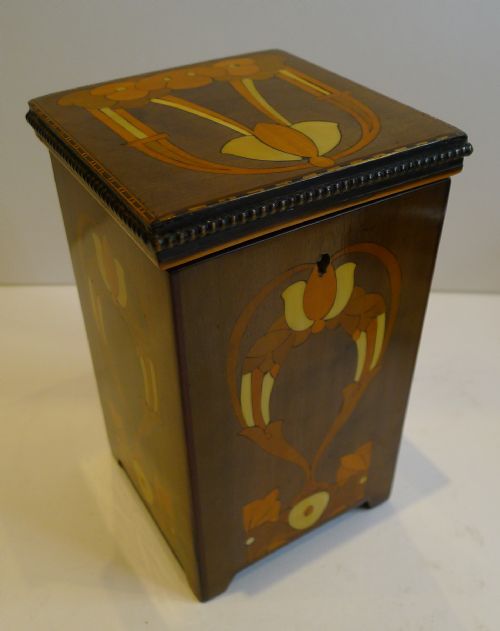
Floral Inlay Caddy
These floral inlay caddy pieces bring the fine cabinet-work of past centuries straight to the tabletop.
Floral Inlay Caddy
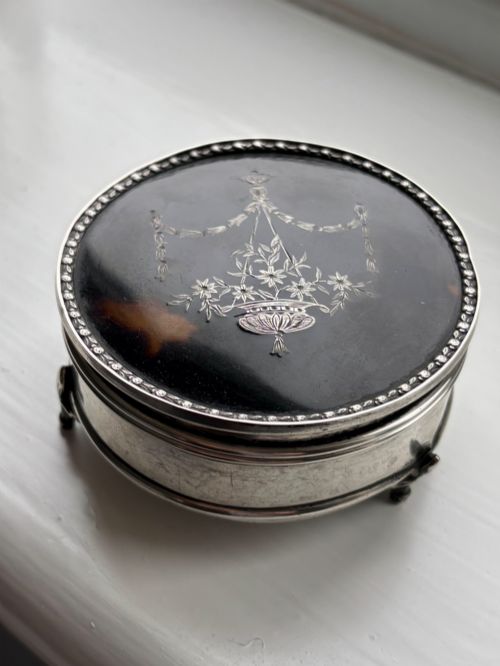
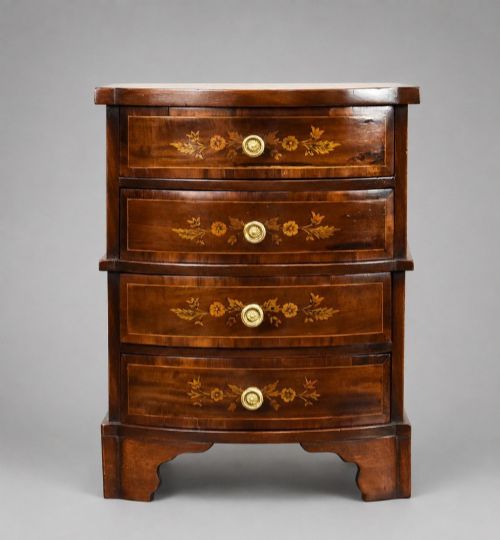
When you search for a floral inlay caddy, you are looking at small wooden containers designed to store tea leaves, alongside related boxes and miniature furniture found on this page. These pieces date from the eighteenth century through the Edwardian period and the early twentieth century.
The version you are most likely to meet on this page is the tea caddy, fashioned from timbers like mahogany, harewood, rosewood, and burr yew, often embellished with detailed marquetry and wood inlay.
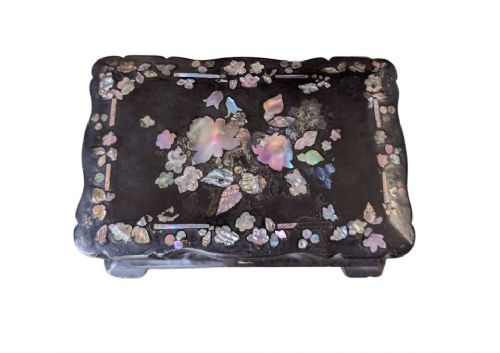
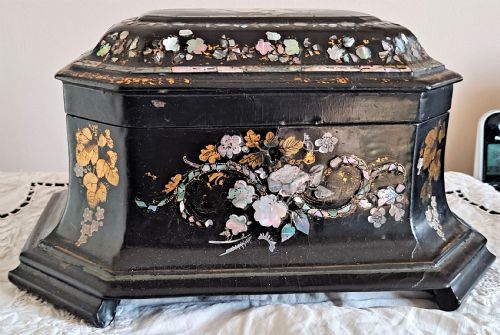
Makers shaped these containers into various forms including oval, hexagonal, and bow front profiles, sometimes incorporating materials such as brass, lacquer, and mother of pearl.
How they were made
Cabinet-makers constructed these pieces using solid timbers and fine veneers, carefully applying wood inlay and marquetry to create floral motifs across the surfaces. Techniques included contrasting different woods like satinwood and harewood to build up the detail of the flowers and leaves.
Papier-mâché serves as an alternative body material in some nineteenth-century examples, combined with mother of pearl inlay for a smooth, lustrous finish. Tunbridge ware represents another specialised technique seen in the listings, utilising tiny pieces of coloured wood assembled into precise geometric and pictorial designs.
What varies in quality
The distinction between a standard box and a superior piece lies in the precision of the marquetry and the choice of timbers, such as burr yew or figured harewood. Finer examples display meticulous control in the cutting and fitting of the floral inlay, creating sharp lines and balanced composition.
The sophistication of the internal fittings and the integrity of the original hinges and linings also mark the standard of execution. Pieces that retain their original structural harmony and subtle timber grain show the hand of a more accomplished workshop.
Ollivant and Botsford
The Floral Inlay Caddy Glossary
- Marquetry
- A decorative technique where pieces of veneer are fitted together to form pictorial designs on a wooden surface. Craftsmen used this method to render floral patterns across the lids and sides of caddies.
- Harewood
- Sycamore wood that has been stained grey, frequently utilised in fine Georgian and nineteenth-century cabinet-making. It provides a cool, pale background that makes inlaid floral details stand out.
- Tunbridge Ware
- A type of woodwork featuring mosaic designs built from thousands of tiny blocks of naturally coloured woods. This technique was centred in Kent and produced highly decorative small boxes and containers.
- Papier-mâché
- A composite material made from paper pulp mixed with glue and oil, then pressed and dried into a rigid form. It was heavily used in the Victorian era as a smooth base for lacquer and mother of pearl inlay.
- Burr Yew
- Wood taken from the gnarled growths of the yew tree, prized for its swirling, highly figured grain patterns. Cabinet-makers selected it for premium tea caddies to create rich, mottled visual textures.
Floral Inlay Caddy: Frequently Asked Questions
What is a floral inlay caddy?
A floral inlay caddy is a small wooden box decorated with botanical marquetry, originally built to store dry tea leaves securely.
These pieces reflect the prevailing decorative styles of the Georgian, Victorian, and Edwardian periods.
How do I date a tea caddy?
Dating relies on identifying the underlying timber, the construction methods of the box, and the style of the floral inlay. Cabinet-making techniques shifted noticeably from eighteenth-century Georgian proportions to heavier Victorian forms and later Edwardian designs.
Examining internal components and hinges also helps place the piece within its correct historical era.
Where were these boxes placed?
Tea caddies sat prominently on dining room sideboards or drawing room tables during an era when tea was an expensive, carefully guarded commodity.
Servants or hosts would unlock the container to measure out the leaves for each sitting.
How do I care for inlaid wood?
Inlaid wooden surfaces benefit from stable room environments away from direct sunlight and excessive humidity, which can dry out veneers.
Gentle dusting with a dry cloth keeps the polished timber and delicate marquetry in sound condition.