



Floral Inlaid Console
These floral inlaid console pieces combine timber and botanical marquetry across periods from the eighteenth century to the twentieth.
Floral Inlaid Console
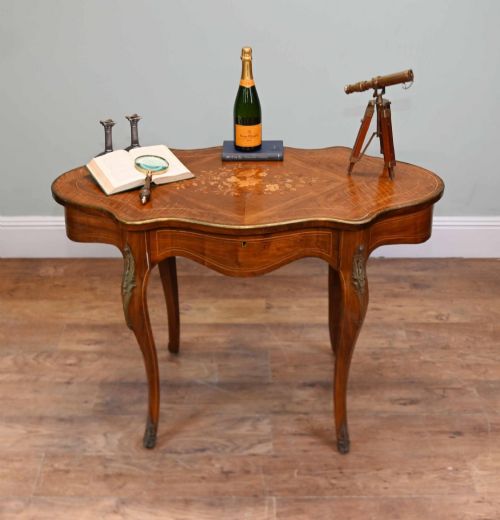
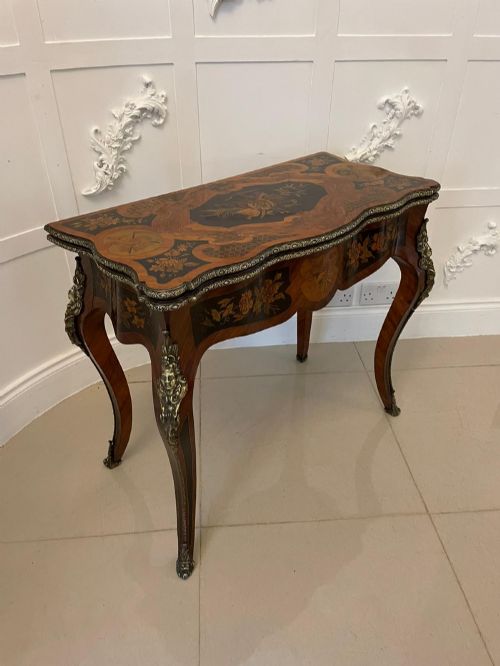
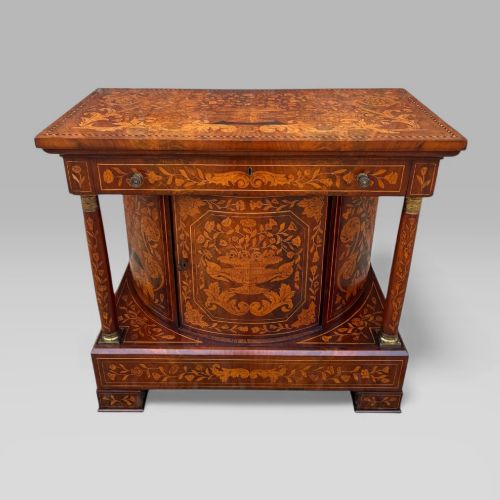
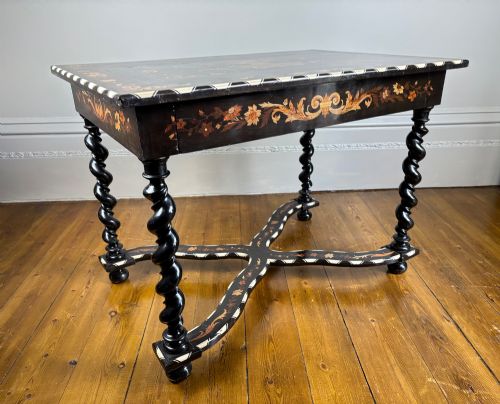
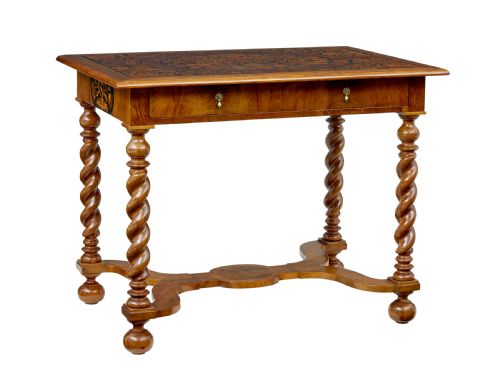
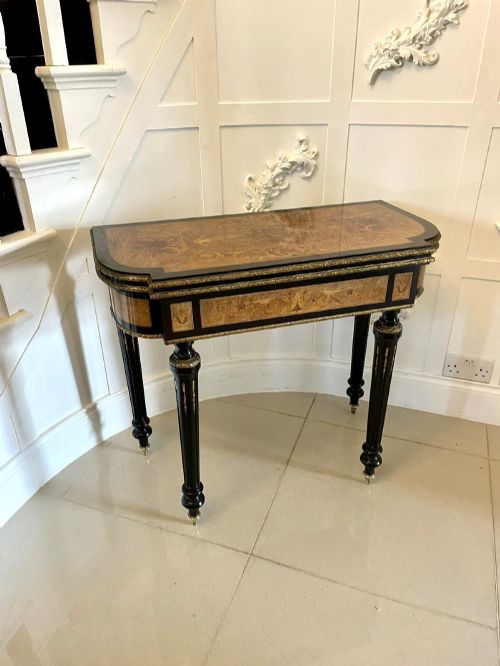
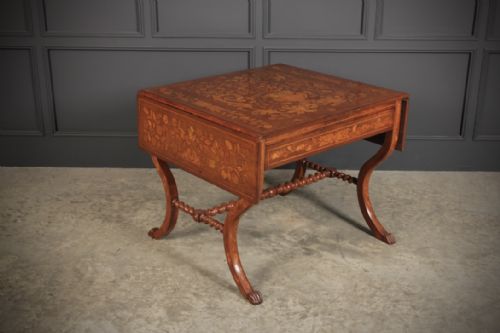
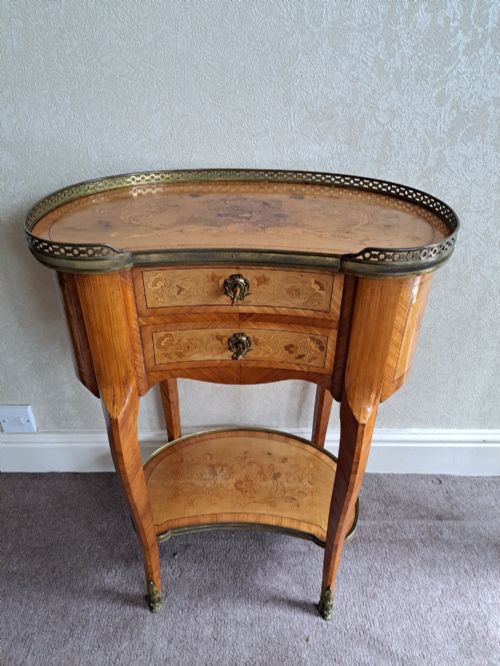
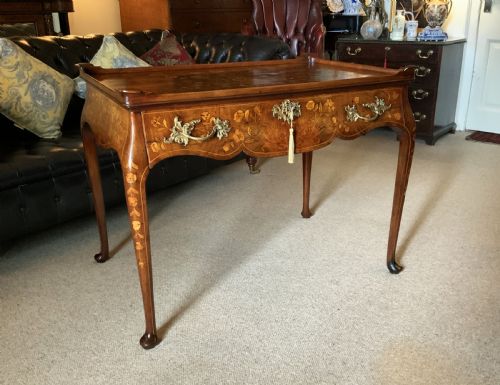
A floral inlaid console brings together varied table forms and cabinetry decorated with detailed wood marquetry. When you search for a floral inlaid console, you encounter side tables, card tables, centre tables, and occasional tables originating from Dutch and French workshops.
The pieces span the eighteenth and nineteenth centuries, including Victorian productions and Edwardian examples. Walnut and mahogany form the primary carcasses, decorated with fruitwood and varied timbers depicting floral and bird motifs.
Dutch Baroque and Rococo pieces sit alongside French Louis styles. Walnut card tables and serpentine side tables appear frequently alongside occasional tables and writing desks.
How they were made
Cabinet makers built the carcases using solid walnut, mahogany, rosewood, and kingwood, often applying veneers to stable underlying timbers. Marquetry panels used fruitwood and bone inlay to construct intricate floral and bird designs.
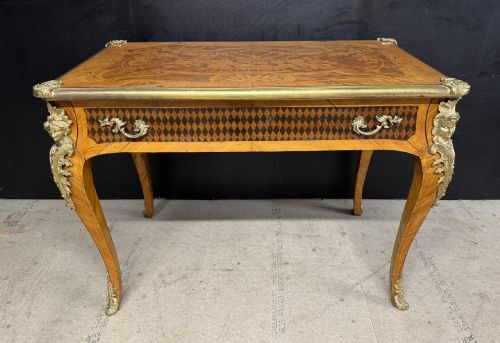
Ormolu mounts and brass details were cast and applied to corners and legs on French pieces, particularly during the Victorian period. Surface polish highlighted the grain variations of the underlying woods.
Floral Inlaid Console Retail Price Guide 2026
Typical asking prices for floral inlaid console among the pieces listed under this phrase on Sellingantiques today, from the lower quarter to the upper quarter. They describe what is for sale here now, not the wider market.
Listings feature walnut, mahogany, rosewood, kingwood, and fruitwood alongside brass and ormolu mounts.
What varies in quality
The precision of the marquetry cutting distinguishes standard pieces from superior examples. Finely executed floral motifs use contrasting timber tones and grain directions to create depth without relying on paint.
The integration of ormolu mounts and the selection of cabinet timbers such as kingwood and burr walnut indicate the ambition of the original workshop.
Henry Dasson
The Floral Inlaid Console Glossary
- Marquetry
- The decorative technique of applying thin pieces of wood veneer to a structure to form pictorial patterns and floral designs. This method defines the surface decoration of these tables.
- Ormolu
- Gilt bronze mounts used for decorative edging and feet on French furniture. It provides metallic contrast against dark timbers like walnut and kingwood.
- Console
- A table designed to stand against a wall, sometimes fixed in place. Many examples function as side tables or pier tables.
- Serpentine
- A curved line of furniture fronts, featuring a convex centre flanked by concave sides. This shape appears on eighteenth-century Dutch side tables.
- Demi-lune
- A half-moon shape used for console and serving tables designed to sit flat against a wall. This format accommodates inlaid folding tops.
Floral Inlaid Console: Frequently Asked Questions
How were floral inlaid consoles used?
These tables served primarily as display surfaces in formal rooms, hallways, and drawing rooms. Many designs functioned as multipurpose furniture, featuring folding tops for card games or writing surfaces.
Larger console tables stood against walls beneath mirrors, while smaller occasional and side tables held lamps or decorative items.
How do I distinguish eighteenth-century pieces?
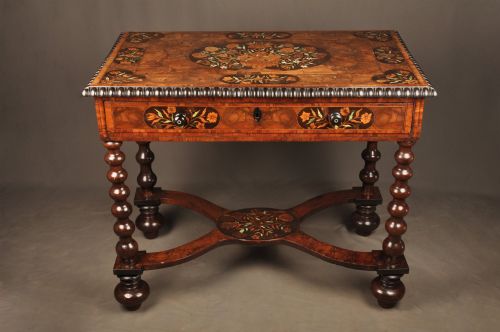
Eighteenth-century examples often originate from Dutch workshops, featuring dense floral and bird marquetry executed in walnut and fruitwood. Their forms follow Baroque and Rococo idioms with serpentine fronts and distinct leg profiles.
Nineteenth-century revivals display cleaner machine-cut veneers and different secondary timbers beneath the surface.
Where should I place a console table?
Place a console table against a primary wall in an entrance hall, living room, or dining space. They occupy minimal floor depth while offering surface area for lighting and decorative objects.
Keep them away from direct heat sources and strong sunlight to protect the aged veneer and polish.
What is the difference between French and Dutch styles?
French pieces frequently incorporate kingwood, rosewood, and ormolu mounts influenced by Louis XV and Louis XVI designs. The floral inlay tends towards symmetrical bouquets and ribbon motifs.
Dutch examples lean towards pictorial floral and bird compositions executed in walnut, often retaining a distinct Rococo or Baroque character.