
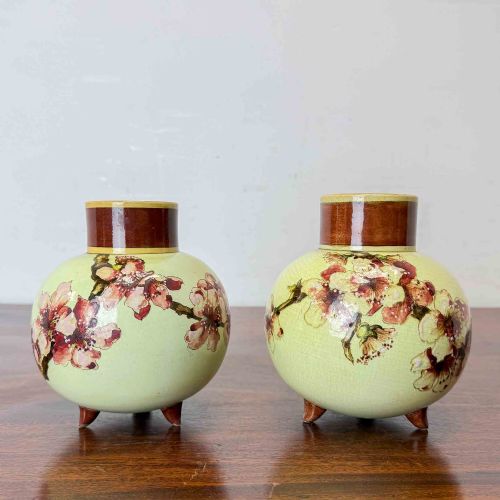


Floral Earthenware Urns
These floral earthenware urns and vases bring botanical decoration and ceramic form together across centuries of international production.
Floral Earthenware Urns
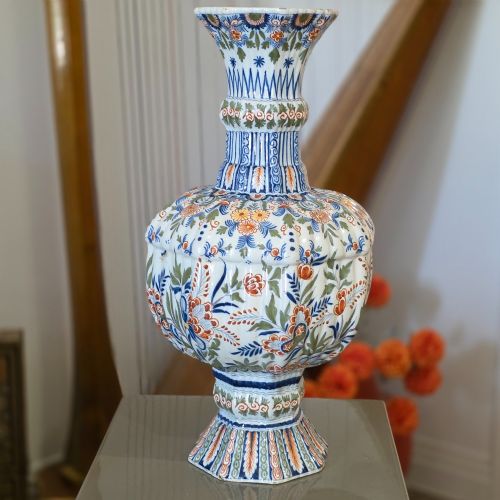
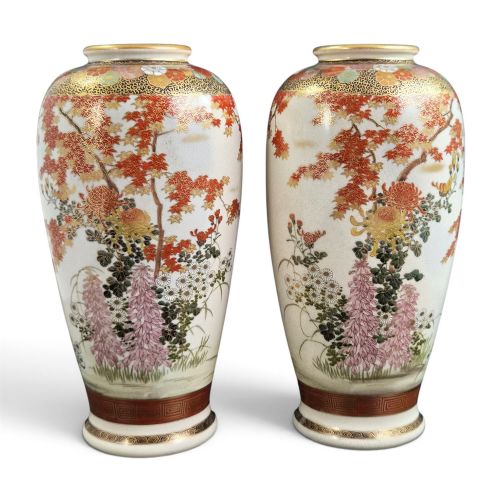
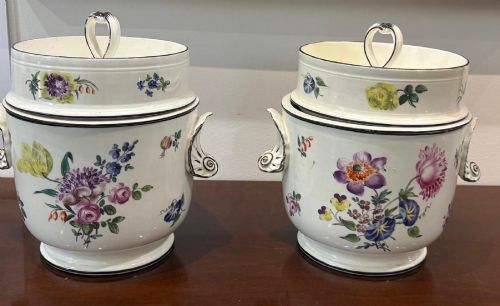
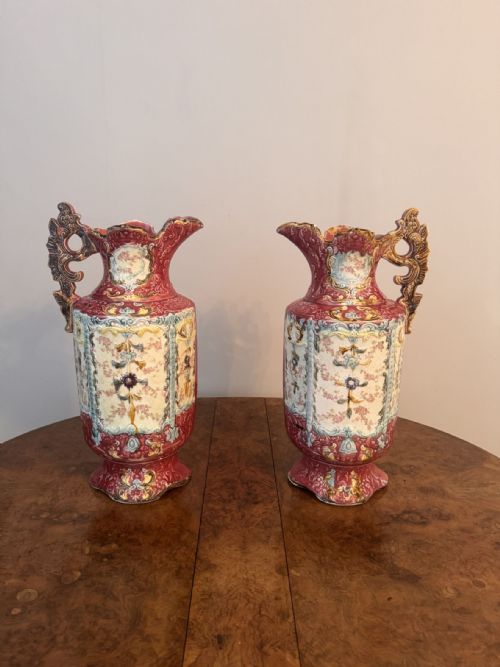
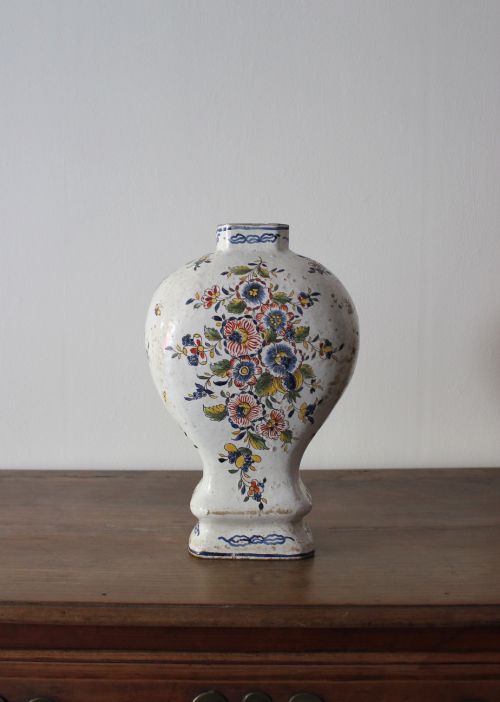
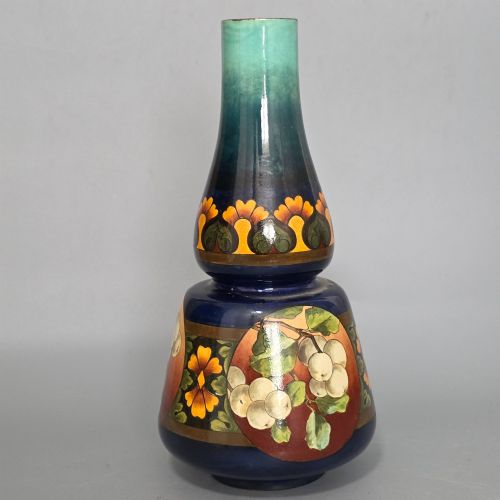
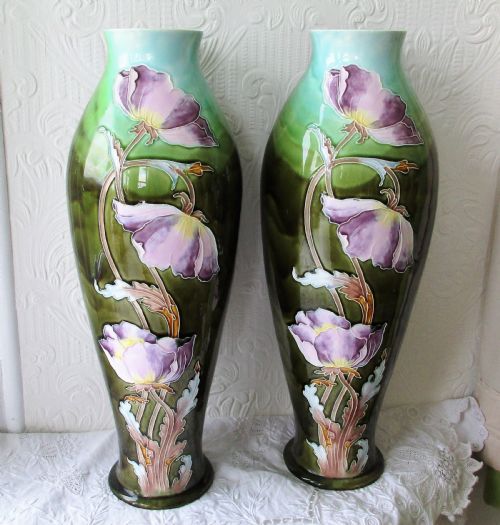
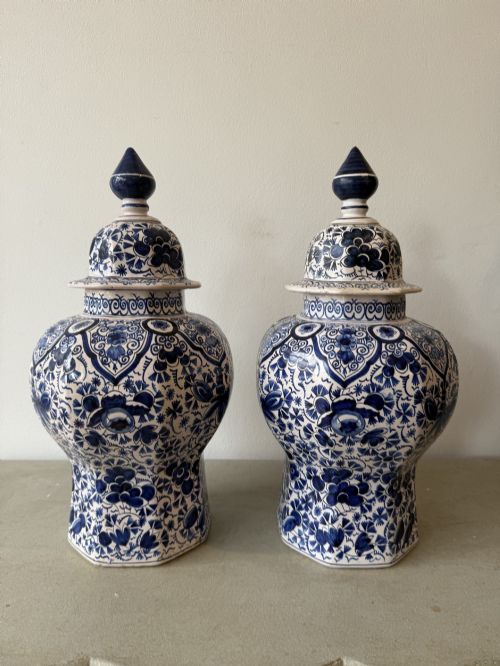
When searching for floral earthenware urns, buyers encounter a diverse selection of ceramic vessels shaped as vases, ewers, ice pails, and jardinieres. These objects originate from English, French, German, Dutch, Italian, and Japanese kilns.
The assortment spans several distinct periods, including the eighteenth century, the Victorian era, the Edwardian years, and the early twentieth century. Visitors frequently meet forms decorated with hand-painted botanical motifs, cobalt blue designs, and polychrome glazes.
Makers utilised various traditional shapes, ranging from large baluster vessels and lidded jars to smaller cabinet pieces and handled urns. Each example reflects the distinct aesthetic priorities of its specific geographic origin and period of manufacture.
How they were made
Potters shaped these vessels using earthenware bodies, creamware, ironstone, and specialised faience or tin-glazed compositions. Artisans applied liquid glazes to seal the porous clay base before subjecting the pieces to kiln firing.
Decoration involved hand-painting botanical patterns, floral sprigs, and garden scenes using enamel colours, underglaze blue pigments, and occasional touches of gilt or gold leaf. Certain workshops employed specialised techniques like intarsio printing or slip-trailing to build surface relief.
Kiln temperatures and glazing methods determined the final finish, producing either high-gloss reflective surfaces or softer, matte textures across the ceramic body.
Listings feature earthenware vessels spanning the eighteenth, nineteenth, and early twentieth centuries, produced across British, European, and Japanese workshops.
What varies in quality
The distinction between standard commercial output and superior execution rests upon the precision of the hand-painted botanical detailing and the crispness of the ceramic form. Master decorators achieved subtle tonal gradations in floral petals and leaves that lesser pieces lack.
The purity of the glaze and the success of the high-temperature firing dictate surface durability and visual depth. Superior examples display even glazing without distracting pooling or contraction flaws across the earthenware body.
Design ambition separates routine production from exceptional studio and factory creations. Pieces designed by notable artist-potters or produced for special exhibitions exhibit sculptural confidence and harmonious proportions.
Doulton Lambeth·Wileman·Minton·Burmantofts Faience·William Moorcroft·Poole Pottery·Kinkozan
The Floral Earthenware Urns Glossary
- Earthenware
- A porous pottery type fired at relatively low temperatures and rendered impermeable through the application of a glaze. It serves as the primary ceramic body for the vases and urns listed here.
- Faience
- Tin-glazed earthenware decorated with opaque coloured glazes, frequently associated with European pottery traditions. The technique produces a smooth, opaque white or tinted background ideal for painted floral scenes.
- Tin Glaze
- A lead glaze rendered white and opaque by the addition of tin oxide. It provides the traditional glossy surface found on historical Delftware vessels.
- Baluster
- An architectural shape featuring a rounded body that tapers toward the neck and stands upon a wider base. This profile appears frequently among larger vases and urns.
- Jardiniere
- A large decorative ceramic pot or container designed to hold potted plants or floral arrangements. They often feature multiple handles or heavy rims to support garden displays.
Floral Earthenware Urns: Frequently Asked Questions
What is the difference between earthenware and stoneware?
Earthenware is fired at lower temperatures than stoneware, leaving the underlying clay body porous rather than vitrified. This requires a complete glaze coating to hold water safely.
Stoneware bakes at much higher heat until the clay fuses into a dense, impermeable material. Most decorative nineteenth and twentieth-century floral urns and vases rely on the softer earthenware body for its receptivity to vibrant glazes.
How can I identify Japanese Satsuma ware?
Satsuma ceramics feature a distinctive ivory-coloured, finely crackled earthenware glaze decorated with polychrome enamels and raised gold details. The style developed in Japan during the Edo period and gained popularity during the Meiji era.
Many pieces carry painted or impressed maker signatures on the base. The floral motifs frequently incorporate traditional garden themes such as wisteria or chrysanthemum flowerheads.
Where were these urns displayed historically?
Owners placed large decorative vases and urns on pedestals, mantelpieces, and entrance hall tables during the nineteenth and early twentieth centuries. Jardinieres sat on plant stands or windowsills to hold indoor greenery.
Smaller lidded vessels served as mantel garnitures or cabinet display items. They functioned primarily as ornamental focal points within formal reception rooms.