


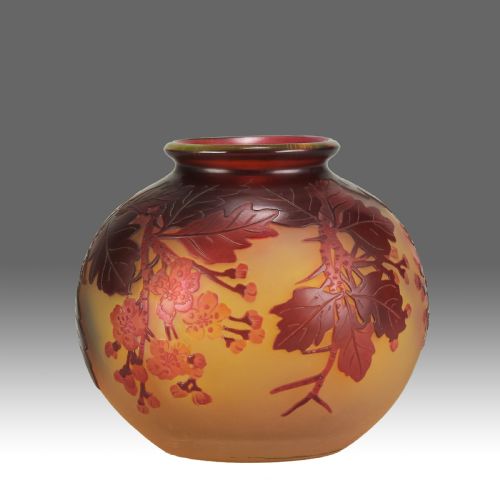


Floral Art Glass Vase
These pieces of floral art glass vase work bring botanical forms and rich colour together through skilled glassmaking traditions spanning multiple decades.
Floral Art Glass Vase
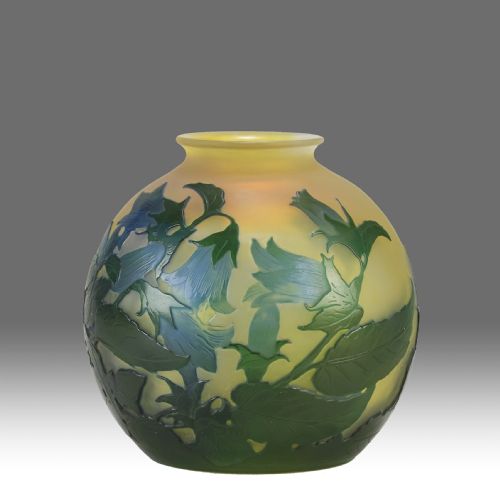
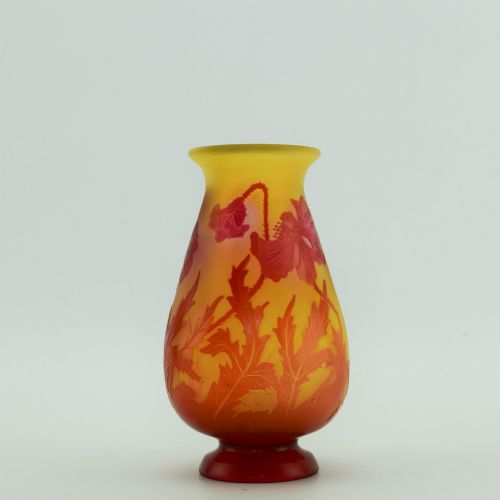
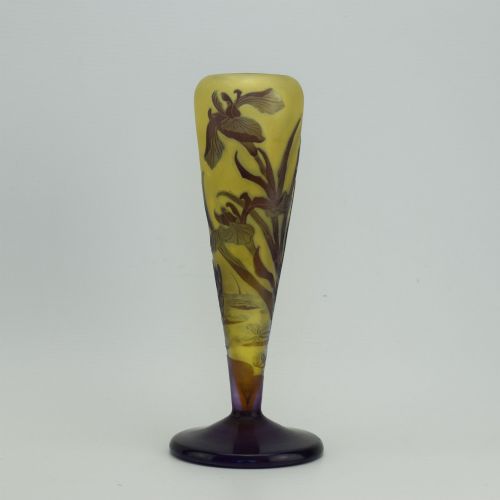
A floral art glass vase displays natural plant motifs, ranging from campanula and poppy to sweet pea and iris, rendered directly in or upon the glass body. These vessels frequently emerge from the Art Nouveau and Art Deco periods, capturing organic contours and detailed botanical subjects.
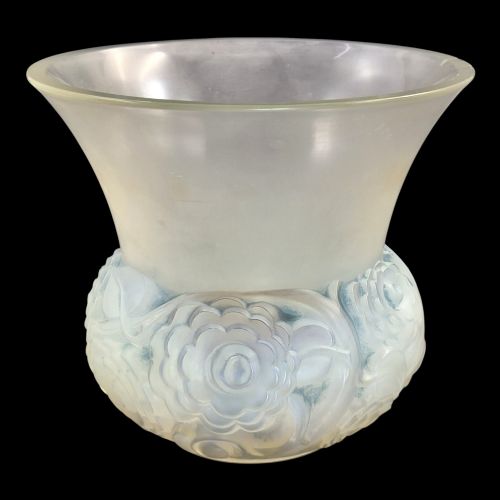
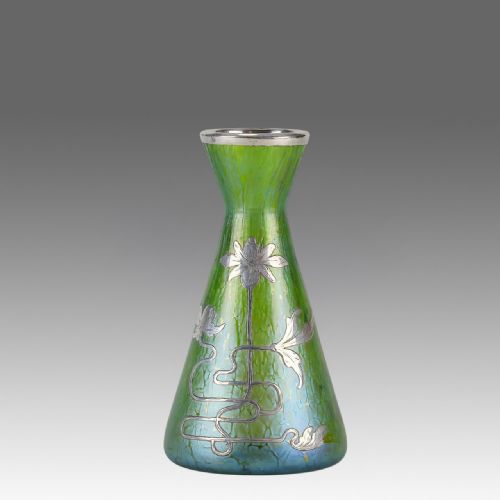
The versions most commonly met on this page include cameo glass creations by makers like Emile Gallé and Daum Frères, alongside opalescent moulded pieces by René Lalique. Alongside these French works, Bohemian iridescent pieces and Victorian enamelled vessels appear regularly.
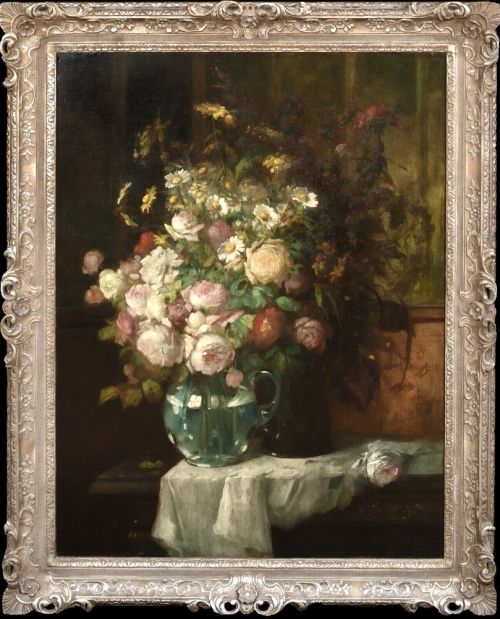
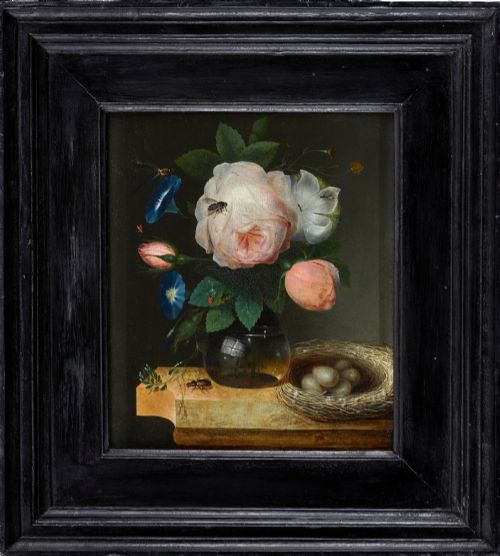
While many listings focus on sculptural glass, the broader selection occasionally touches upon related floral visual arts like still life paintings and watercolours. The primary focus, however, remains the three-dimensional glass vessel decorated with plant life.
Methods of manufacture
Cameo glass construction involves layering different coloured glasses and carving or acid-etching the outer layers away to reveal contrasting floral designs underneath. This demanding technique requires precise depth control to achieve delicate shading on motifs such as apple blossoms or honeysuckle.
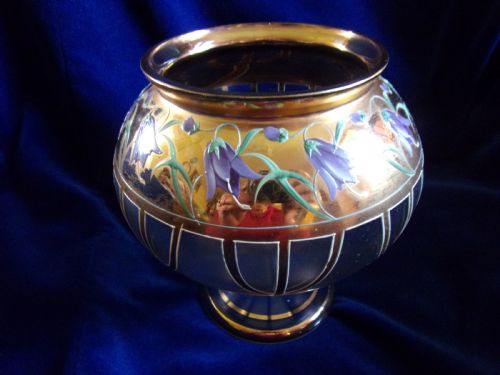
Mould-blowing and opalescent pressing techniques shape pieces like the René Lalique designs, utilising specialised metal moulds to impart relief patterns and translucent milky finishes. Other examples employ surface enamelling and gilding, where artisans paint botanical details directly onto the glass before firing.
Some nineteenth-century makers captured the fleeting beauty of wild roses and hydrangeas by freezing them permanently in heavy layers of coloured glass.
Distinctions in quality
The refinement of the carving and the complexity of the glass layers determine the upper echelon of cameo vessels, where depth creates a naturalistic illusion of petals and stems. Simpler pieces rely on basic surface prints or single-layer etching with less dimensional interplay.
The crispness of the mould and the subtlety of the opalescent finish separate superior moulded works from heavier, less articulate productions. Superior examples demonstrate a careful balance between the natural properties of the glass medium and the precision of the botanical depiction.
Emile Gallé·Johann Loetz·Daum Frères·Thomas Webb & Sons·René Lalique·Moser
The Floral Art Glass Vase Glossary
- Cameo glass
- A vessel formed of two or more fused layers of contrasting coloured glass, carved or acid-etched to create a raised design. This technique demands immense patience from the glassblower and cutter.
- Acid-etched
- A method utilising hydrofluoric acid to eat away exposed glass surfaces, creating frosted textures or recessed background patterns. It replaced or supplemented hand-carving in many late nineteenth-century workshops.
- Opalescent glass
- A translucent glass type that milky-blue in transmitted light and warm amber or yellowish in reflected light. René Lalique utilised this quality extensively to accentuate relief moulded details.
- Phänomen
- An iridescent glass technique developed by Loetz featuring combed, wavy surface threads captured while hot. This creates a shimmering, organic texture across the body of the vase.
- Enamelled
- Decorated with fused glass powders or paints applied to the surface and subsequently heated to permanent fixation. This allows vibrant polychromatic floral scenes on dark or clear glass bases.
Floral Art Glass Vase: Frequently Asked Questions
What is Art Nouveau glass?
Art Nouveau glass embraces asymmetrical, flowing lines and motifs drawn directly from the natural world, particularly stems, blossoms, and seed pods. These pieces often feature iridescent finishes or organic silhouettes that mimic plant growth.
The style dominated production around the turn of the twentieth century, championed by experimental glasshouses in France, Austria, and Bohemia.
How should I display my vase?
Positioning these vessels near natural light allows translucent qualities and internal shading to become fully visible. Placing them away from direct, harsh sunlight protects any delicate surface enamelling or gilding from fading over time.
Ensure they rest on stable, level surfaces where accidental knocks are minimised, as antique art glass can be vulnerable to impact.
Are all Lalique vases opalescent?
Not all Lalique pieces display opalescence, as production also included clear, frosted, and enamelled glass variants. Opalescence is a specific optical property added to the batch to create a milky, shimmering glow on the moulded relief.
Examining the underside usually reveals the signature or mould mark associated with the specific production era of the piece.