
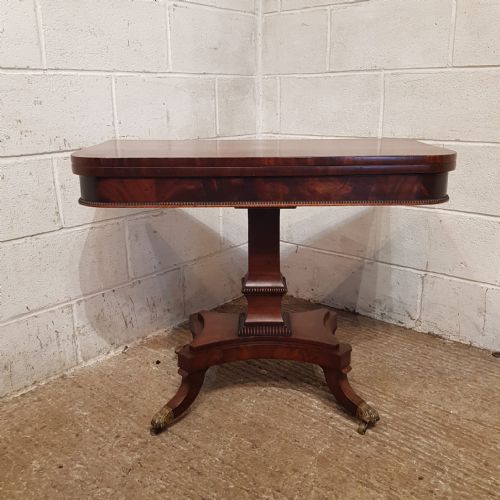
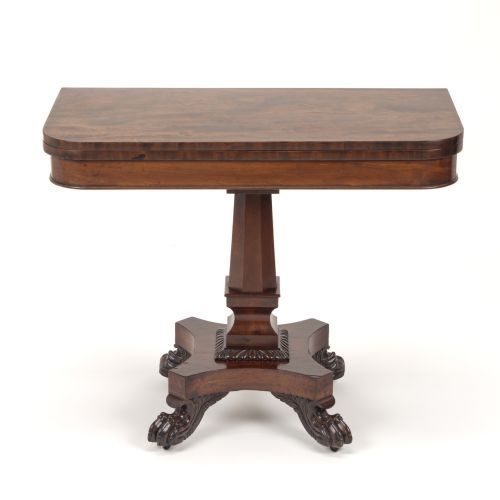
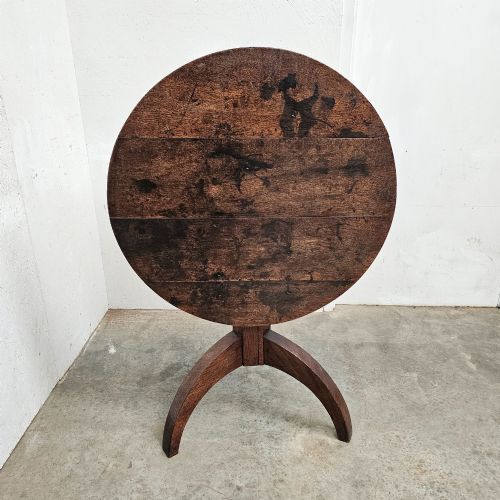
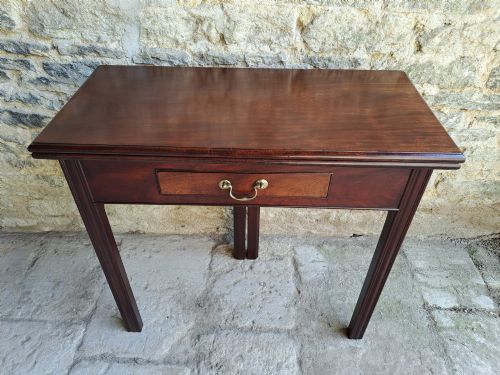

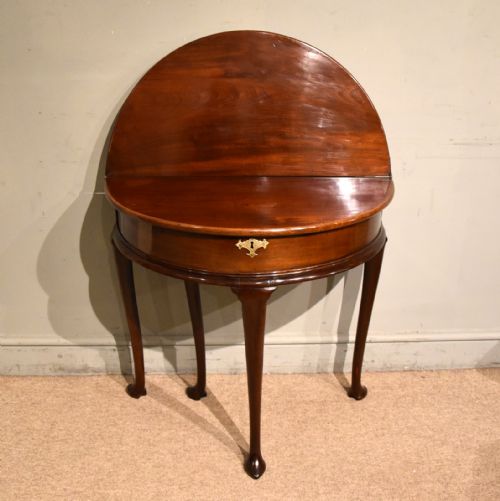


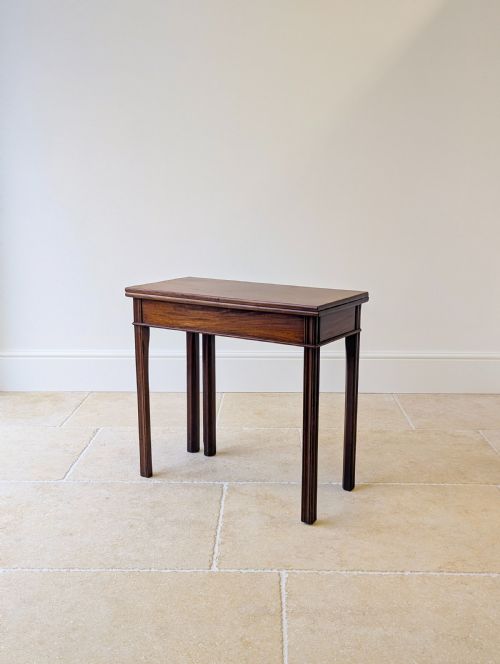


Flip Top Side Table
A flip top side table adapts from a compact pier piece into a tea, card or games surface through a folding, pivoting or tilting action.
Flip Top Side Table
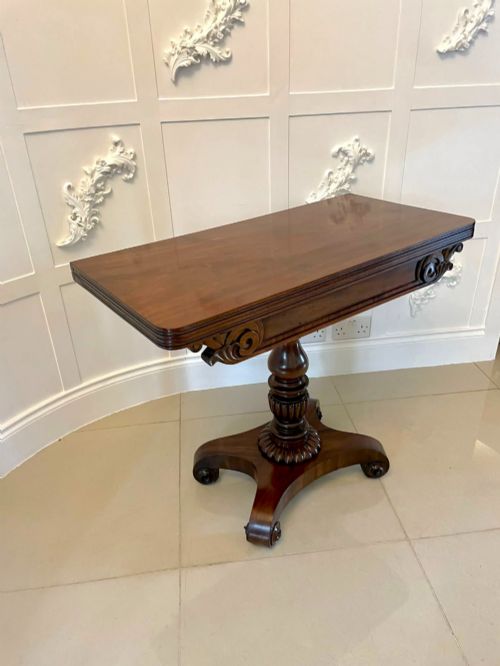
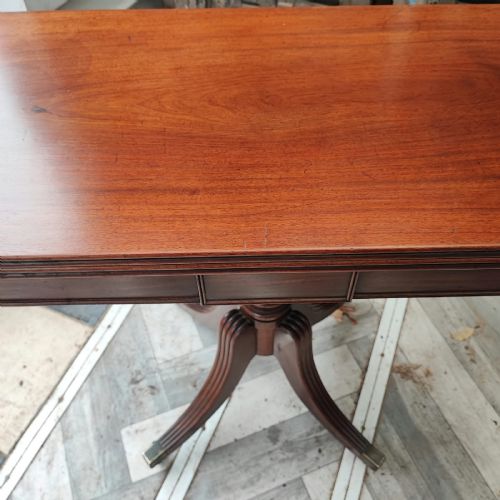
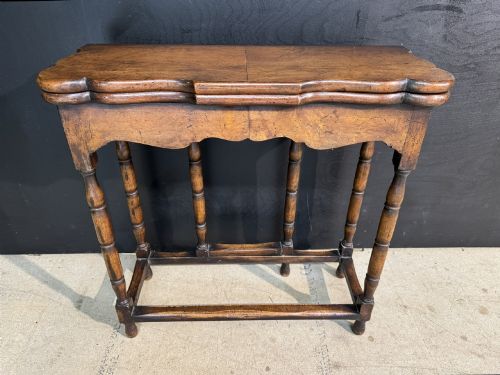
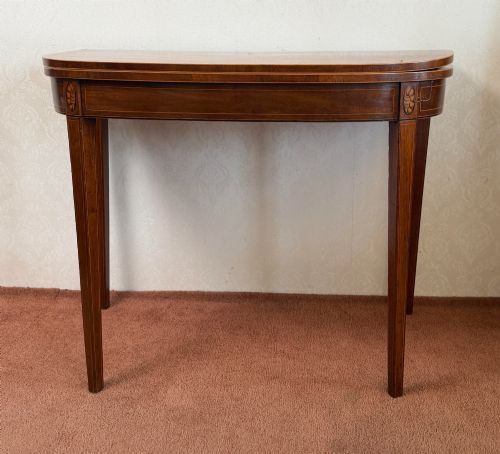
When you search for a flip top side table, you examine pieces built to serve multiple functions in domestic interiors across several centuries. The selection spans the 18th century, the Georgian, Regency and William IV eras, and the Victorian period, originating from British and continental workshops.
You meet a variety of object types on this page, dominated by tea tables, card tables and games tables alongside occasional side pieces. These items commonly employ folding, rotating or tilting mechanisms to conceal their secondary purpose when not in use.
The prevalent forms include D-shaped folding leaves, demilune tops and circular tripod designs that pivot from a central pillar. Walnut, mahogany and rosewood examples appear frequently, reflecting the changing tastes of cabinet makers from the George II period through to the late 19th century.
Materials and technique
Cabinet makers constructed these pieces primarily in solid hardwoods and applied veneers, utilising mahogany, walnut and rosewood supported by secondary timbers such as oak and pine. The surfaces often display figured grain patterns, enhanced through contrasting inlay work using boxwood, satinwood and marquetry motifs.
Joinery techniques focus on the stability of the folding or tilting action, incorporating brass hinges, pivot mechanisms and rotating top blocks that lock the leaf in position. Carved details such as paw feet, gadrooning and edge moulding appear directly on the structural timbers of the legs and aprons.
Some card tables hide secret corners once used to store heavy gold coins before paper money took over the gaming table.
Judging the work
Quality rests in the precision of the turning mechanism and how tightly the folding leaves meet when closed. Superior examples maintain structural alignment across the hinge line without sagging or rocking on the base.
The depth of timber selection and the skill of the veneer matching dictate the visual hierarchy. Master craftsmen chose highly figured mahogany, burr birch or olive wood to accentuate the plane of the top, whereas utilitarian items relied on plain stock.
The Flip Top Side Table Glossary
- Flip top
- A table top that folds, turns or tilts to reveal a concealed surface or to store flat against a wall. This mechanism allowed dual usage as a side piece and a gaming or tea table.
- Fold-over
- A hinged table top that doubles its surface area when opened and laid flat upon a swinging rear leg or framework. It forms the standard construction for antique card and tea tables.
- Tilt-top
- A mechanism where the entire upper surface pivots on a catch to rest vertically when not in use. It is commonly found on tripod wine and occasional tables.
- Demilune
- A half-moon shape used for table tops and frames designed to stand flush against a wall. Sheraton and Georgian makers favoured this outline for side and tea tables.
- Sabre leg
- A concave sweeping leg that tapers toward the foot, characteristic of Regency furniture design. It provides stability to heavier fold-over bases without heavy bracing.
Flip Top Side Table: Frequently Asked Questions
How do I use a flip top side table today?
These tables function well as console surfaces against a hallway wall or behind a sofa when closed. Opening the leaf provides an impromptu writing desk, dining surface or card table when guests visit.
The folding mechanisms require clear space around the piece to operate safely. Placing them out of direct sunlight protects the timber veneers and polished finishes from fading.
How do I identify a Georgian flip top table?
Georgian pieces typically display straight or cabriole legs, solid mahogany or walnut construction, and discreet brass hinges. The woodwork prioritises structural joinery over applied decoration.
Looking beneath the top reveals hand-cut dovetails and timber shrinkage marks consistent with 18th-century workshop practices. Drawer linings, where present, use oak or pine rather than modern sheet materials.
What is the difference between a tea table and a card table?
Tea tables generally feature plain wooden surfaces designed to hold porcelain and silver during the afternoon ritual. Card tables often incorporate lined interiors featuring baize, leather or intricate marquetry for playing games.
Card tables also frequently include small corner recesses known as guinea wells for holding coins or counters. Both types share the fold-over mechanism but serve distinct domestic routines.
How do I care for antique wood surfaces?
Maintain the polish by applying natural beeswax sparingly and buffing with a soft cloth to nourish the grain. Avoid placing wet cups or hot items directly on the polish to prevent ring marks and blistering.
Keep the tables away from direct heat sources such as radiators and fireplaces. Extreme temperature fluctuations cause timber to split and veneers to lift from their baseboards.
How do I tell Regency pieces apart from Victorian ones?
Regency tables favour classical motifs such as brass mounts, carved paw feet, reeded edges and sabre legs influenced by ancient Roman designs. The timber selection emphasises dark figured mahogany and rosewood with restrained brass inlay.
Victorian pieces often introduce heavier proportions, bolder carving and exotic woods like burr birch or walnut. The mechanisms become more industrial in manufacture, reflecting the transition toward mechanized workshop production.