
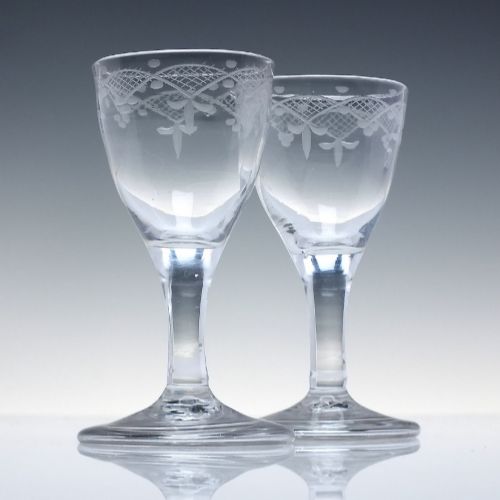
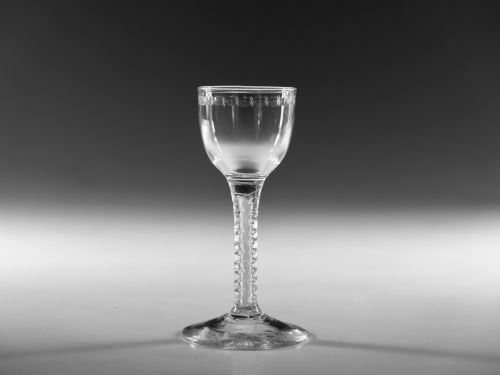
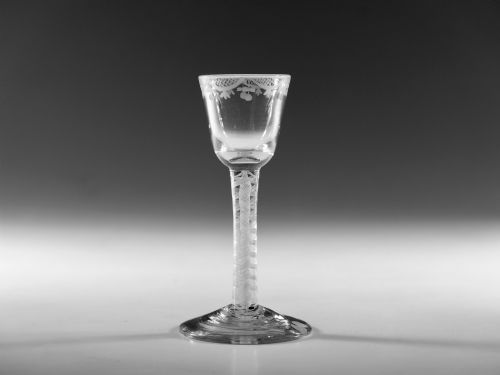


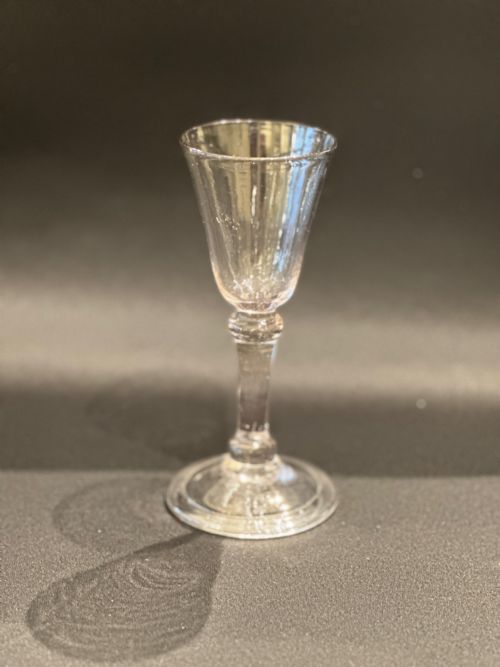


Flint Glass Cordial Glass
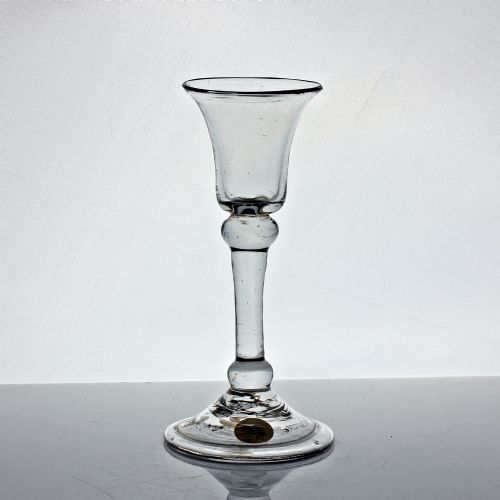
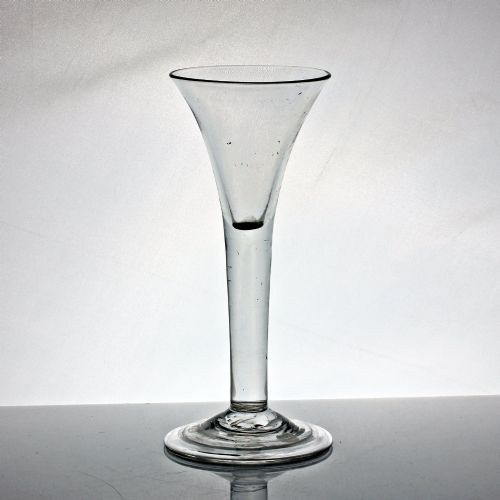
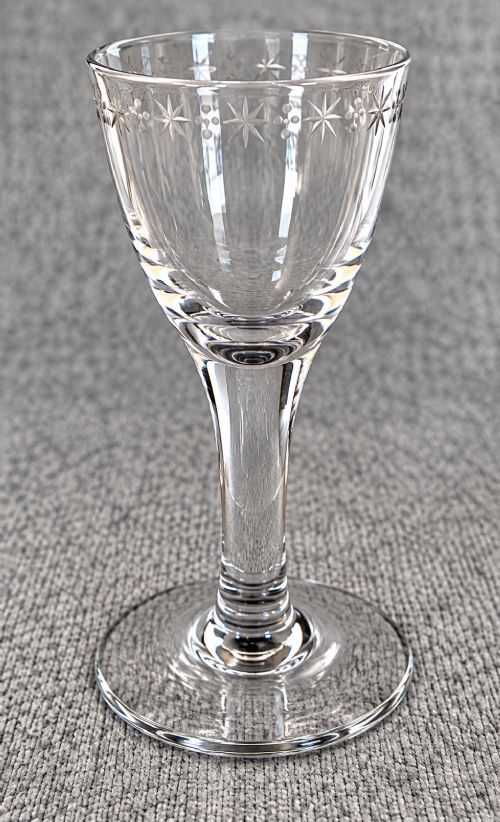
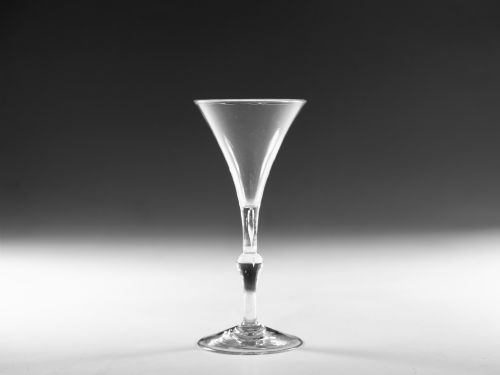
These flint glass cordial glass pieces are small, elegant vessels made for strong spirits, offering collectors tactile pieces of Georgian drinking history.
Flint Glass Cordial Glass
A flint glass cordial glass is a small drinking vessel designed for serving potent spirits like cordials, drams, or ratafia during the eighteenth century. These pieces belong to the broader category of Georgian stemware, reflecting the refined social rituals of the period.
The versions most commonly met on this page date from the Georgian era, specifically spanning the decades between seventeen thirty and seventeen eighty. They appear in distinct forms such as dram glasses, gin glasses, and ratafia glasses, often featuring slender stems and compact bowls suited to smaller measures of alcohol.
Makers of these drinking glasses utilised lead glass and clear glass to achieve a brilliant refractive quality that defined the era's glassware. Collectors encounter variations including plain stems, air twists, opaque twists, balustroid forms, and facet stems.
Distinguishing Quality
The distinction between ordinary and exceptional examples rests upon the dexterity of the glassmaker and the optical purity of the metal. Superior specimens display an absence of heavy striations or excessive seed bubbles in the glass body, alongside a pleasing weight and balance in the hand.
Complexity of form also elevates a piece, such as the precision found in a double series opaque twist or the balanced proportions of a balustroid stem. Finer items often incorporate additional decorative elements like finely engraved bowls or folded feet executed with clean symmetry.
A tiny trapped bubble at the very base of the stem was sometimes left deliberately to prove the glass was handmade.
The Flint Glass Cordial Glass Glossary
- Flint glass
- A heavy, brilliant type of lead glass developed in England that refracts light strongly. It became the primary material for high-quality eighteenth-century drinking vessels.
- Air twist
- A stem formation enclosing elongated spiral threads of trapped air within the glass. Artisans created these by drawing and twisting bubbles trapped inside the molten metal.
- Opaque twist
- A stem style featuring white or coloured enamel threads twisted within clear glass. This technique gained popularity during the mid-eighteenth century for wine and cordial vessels.
- Baluster
- A sturdy, heavy stem shape characterised by swelling nodes reminiscent of architectural pillars. Early Georgian drinking glasses frequently employed this substantial form.
- Folded foot
- A base edge turned back underneath to create a thickened, rounded rim. This method added durability to fragile drinking glasses and provided a smoother tactile finish.
Flint Glass Cordial Glass: Frequently Asked Questions
What is a cordial glass?
A cordial glass is a small historic drinking vessel specifically designed to serve concentrated alcoholic spirits, liqueurs, or medicinal drams after dinner.
Because eighteenth-century spirits were potent and expensive, these glasses featured much smaller bowls than standard wine goblets to limit each serving.
How do I date a glass?
Dating relies on observing stylistic markers such as stem construction, bowl shape, and foot formation alongside the characteristics of the metal itself. Early pieces often feature heavy baluster stems and folded feet, whereas later eighteenth-century examples lean towards facet-cut or slender twist designs.
Comparing the optical weight and manufacturing traits against established period typologies helps narrow down the decade of production.
Why are some stems twisted?
Twisted stems were decorative techniques developed by glassmakers to catch the light and add visual texture to clear lead glass vessels. Air twists relied on trapped bubbles drawn into spirals, while opaque twists incorporated fine enamel rods.
These methods demonstrated the technical skill of the workshop and provided affluent buyers with fashionable variations on standard stemware.
How should I display them?
These delicate vessels require stable shelving away from direct sunlight and areas prone to heavy vibrations or accidental knocks. Placing them inside an enclosed cabinet protects the fine surfaces and delicate rims from dust and potential damage.
Proper lighting positioned above or behind the cabinet highlights the refractive quality of the lead glass and the intricate details of the stems.