


Flemish Carved Oak Cabinet
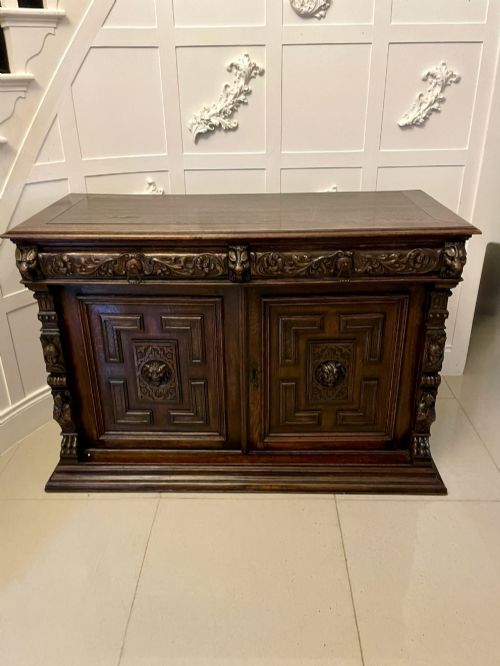
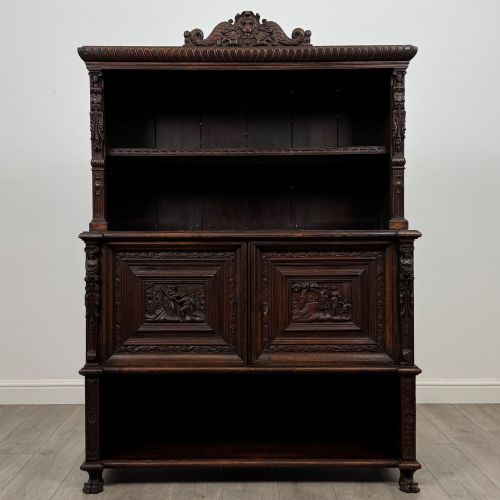
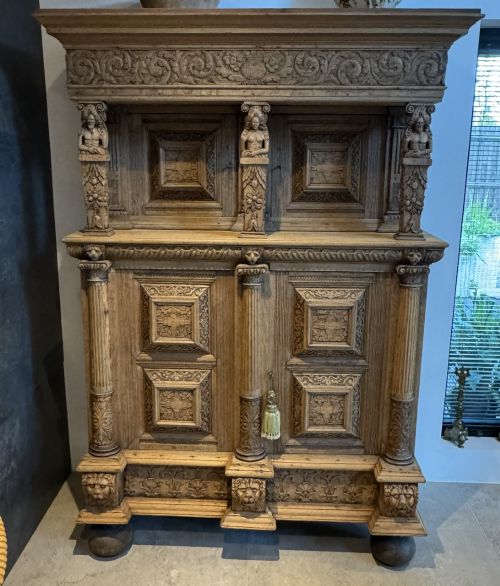
These flemish carved oak cabinet pieces bring heavy timber, deep relief work and centuries of continental design straight into a modern room.
Flemish Carved Oak Cabinet
A flemish carved oak cabinet is a substantial storage piece rooted in sixteenth, seventeenth, eighteenth and nineteenth century continental traditions. Buyers encounter everything from tall cupboards and mirror-back sideboards to cabinets on stands, corner units and open bookcases.
The aesthetic leans heavily into Renaissance Revival, Flemish Baroque and Continental styles. Formats vary from simple hall cupboards to elaborate armoires featuring lion masks and religious motifs.
What varies in quality
Quality rests on the depth and crispness of the carving, particularly around figural elements like lion masks and religious scenes. Heavy relief work executed with sharp detail separates superior examples from softer, more repetitive production.
The choice of secondary timbers and contrasting accents, such as fruitwood inlay or ebony stringing, also dictates the standing of a piece within the range.
Several pieces keep watch over the room with stern wooden lion masks glaring out from the drawer fronts.
The Flemish Carved Oak Cabinet Glossary
- Cabinet on stand
- A primary storage compartment elevated on a separate framework of legs connected by stretchers. This form lifts the heavy timber visually from the floor.
- Kast
- A large traditional continental wardrobe or cupboard built with substantial panelled doors. These pieces often feature architectural cornices and deep base drawers.
- Renaissance Revival
- A nineteenth-century design movement that reinterprets sixteenth-century classical motifs. It draws heavily on symmetry, architectural framing and bold relief carving.
- Baroque
- A theatrical style defined by dynamic movement, rich surface texture and dramatic relief work. In these pieces, it manifests through scrolling foliage and prominent masks.
Flemish Carved Oak Cabinet: Frequently Asked Questions
How do I date a flemish carved oak cabinet?
Dating relies on examining the construction methods, timber prep and stylistic cues visible across the panels and hardware. Earlier pieces from the sixteenth and seventeenth centuries show hand-riven timber and simpler joinery, whereas nineteenth-century revival pieces often incorporate mechanised cuts alongside heavier, more theatrical carving.
Changes in hinge types, lock mechanisms and the specific flavour of the Renaissance or Baroque revival also help pinpoint whether a piece originates from the period it emulates or dates to later Victorian production.
Where should I place a large oak cabinet?
These substantial pieces demand a room with adequate floor space and enough wall clearance to accommodate their heavy proportions. Hallways, dining rooms and large studies suit them best, where their deep timber tones and carved panels can anchor the surrounding decor.
Keep them away from direct heat sources and strong sunlight to protect the solid oak and any contrasting fruitwood or ebony inlays from drying out and splitting over time.
What is the difference between a cabinet and a sideboard?
Cabinets generally focus on enclosed vertical storage with doors, sometimes featuring open shelving or glass panels for display. Sideboards traditionally serve dining spaces, combining lower cupboard space with a broad serving surface and occasionally a mirror back.
Both forms utilise the same heavy oak construction and relief carving traditions, but their internal layouts and overall heights reflect their distinct original domestic uses.
How do I care for antique oak furniture?
Maintain the timber by dusting regularly with a dry, soft cloth and applying a quality beeswax sparingly to nourish the grain. Avoid silicone-based polishes, which build up and attract dust over time.
Maintain a stable indoor humidity level to prevent the thick oak panels and applied mouldings from expanding or contracting too drastically with seasonal changes.