
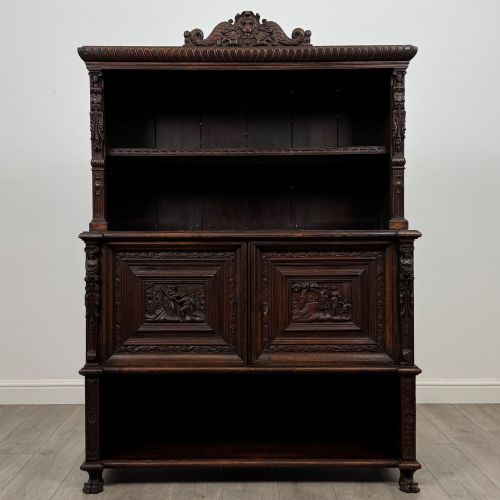


Antique Flemish Dresser
An antique flemish dresser delivers robust timber and dramatic carving, offering both historic presence and deep storage for the modern interior.
Antique Flemish Dresser
When you search for an antique flemish dresser, you are looking at substantial storage furniture built with deep regional character and architectural weight. The pieces available here span from the seventeenth century through the nineteenth century, drawing heavily on Renaissance Revival and Flemish Baroque aesthetics.
You are most likely to meet heavily carved oak cupboards, sideboards, and buffets on this page. Many examples incorporate mirror backs, plate racks, or detailed side cabinets that reflect the ornate tastes of the nineteenth-century revival periods.
The forms range from wall shelves and compact side cabinets to large freestanding cupboards and monumental sideboards. These items originate from continental traditions, bringing dark timber and figural or floral carving into domestic spaces.
How they were made
Makers built these pieces primarily from solid oak and walnut, selecting timber with strong grain to support deep relief carving. Artisans employed traditional joinery techniques to construct heavy carcases that could bear the weight of projecting cornices and internal shelving.
Metal components in brass and iron appear as hinges, handles, and locks, often forged or cast with decorative detail. Selected pieces integrate glass panels and stained glass within doors and upper sections to contrast with the dark wood.
Surface decoration relies on hand chiselling and moulding rather than applied veneers, creating tactile panels, figures, and scrollwork across doors and friezes.
A solitary seventeenth-century wall shelf hides among the heavy nineteenth-century sideboards, proving that not every Flemish antique requires a forklift.
What varies in quality
The depth and clarity of the hand carving separate standard commercial items from superior examples. Crisp undercut relief work and well-proportioned architectural elements indicate a higher standard of cabinet-making.
The integration of secondary materials such as stained glass and heavy brass hardware influences the overall character and visual weight of the piece. Superior cabinets maintain structural balance between massive wooden frames and decorative glazing or metalwork.
The Antique Flemish Dresser Glossary
- Renaissance Revival
- A nineteenth-century design movement that revived sixteenth-century architectural motifs, classical symmetry, and sculptural ornament. It appears frequently on heavy oak sideboards and cabinets from this era.
- Flemish Baroque
- An ornate style characterised by exuberant curves, heavy drapery motifs, and dramatic sculptural figures. This aesthetic originates in seventeenth-century Flanders and influences later nineteenth-century revival furniture.
- Stained Glass
- Coloured glass pieces joined with lead caming to form decorative windows or cabinet doors. In these listings, it introduces rich colour and filtered light into wooden storage furniture.
- Sideboard
- A long dining room or hall piece designed for serving food and storing tableware. These examples often include carved lower cupboards paired with upper plate racks or mirror backs.
Antique Flemish Dresser: Frequently Asked Questions
What is an antique flemish dresser?
These items are large storage pieces, typically cupboards, sideboards, or buffets, constructed mainly from carved oak and walnut. They originate from continental workshops and draw on seventeenth-century Baroque and nineteenth-century revival styles.
They serve as focal storage furniture in dining rooms, halls, or living spaces, combining heavy timber construction with elaborate sculptural decoration.
How do I date an antique flemish dresser?
Dating relies on examining the timber species, joinery methods, and the specific revival style employed by the maker. Seventeenth-century pieces show earlier hand-working marks, whereas nineteenth-century revival items often blend Renaissance motifs with machine-sawn backing boards.
Hardware styles, such as brass drop handles or iron hinges, also provide clues to the manufacturing era alongside the crispness of the carved panels.
Where should I place a large cabinet?
These monumental pieces require substantial wall space and structural floor support due to their solid oak and walnut construction. Placing them against a blank dining room or hallway wall allows the carved details and proportions to anchor the room.
Ensure the floor is level and keep the timber away from direct heat sources to prevent the heavy doors and panels from warping over time.
What is the difference between baroque and renaissance revival?
Renaissance revival focuses on strict architectural symmetry, classical columns, and restrained strapwork panels. Flemish baroque introduces more dynamic movement, scrolling foliage, and dramatic figural carvings.
Both styles utilise dark oak, but baroque pieces generally present a more theatrical and exuberant surface texture.