






Flatweave Cushion Cover
A flatweave cushion cover brings the texture and geometry of nomadic textiles directly onto a sofa or chair.
Flatweave Cushion Cover
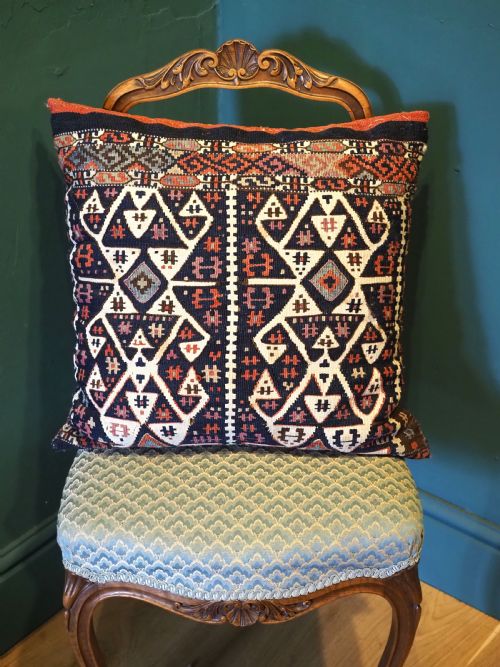
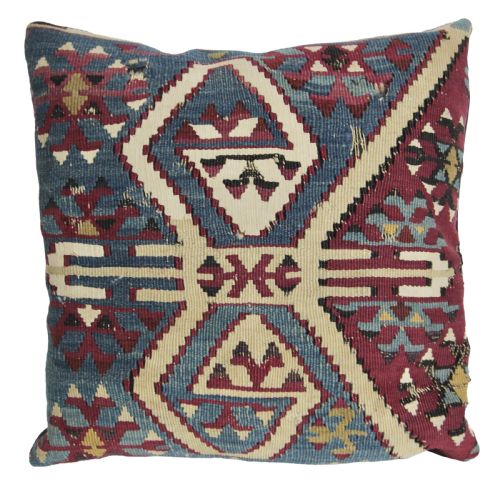
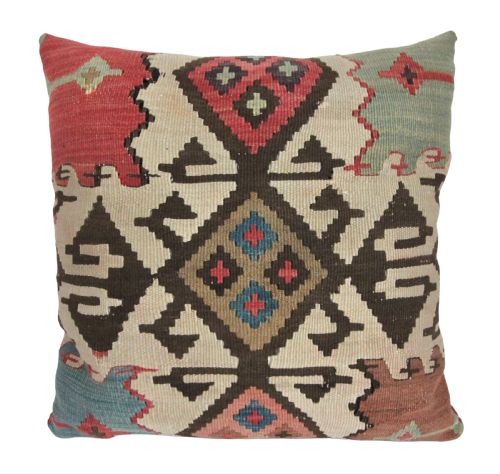
A flatweave cushion cover is typically fashioned from antique tribal textiles such as saddle bags, mafrashes, and torbas rather than newly woven fabric. When you search for a flatweave cushion cover, you encounter pieces transformed from nineteenth-century nomadic weavings originating across Anatolia, Persia, and Central Asia.
The objects listed here span periods from the mid-nineteenth century through the early twentieth century, capturing regional traditions like Shahsavan, Yomut Turkmen, and Bakhtiari tribal work. Many examples repurpose authentic bag faces, retaining their original flatweave construction while adapting them for modern interiors.
Buyers find both simple banded designs and complex pictorial motifs depicting birds and dragons. Each cover represents a distinct tribal heritage, often utilising repurposed kilim or soumak panels paired with plain weave backs.
Materials and construction
These textiles rely primarily on wool and hand-spun wool, sometimes combined with goat hair for added durability in structural elements. Artisans utilised vegetable dyes and natural dyes to achieve rich, enduring colours across the patterned surfaces.
Techniques range from basic flatweave kilim to intricate soumak work, where supplementary weft threads wrap around the warp to create raised geometric designs. The resulting fabric is sturdy and flat, originally designed for practical nomadic storage before its conversion into soft furnishings.
Some cushions still retain the stubborn dust of nineteenth-century camel trails.
Assessing quality and authenticity
Quality in these cushion covers rests upon the integrity of the original tribal textile and the skill of the initial weaving. Finer pieces display tight, even weft work and sophisticated iconography, such as recognisable bird and dragon motifs.
The depth and nuance of the natural and vegetable dyes also distinguish superior examples, as does the condition of the historic wool surface. Pieces that retain their original bag face geometry without heavy modern intervention hold greater interest for collectors.
The Flatweave Cushion Cover Glossary
- Kilim
- A flatweave textile produced without a pile by tightly interweaving warp and weft strands. This technique creates a smooth, tapestry-like fabric suited for both floor coverings and cushions.
- Soumak
- A brocade-like flatweave technique where pattern wefts are wrapped around warp threads before being packed down tightly. It produces a textured surface that stands proud of the background.
- Mafrash
- A large rectangular storage bag or bedding chest used by nomadic tribes, panels of which are frequently converted into cushions. They often feature distinct banded or pictorial designs.
- Torba
- A small nomadic bag used for hanging inside a tent or transporting belongings on pack animals. Surviving fragments of these bags provide the vibrant faces for scatter cushions.
Flatweave Cushion Cover: Frequently Asked Questions
Are these cushion covers made from old rugs?
Most of these covers are fashioned from authentic antique nomadic items such as saddle bag faces, mafrashes, and torbas rather than standard floor rugs. These original utilitarian pieces are carefully repurposed into cushions while preserving their historic textile art.
This method gives a second life to nineteenth-century tribal weaving, turning functional nomadic storage into decorative home accessories.
How do I care for a vintage flatweave cushion?
Maintenance requires gentle handling to protect the historic wool fibres and natural dyes used in the nineteenth-century construction. Professional dry cleaning or careful surface spot cleaning is generally recommended to preserve the integrity of the weave.
Avoiding direct, prolonged sunlight helps prevent the vegetable and natural dyes from fading over time in a domestic setting.
What is the difference between kilim and soumak?
Kilim construction is a flat, tapestry-like weave where the pattern is created simply by passing coloured weft threads back and forth across the warp. The fabric remains completely smooth on both sides.
Soumak involves wrapping supplementary weft threads around the warp to build a textured, raised design on the face of the textile, offering a heavier feel.