


Flatweave Area Rug
A flatweave area rug brings texture and pattern to a floor through flat-surface tapestry weaving.
Flatweave Area Rug
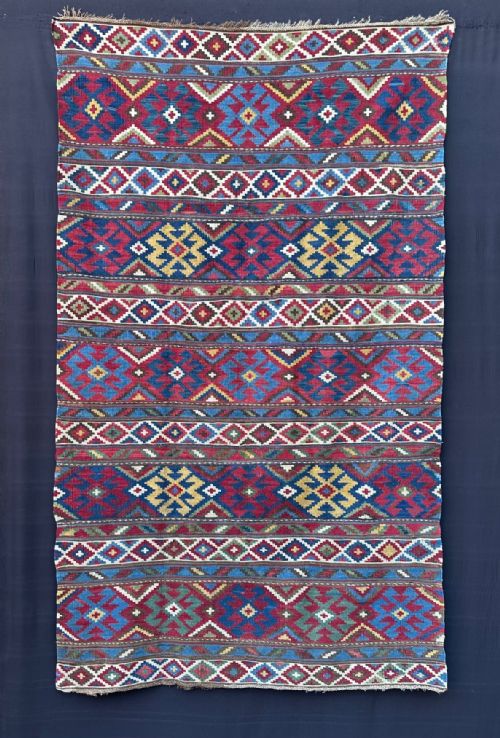
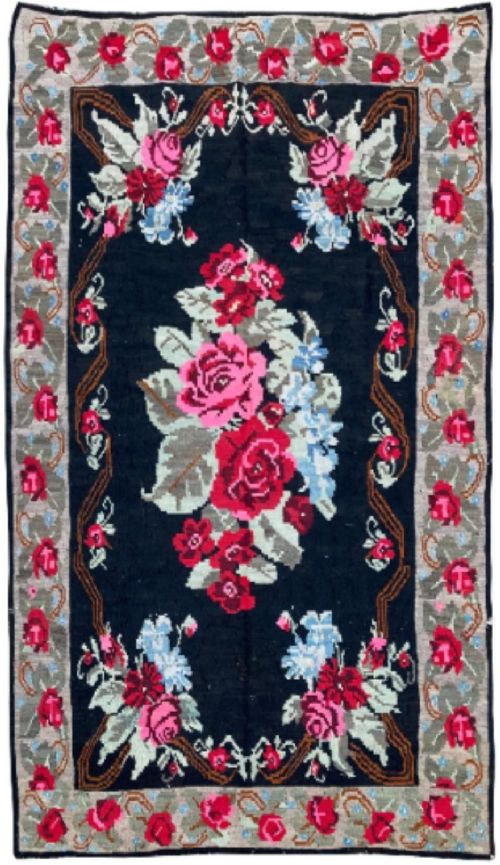
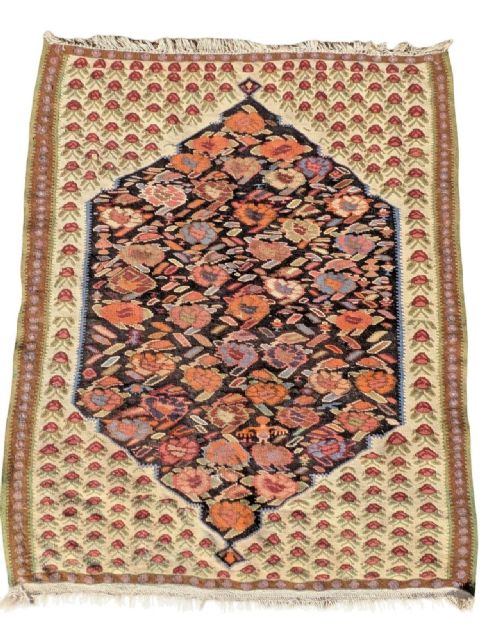
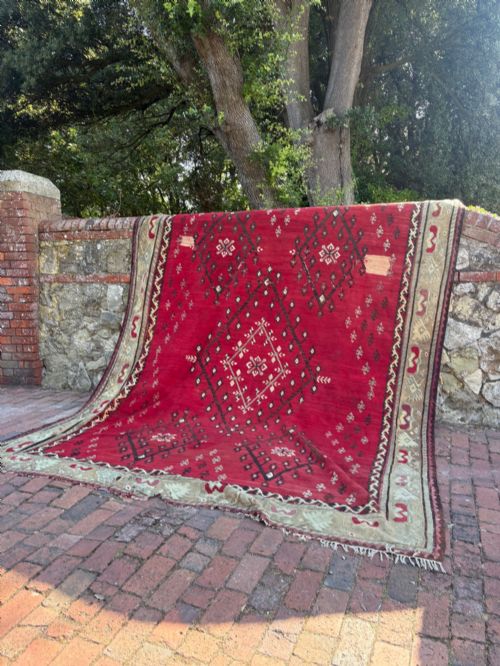
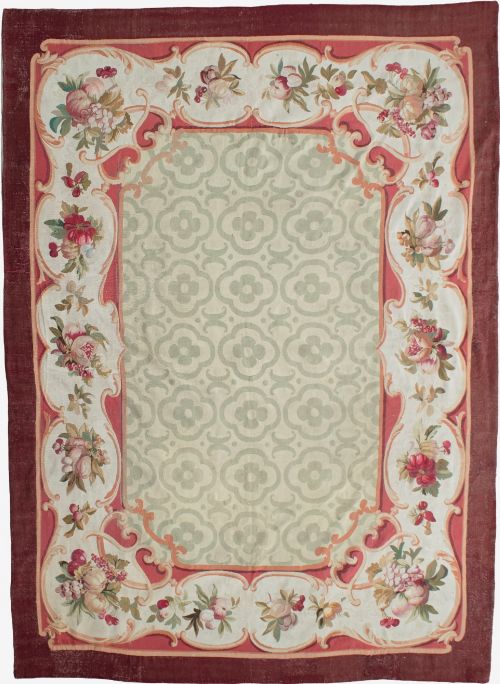
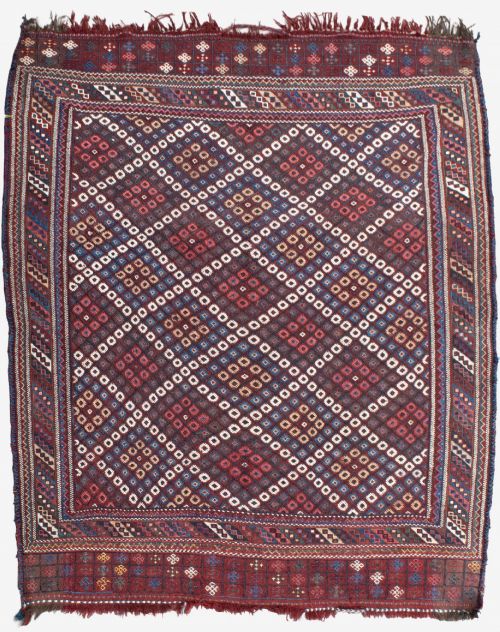
A flatweave area rug is a tapestry-woven floor covering lacking a traditional piled surface, relying instead on interlocking or supplementary weft threads to form the pattern. When searching for a flatweave area rug, collectors encounter regional types such as Turkmen Dali kilims, Caucasian Kuba kilims, Pirot or Sarkoy kilims, Turkish Konya kilims, and Indian cotton dhurries. These pieces span from the late nineteenth century into the early decades of the twentieth century, specifically representing the years 1880, 1900, 1910, and 1920.
The styles recorded in these rugs include tribal, tribal and nomadic, Caucasian tribal, traditional Balkan, Balkan, Balkan folk, Indian, and Anatolian tribal designs. Object types vary across rugs and carpets, rugs, and area rugs, often showcasing large room sizes, shield motifs, flowering tree patterns, banded compositions, and repeat medallion layouts. Such diversity reflects distinct weaving traditions across the Caucasus, Central Asia, the Balkans, Anatolia, and India.
Materials and construction
The materials utilised in these flatweave area rugs consist primarily of wool and cotton. Wool provides the structural resilience and warmth in Turkmen, Caucasian, Balkan, and Anatolian tribal examples, while cotton forms the foundation or the entire textile in Indian dhurries.
Weaving techniques rely on flat-surface construction methods rather than knotting, producing a thin, pliable textile suitable for floor placement. Very fine weave variations appear in specific Turkmen examples, demonstrating high technical skill in controlling tension and colour transitions.
Flatweave Area Rug Retail Price Guide 2026
Typical asking prices for flatweave area rug among the pieces listed under this phrase on Sellingantiques today, from the lower quarter to the upper quarter. They describe what is for sale here now, not the wider market.
Some weavers packed their wool so tightly that the rugs doubled as sturdy windbreaks during nomadic migrations.
Assessing quality and execution
Quality in these flatweave area rugs rests upon the tightness and consistency of the weave. Pieces with exceptionally fine weave structures demonstrate superior control by the weaver over the geometric or pictorial layout.
Visual impact depends on the clarity of motifs, such as shield designs, flowering trees, and repeat medallions. Softer colour palettes and well-balanced banded compositions elevate the visual coherence of the textile.
The Flatweave Area Rug Glossary
- Kilim
- A flat tapestry-woven carpet or rug produced in countries of the former Ottoman Empire, Persia, and Central Asia. They are made without a pile, resulting in a lightweight textile.
- Dhurrie
- A traditional Indian flatwoven rug or carpet used for floor coverings and bedding. These pieces frequently utilise cotton as the primary material.
- Weft
- The transverse threads passed over and under the warp threads during weaving. In flatweaves, the coloured wefts create the visible pattern.
- Medallion
- A central decorative motif or design element placed symmetrically within the field of the rug. Repeat medallion designs feature multiple instances of this ornamental unit.
Flatweave Area Rug: Frequently Asked Questions
What is a flatweave area rug?
A flatweave area rug is a floor covering constructed without pile knots, using a flat tapestry weave technique. These textiles rely on interlocked weft threads to create geometric and pictorial designs.
They originate from diverse regions including the Caucasus, Anatolia, the Balkans, Central Asia, and India, dating from the late nineteenth and early twentieth centuries.
How do I care for flatweave rugs?
Care for flatweave textiles involves gentle shaking, careful vacuuming without a rotating brush roll, and professional cleaning when necessary. Protecting them from direct sunlight helps preserve softer natural colours.
Rotating the rug periodically ensures even wear across high-traffic areas in a room.
Where were these rugs made?
The pieces originate from traditional weaving centres across the Near East, Central Asia, and South Asia. Specific regional origins include Turkmenistan, the Caucasus, the Pirot and Sarkoy districts of the Balkans, Konya in Turkey, and India.
Each region imparted distinct tribal and folk motifs into the wool and cotton weaves.
How are different regional styles identified?
Regional styles are identified through characteristic motifs, colour palettes, and weave structures. For instance, Turkmen pieces often feature Dali designs, while Caucasian examples display large shield patterns.
Balkan Pirot or Sarkoy kilims frequently incorporate flowering trees or repeat medallion layouts, distinguishing them from Anatolian Konya flatweaves.