
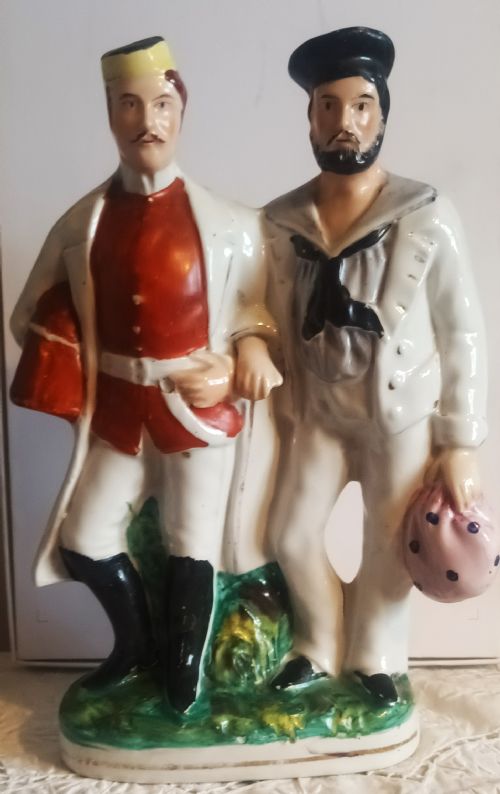
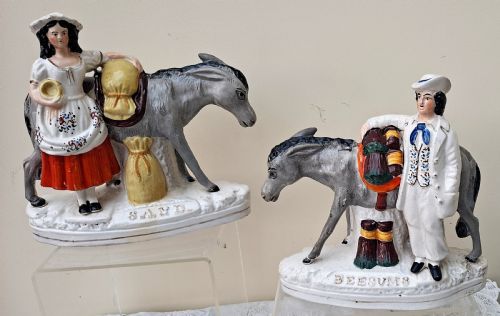


Flatback Ceramic Statue
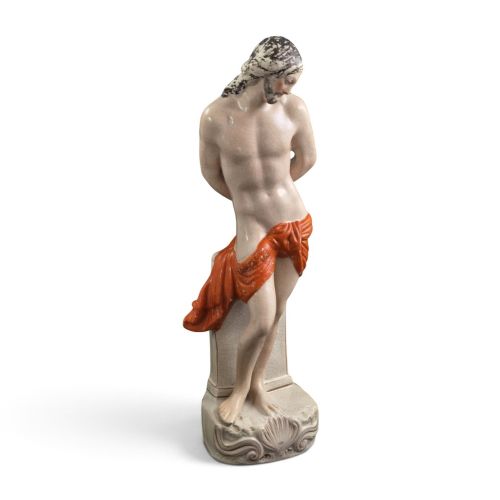
These flatback ceramic statue pieces are Victorian Staffordshire earthenware figures designed for display on mantelpieces, shaped with unglazed backs because they stood against a wall.
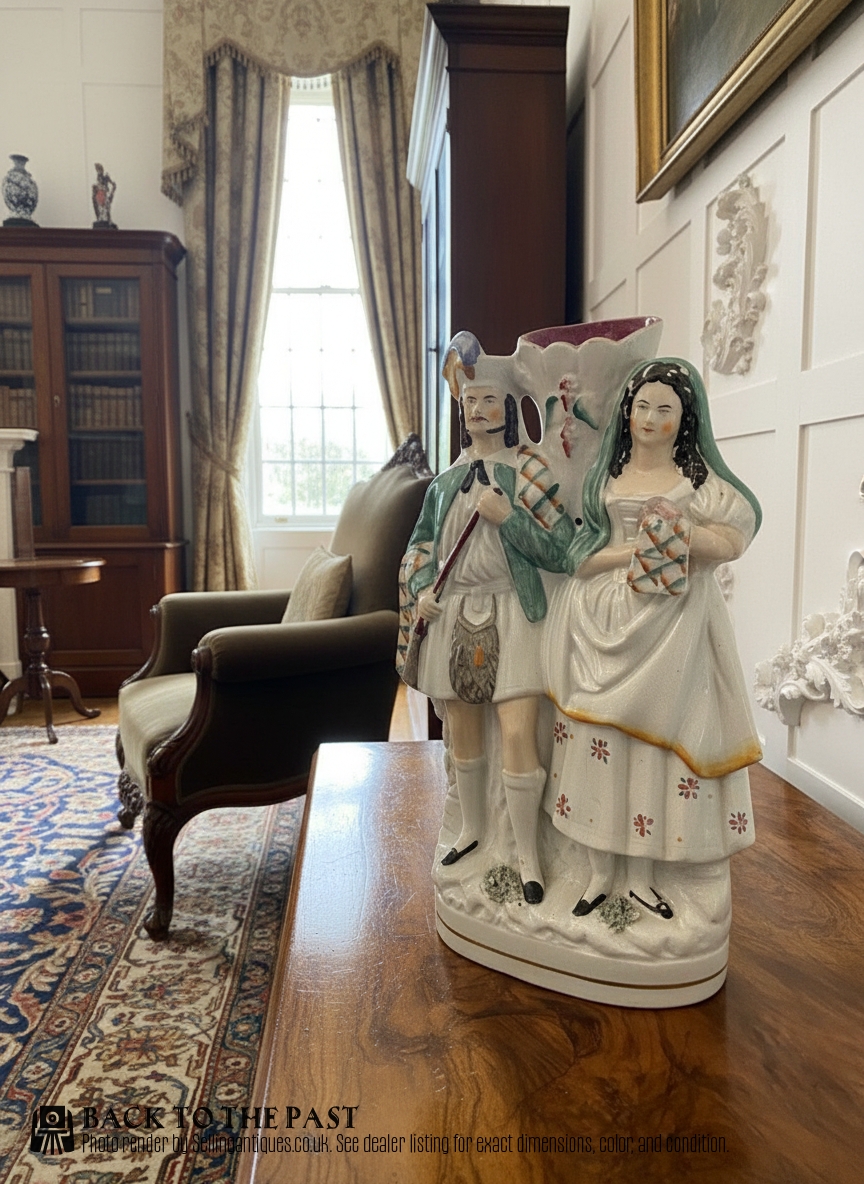
Flatback Ceramic Statue
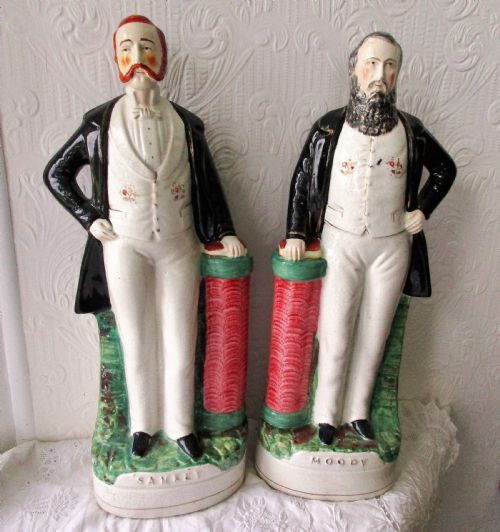
A flatback ceramic statue typically depicts a portrait, theatrical pair, royal figure, or animal subject from the nineteenth century. The listings on this page consist entirely of Victorian Staffordshire pottery figures dating from around eighteen fifty to eighteen eighty.
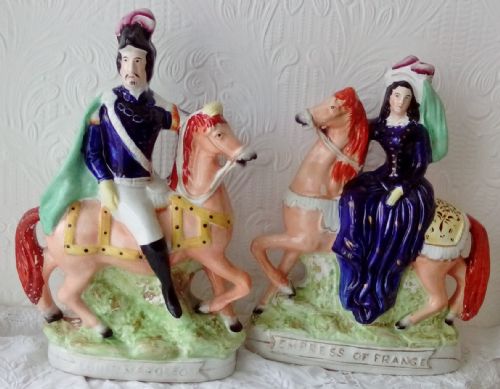
Makers produced these decorative ceramics as pairs or single subjects, ranging from large equestrian figures and huntsmen to miniature figurines. Subjects include royalty, military leaders, literary characters, and domestic animals like greyhounds and zebras.
Most examples originate from the Victorian period, capturing popular cultural interests through portrayals of contemporary personalities and theatrical performers. Collectors encounter these earthenware pieces primarily in the form of portrait groups and pastoral pairs.
Materials and construction
Potters shaped these figures from earthenware clay using moulds, resulting in hollow backs that saved material and prevented cracking during firing. Artisans applied lead glaze over the surface to seal the porous ceramic body.
Decoration relied upon hand-painted enamel and enamel glaze, often supplemented by gilt highlights. The flat backs remained unpainted and unglazed because the figures stood against parlour walls.
Among the menagerie of dogs, leopards, and zebras, Victorian owners could display highwayman Tom King alongside Admiral Sir Charles Napier.
Distinctions in craftsmanship
Size and ambition also define the upper tier of the range, with large equestrian groups and detailed portrait pairs requiring greater technical skill from the potter. Softer modelling and hurried brushwork indicate more commercial production.
The Flatback Ceramic Statue Glossary
- Flatback
- A figure moulded with a finished front and sides but a flat, unglazed rear designed to face a wall.
- Earthenware
- A porous pottery body fired at a lower temperature than stoneware or porcelain, standard for nineteenth-century Staffordshire production.
- Enamel glaze
- Coloured glass paste applied over the fired ceramic body and fixed in a second kiln firing.
- Lead glaze
- A glossy transparent coating containing lead oxide, used to waterproof earthenware and enrich surface colours.
- Gilt
- A thin layer of gold leaf or gold paint applied to highlights such as buttons, frames, or titles.
Flatback Ceramic Statue: Frequently Asked Questions
Why are the backs flat?
Potters left the backs unglazed and flat because these figures stood on narrow mantelpieces or against drawing-room walls.
This design saved clay, reduced weight, and prevented the pieces from occupying unnecessary depth on household shelves.
How do I date these figures?
Dating relies upon historical subjects, costume details, and stylistic traits associated with the Victorian era between eighteen fifty and eighteen eighty.
Royal portraits and historical events depicted in the titles provide specific chronological markers for each piece.
Were they made as pairs?
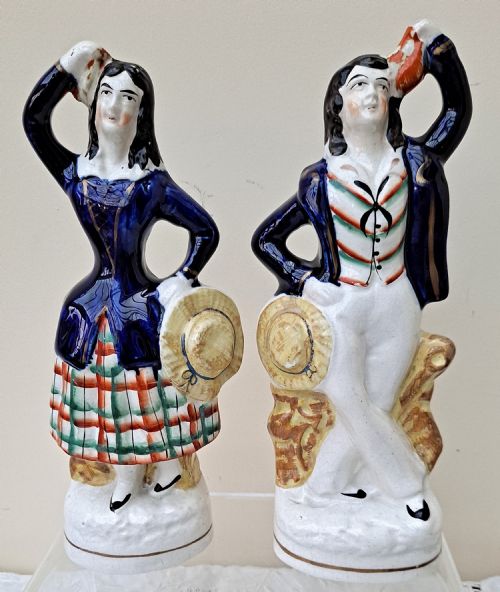
Many Staffordshire figures were produced as matched pairs, particularly theatrical portraits, animals, and pastoral subjects like gardeners or goatherds.
Single portrait figures also exist alongside large equestrian groups and multi-figure royal groups.
How should I clean them?
Care requires a dry cloth or a soft brush to remove dust from the glaze and crevices without disturbing the enamel paint.
Water and liquid cleaners risk damaging the delicate hand-painted surfaces and historic gilt highlights.