
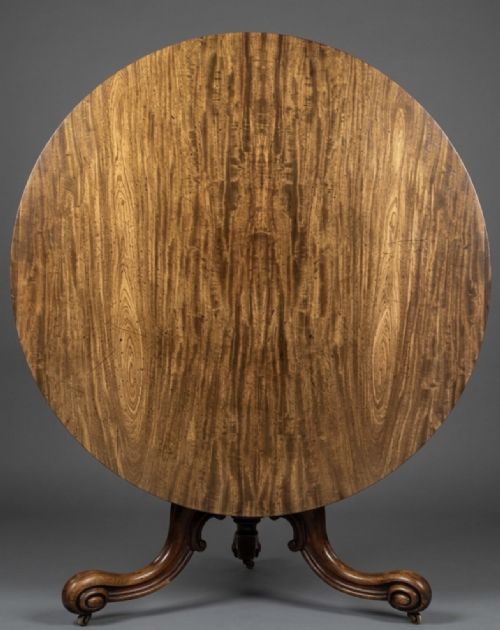
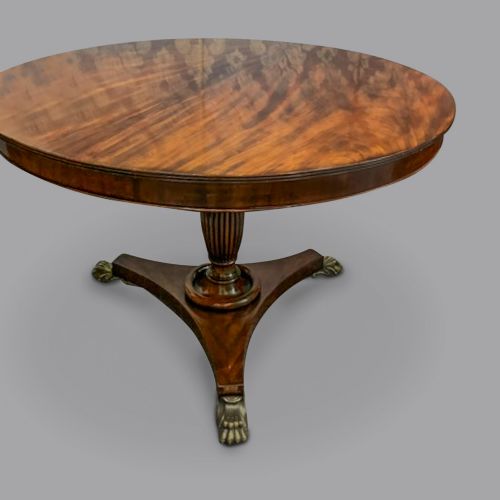


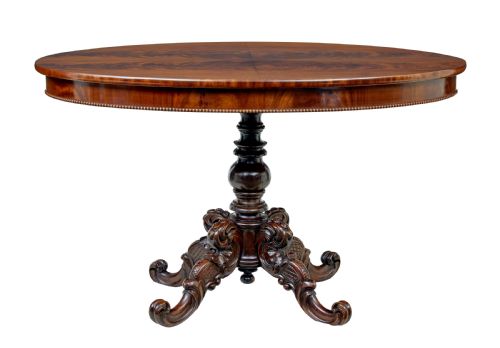

Flame Mahogany Tilt Table
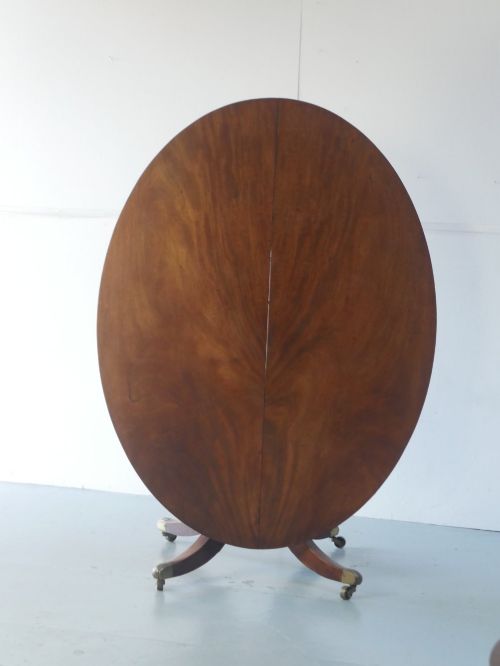
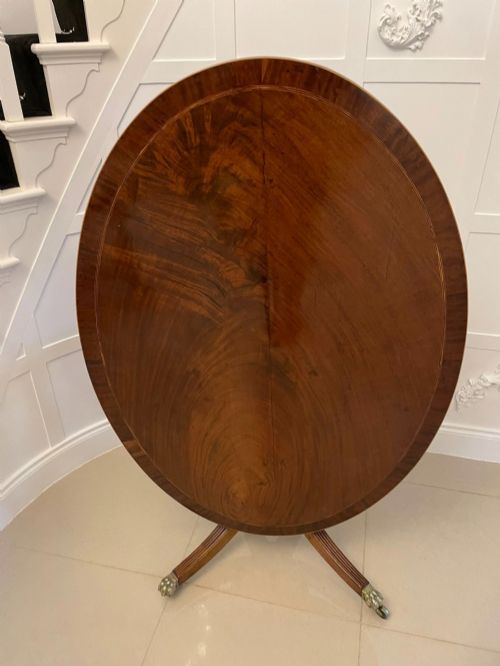
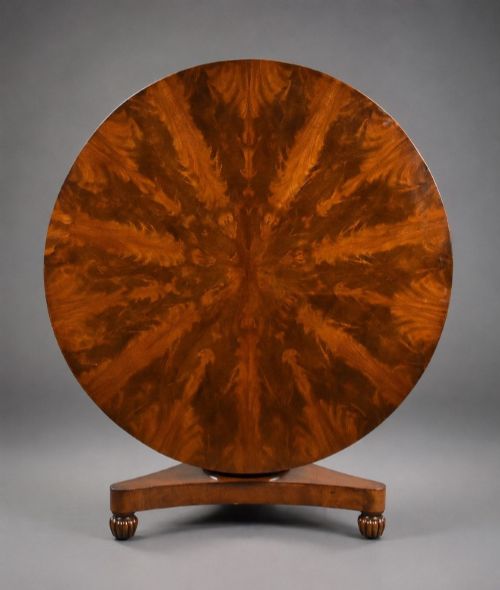
A flame mahogany tilt table brings figured timber and clever pivoting action together, offering a versatile surface that stores flat against a wall.
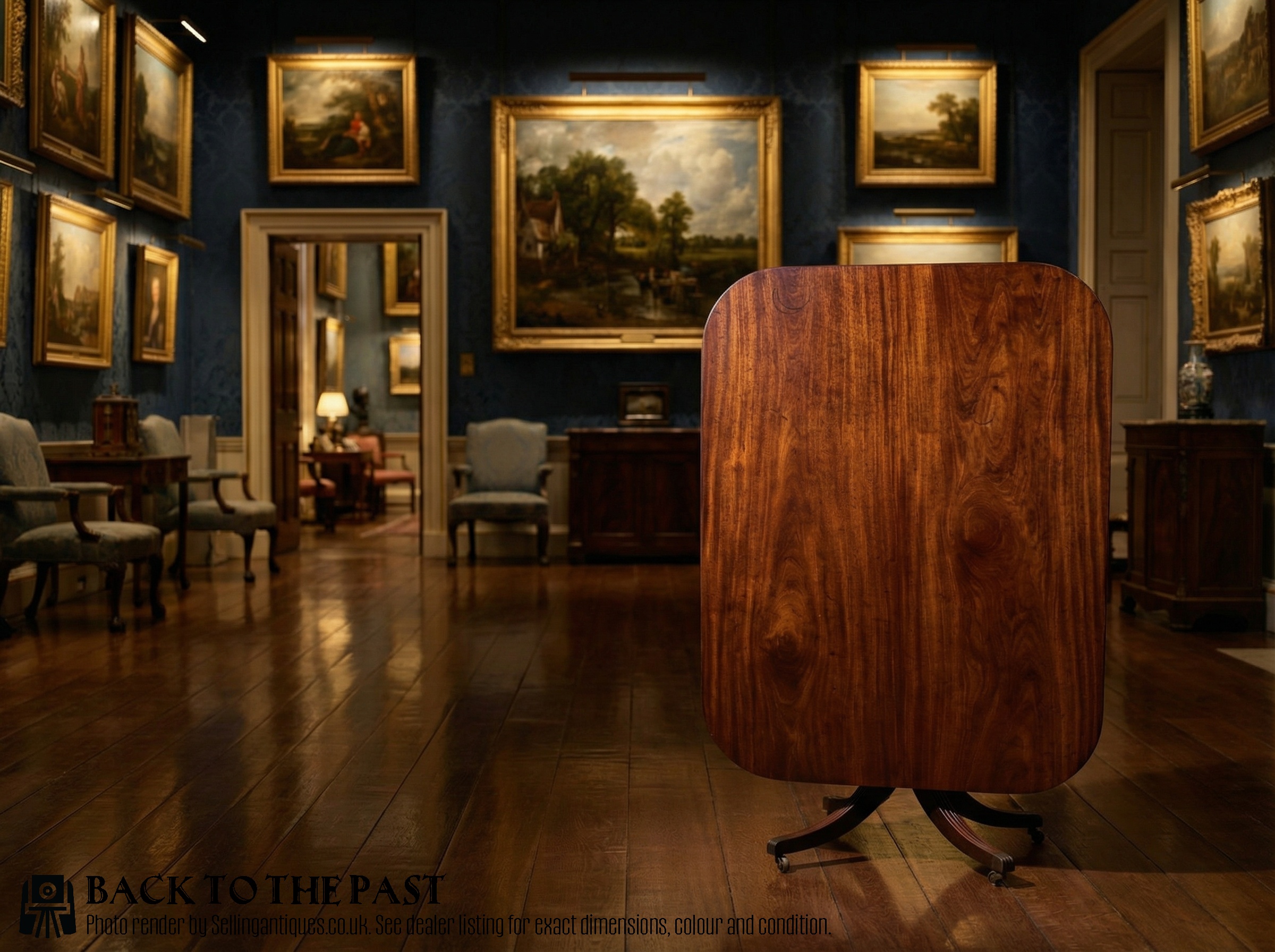
Flame Mahogany Tilt Table
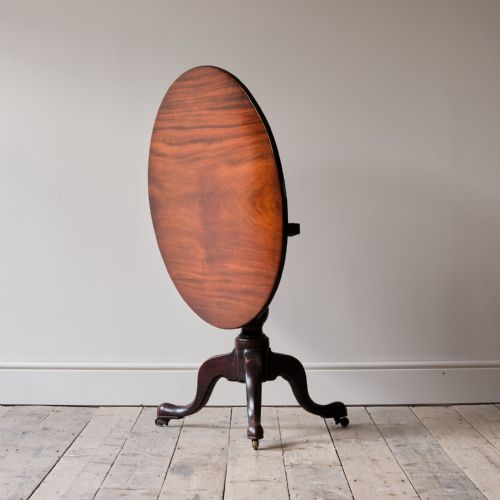
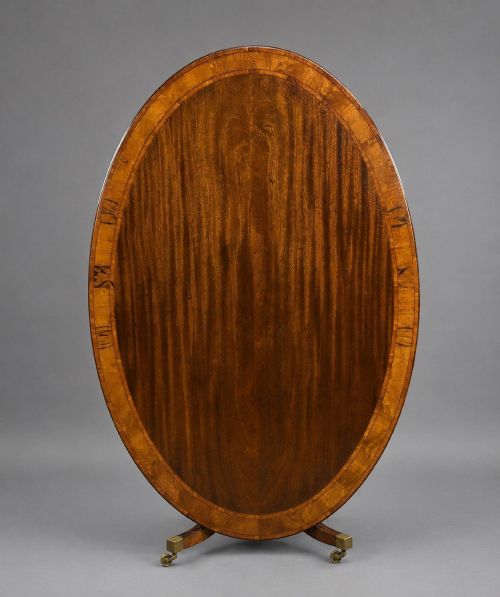
A flame mahogany tilt table is a piece of furniture designed with a hinged top that rotates from a horizontal surface to a vertical position when not in use. These tables appear across several periods in the evidence, most notably during the Regency, Georgian, William IV, and Victorian eras.
The form functions primarily as a breakfast table, centre table, or occasional wine table depending on its scale. Examples range from large circular breakfast models down to small tripod wine tables and occasional pieces.
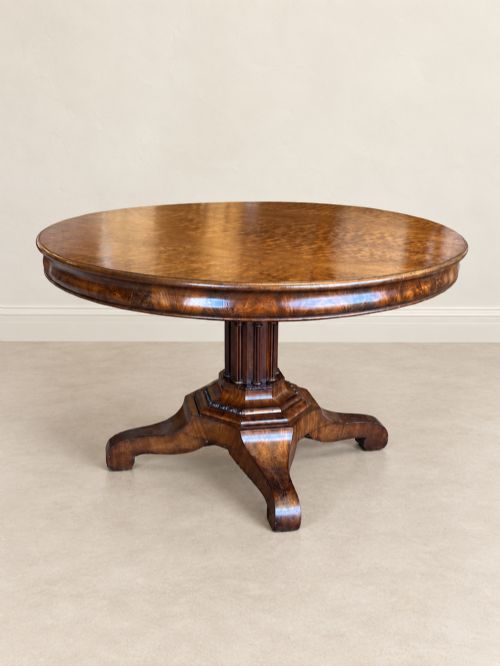
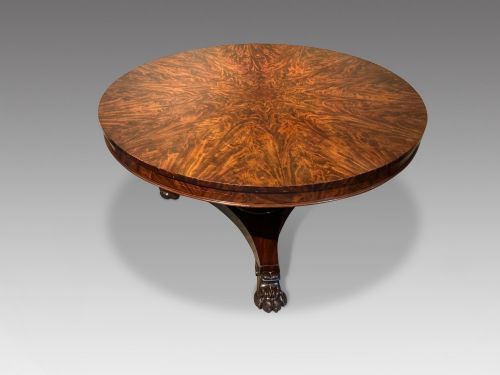
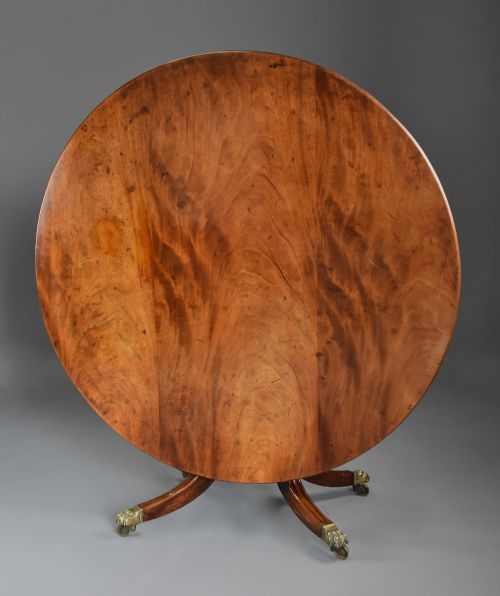
Makers often shaped the tops as circles, ovals, or rectangles supported by a central pillar and tripod base, or occasionally a pedestal. Buyers will frequently encounter Regency and 19th century interpretations utilising flame mahogany veneer alongside solid mahogany.
How They Were Made
Cabinet makers constructed these tables using solid mahogany and secondary timbers such as oak, applying flame mahogany veneer to the tops to create dramatic grain patterns. Brass components, including castors, inlay, and the tilting mechanisms, often provide structural support and decorative contrast.
Surface decoration relies heavily on the natural figure of the wood rather than excessive carving, though some examples incorporate hand carving, satinwood details, or segmented top designs.
Listings feature flame mahogany tilt tables across Georgian, Regency, William IV, and Victorian periods, utilising brass inlay and satinwood.
What Varies in Quality
Quality rests in the selection of the flame veneer and how cleanly the timber figure is matched across the top. Superior examples show careful grain alignment and rich, faded patination rather than flat or uniform surfaces.
The stability of the tilt mechanism and the joinery of the pillar to the tripod base determine how well the table functions day to day. Finer tables display crisp turning on the pedestal and precise brass inlay without awkward gaps.
Walker-Lancaster·Gillows
The Flame Mahogany Tilt Table Glossary
- Flame mahogany
- A veneer cut from the fork of the mahogany tree where the branch meets the trunk. This produces a distinctive, flickering flame-like pattern prized by cabinet makers.
- Tilt top
- A hinged table top mechanism that allows the surface to pivot upright. This enables the furniture to take up less floor space when pushed against a wall.
- Tripod base
- A pedestal support resting on three spreading feet. It provides balance for a central pillar on breakfast and wine tables.
- Patina
- The surface sheen and colour acquired by wood over decades of handling and exposure. A desirable finish shows depth and warmth rather than a flat modern lacquer.
- Breakfast table
- A large occasional or dining table developed in the Georgian and Regency periods. These pieces often feature circular or oval tilting tops supported by a pedestal.
Flame Mahogany Tilt Table: Frequently Asked Questions
Why did they make tilt top tables?
Cabinet makers designed tilt tops so large tables could be swung upright and pushed against the perimeter of a room when meals finished. This cleared floor space in smaller parlours and dining rooms.
The pivoting mechanism also protected the polished wood surface from accidental damage while the room served other daily functions.
How do I identify a Regency flame mahogany table?
Regency tables generally feature bold flame mahogany veneer, often paired with rosewood or brass inlay, resting on a central pillar with sabre legs. Look for clean classical proportions and heavy brass paw castors.
Construction details from this period around 1800 to 1830 include pegged joints and heavy mahogany blocking beneath the circular or rectangular top.
Can I use a breakfast table for daily dining?
These large circular or oval tables provide sturdy surfaces that easily seat several guests for meals. The central pedestal leaves ample legroom around the perimeter.
Protect the flame mahogany veneer with placemats and coasters to prevent heat marks or moisture rings from damaging the antique finish.
What is the difference between a wine table and a breakfast table?
Wine tables are small occasional pieces built for holding glasses or a single bottle by a chair, standing on a slender tripod base. Breakfast tables are much larger centre pieces meant for sitting around.
Both share the tilt top mechanism, but their scale and intended placement in the room differ entirely.