


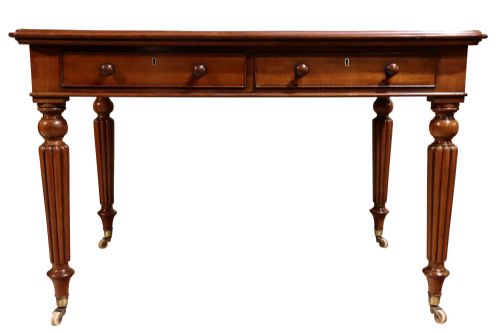


Early Victorian Mahogany Table
An early victorian mahogany table brings the rich grain and warm tones of mid-nineteenth-century cabinet-making into a modern room.
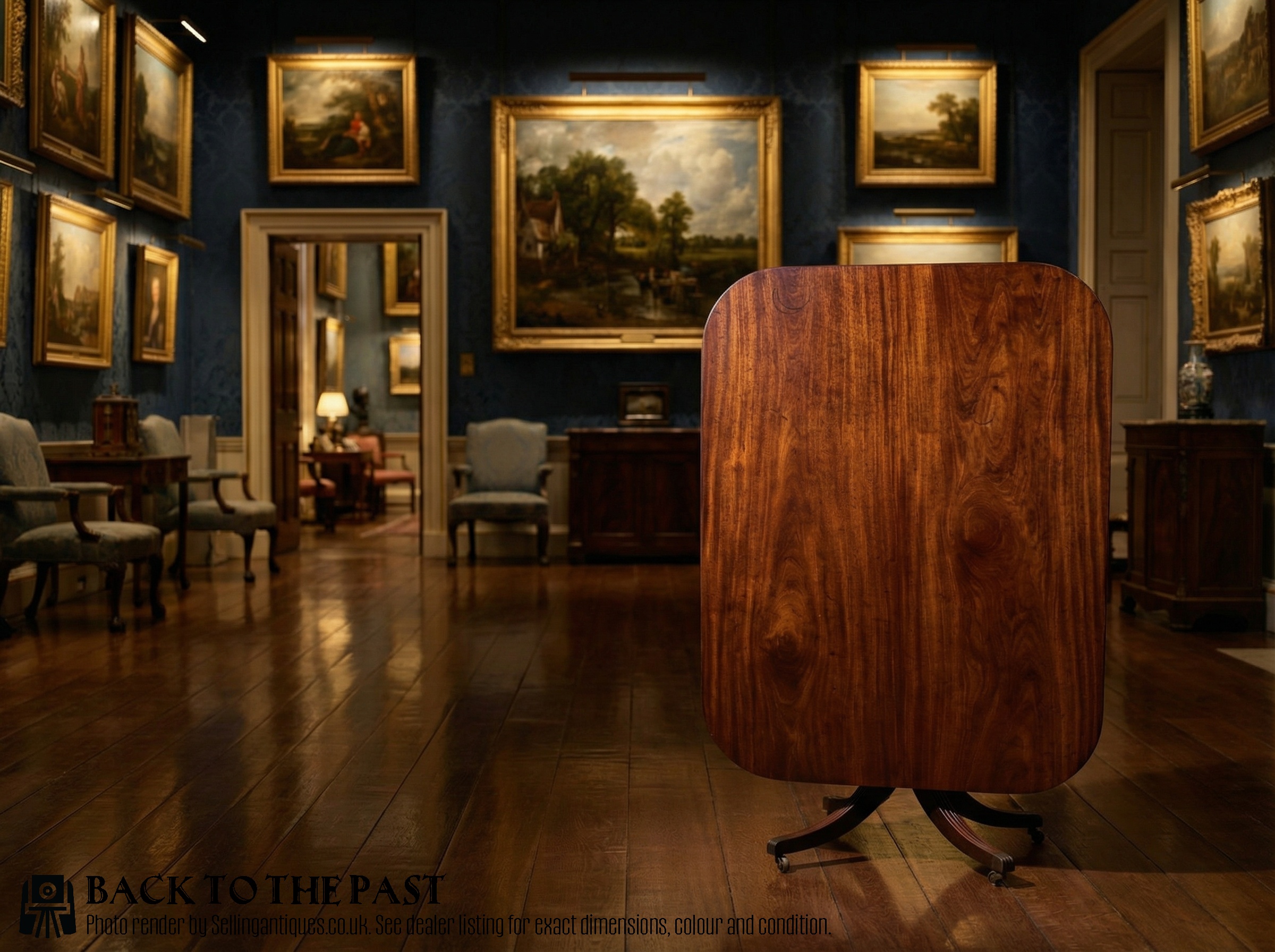
Early Victorian Mahogany Table
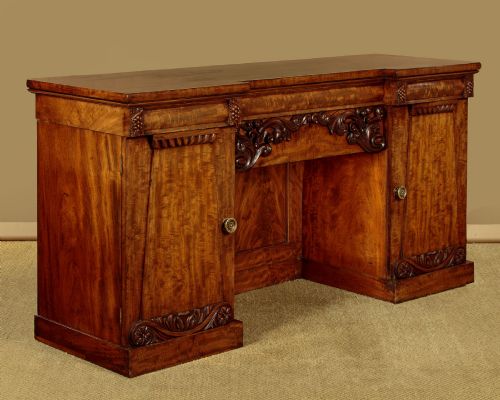
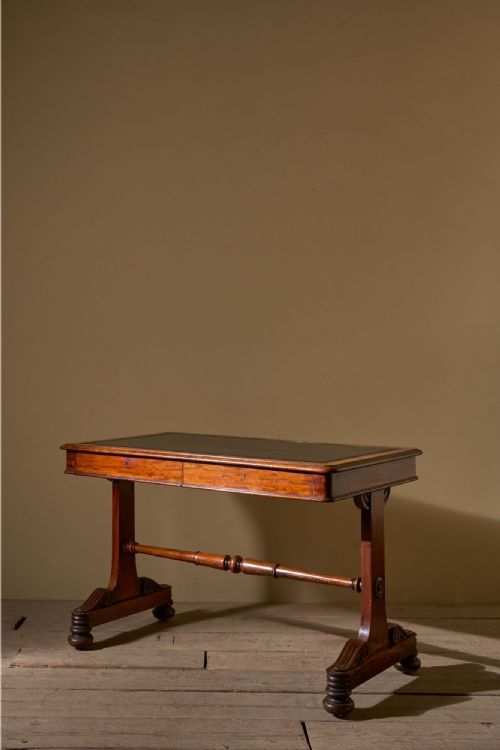
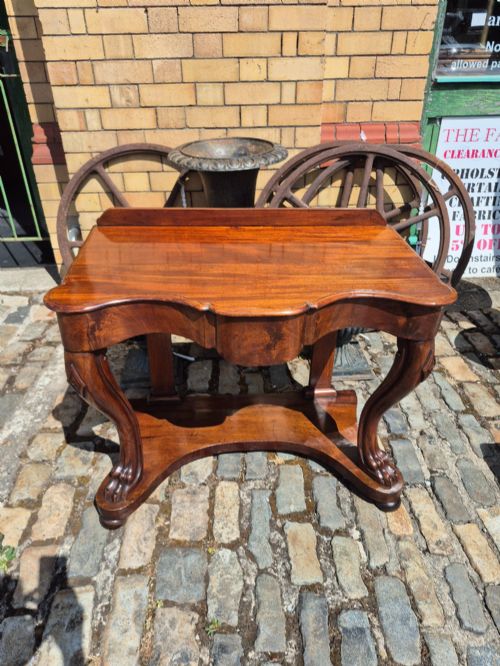
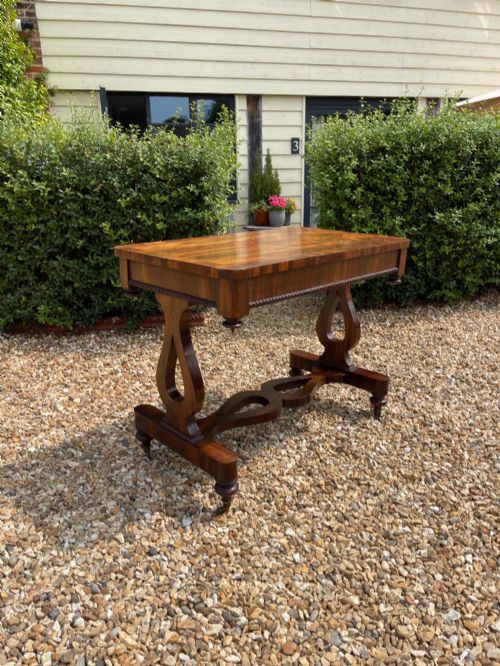
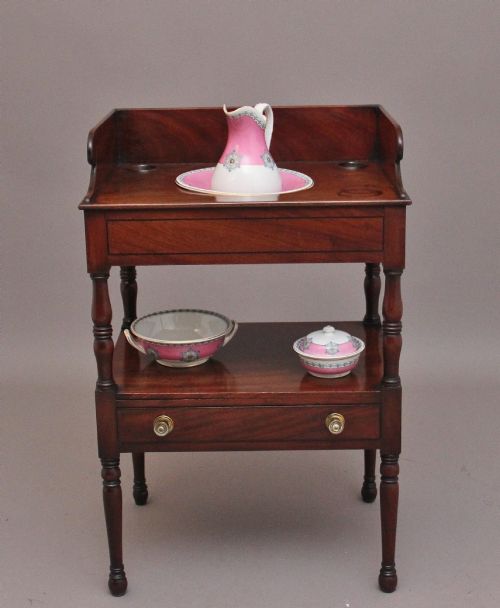
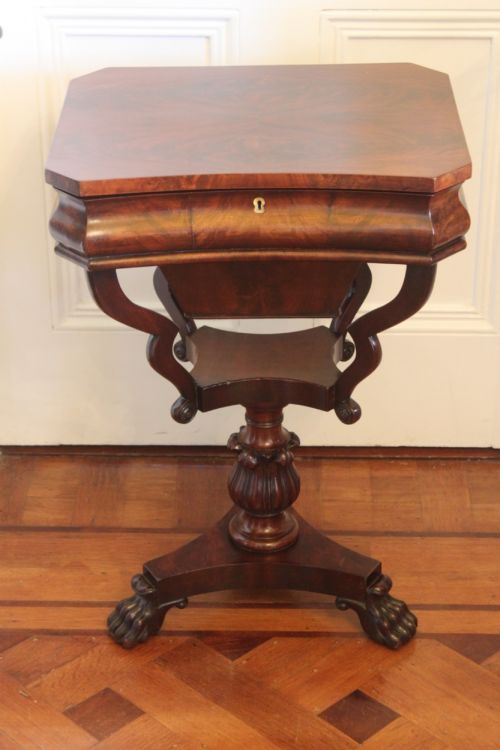
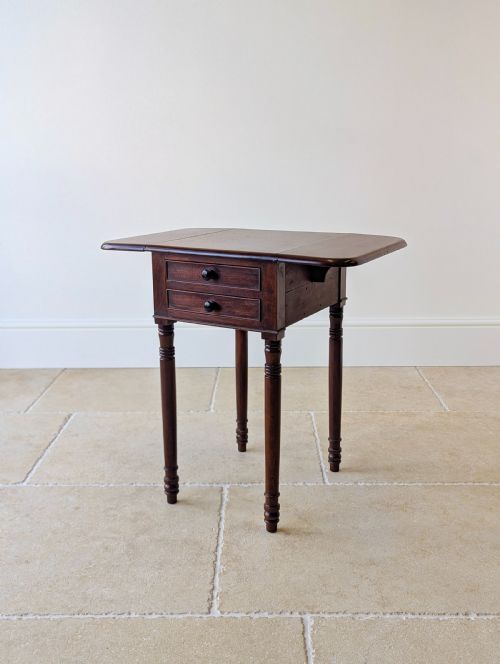
When you search for an early victorian mahogany table, you encounter pieces spanning the decades around the middle of the nineteenth century, built during a time when furniture design favored practical elegance alongside sturdy construction. These pieces range from compact drop-leaf Pembroke tables and writing desks fitted with drawers to large, wind-out extending dining tables designed to accommodate gatherings.
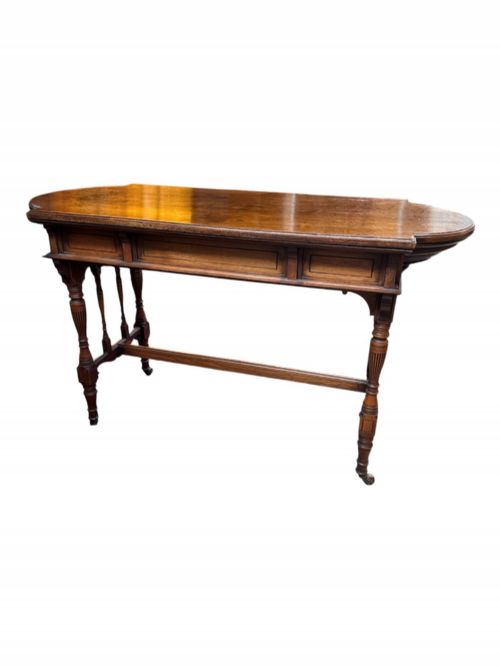
The selections on this page reflect the diverse domestic needs of the Victorian household, appearing as side tables, card tables with foldover tops, library tables, and occasional stands. Cabinet-makers of the period utilised dense native and imported timbers, shaping them into functional forms that remain central to traditional interior layouts.
Materials and Technique
Makers relied heavily on solid mahogany and flame mahogany veneers, selecting timber known for its deep colour and pronounced grain patterns, often enhanced by meticulous polishing. Secondary woods provided structural stability beneath these show surfaces, while decorative techniques such as reeded legs, turned pedestals, and inlaid leather writing surfaces added both texture and utility.
Joinery techniques from the era prioritized durability, employing robust framing for extending dining mechanisms and precise dovetailing for drawer construction. Brass castors, porcelain fittings, and turned wooden knobs frequently completed the fabrication, ensuring the pieces moved smoothly and functioned reliably.
Listings feature various forms combining mahogany with marble, brass, leather, and glass across the nineteenth-century timeline.
Assessing Craftsmanship
The distinction between ordinary and superior pieces rests on the choice of timber and the precision of the cabinet-maker's execution. Tables featuring figured flame mahogany veneers carefully matched across top surfaces, or those displaying hand-carved details rather than cast ornaments, represent the higher end of the scale.
Structural integrity and the preservation of original mechanisms also dictate worth. Examples retaining their authentic brass hardware, smooth-running drawer linings, and original extending winding systems command greater appreciation than those altered or rebuilt over subsequent generations.
Johnstone and Jeanes·Heal and Son·J. Kerr and Co
The Early Victorian Mahogany Table Glossary
- Flame mahogany
- A veneer cut from timber where the grain creates a distinctive flame-like pattern, highly prized for its decorative visual impact on table tops.
- Pembroke table
- A small, versatile table featuring two hinged drop leaves on opposing sides, often equipped with one or more small drawers.
- Reeded legs
- Cylindrical table legs carved with parallel convex mouldings running vertically, popular in nineteenth-century joinery.
- Wind-out table
- An extending dining table operated via a mechanical screw mechanism concealed beneath the leaves, turned with a removable handle.
Early Victorian Mahogany Table: Frequently Asked Questions
How do I care for a mahogany table top?
Maintain the timber by keeping it away from direct heat sources and strong sunlight, which can dry out the polished finish over time. Dust regularly with a soft, dry cloth and apply occasional high-quality beeswax to nourish the wood.
Avoid using silicone-based polishes or placing damp items directly onto the surface without protective mats. Promptly attending to spills prevents moisture rings from settling into the antique polish.
Can I use an antique table for daily dining?
Many examples from this era were constructed for robust family use and remain fully capable of serving as everyday dining furniture. Extending versions allow the table to adapt easily between compact daily layouts and larger family meals.
Using heat-resistant pads beneath hot dishes and placemats under tableware protects the antique polished surface from accidental marks. Regular checks of the underframe and leg joints ensure the structure remains stable during daily use.
How can I tell an early Victorian piece from later ones?
Examine the construction methods visible underneath and inside the drawers, looking for hand-cut dovetails and timber framing typical of mid-nineteenth-century workshops. The choice of solid mahogany and specific turned leg styles, such as reeding, help anchor the piece within the Victorian period.
Later Victorian furniture often incorporated machine-made components and different finishing trends that diverge from earlier cabinet-making standards. Comparing secondary woods and hardware styles provides further clues to dating.
What rooms suit a Pembroke table best?
A Pembroke table functions well in smaller spaces like living rooms or studies due to its drop leaves that fold down to save floor area. Raising the leaves creates a compact surface suitable for writing or holding lamps.
Their mobility allows them to sit comfortably against walls or behind sofas when not in active use. The presence of small drawers also provides convenient storage for stationery or household items.