

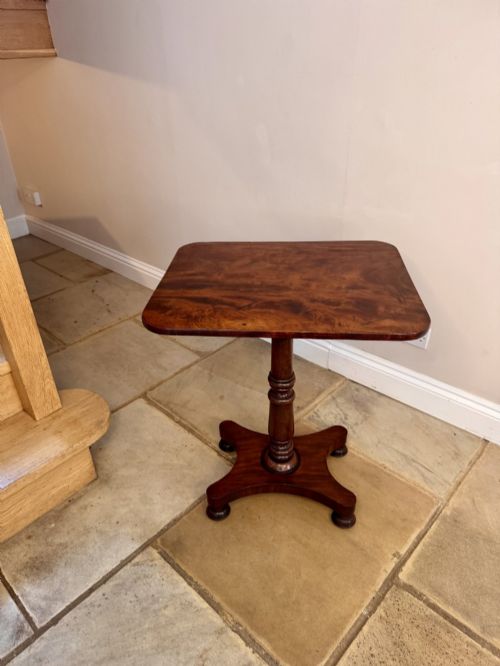
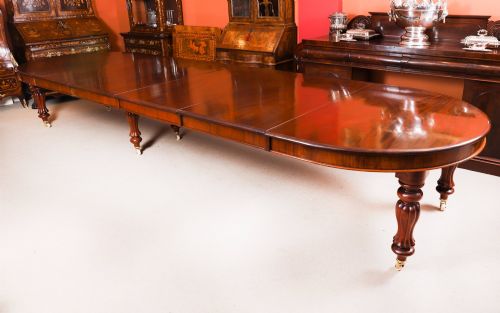
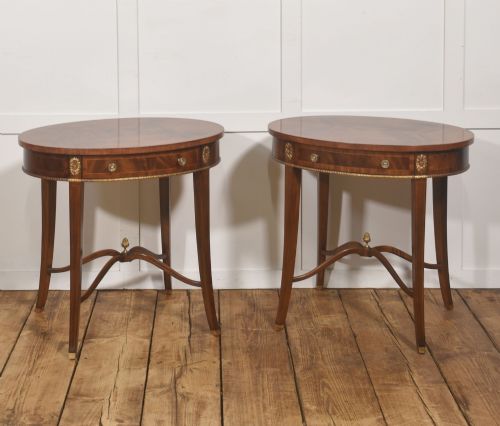
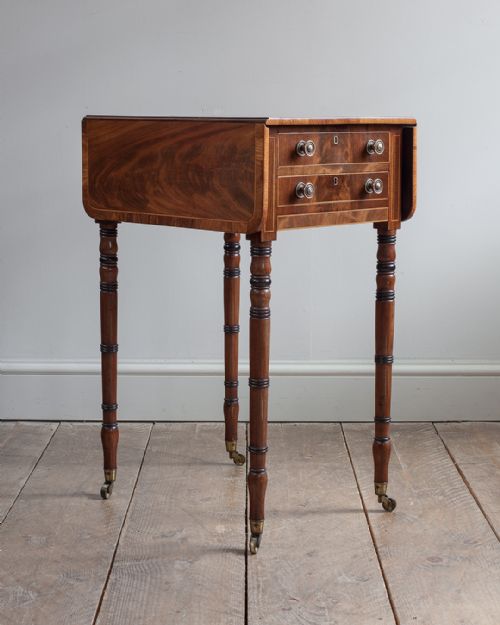




Flame Mahogany End Tables
Flame mahogany end tables bring striking timber grain and classical proportion into a room, offering both surface utility and period warmth.
Flame Mahogany End Tables
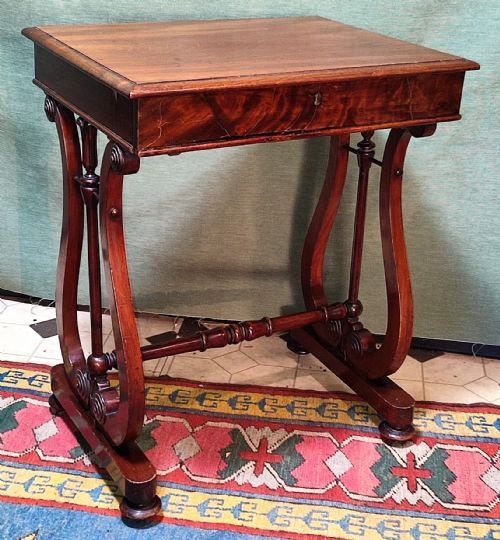
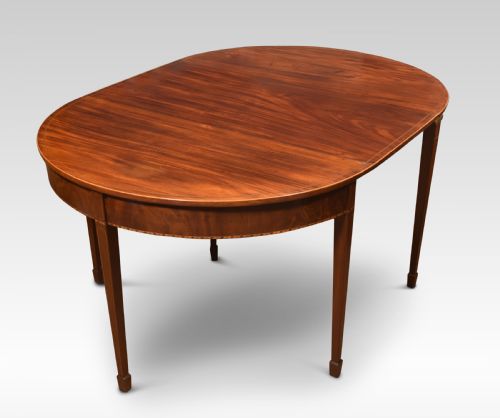
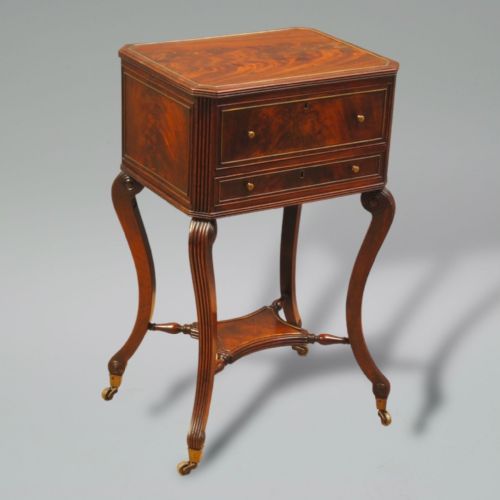
Flame mahogany end tables encompass side tables, occasional tables, bedside tables, and sofa tables produced across the Georgian, Regency, and William IV eras, alongside later revival pieces from the early twentieth century. Buyers seeking flame mahogany end tables will find forms ranging from oval side tables with boxwood inlay to brass-mounted occasional pieces and Pembroke tables.
How they were made
Cabinetmakers constructed these tables using solid mahogany carcases overlaid with figured flame mahogany veneer to achieve swirling grain patterns across the tops and drawer fronts. Boxwood inlay frequently provides linear contrast, framing the rich timber figure.
Metalwork played a structural and decorative role, with brass mounts and fittings appearing on specific Regency examples. Timber selection and veneer matching determined the visual impact of each piece.
Flame Mahogany End Tables Retail Price Guide 2026
Typical asking prices for flame mahogany end tables among the pieces listed under this phrase on Sellingantiques today, from the lower quarter to the upper quarter. They describe what is for sale here now, not the wider market.
Card tables among the selection hint at past evenings spent playing whist by candlelight.
What varies in quality
Quality rests in the intensity of the timber figure and the precision of the veneer work across the top surfaces. Tables with lively flame mahogany grain and balanced proportions command greater attention from collectors.
The integration of secondary details, such as boxwood stringing and brass mounts, distinguishes standard production from more finished cabinet work. Structural integrity in the legs and stretcher joints also defines the better examples.
The Flame Mahogany End Tables Glossary
- Flame mahogany
- A veneer cut from the fork of the mahogany tree where the branch meets the trunk, producing a characteristic rippled, flame-like pattern. This figured timber was favoured for principal display surfaces on better furniture.
- Boxwood inlay
- Narrow strips of pale yellowish boxwood embedded into the mahogany surface to create contrasting geometric borders or lines. It provides crisp definition to table tops and drawer edges.
- Pembroke table
- A small rectangular table with two hinged drop leaves on opposing sides, often fitted with a single drawer. Introduced in the eighteenth century, it offered versatile surface space.
- Sofa table
- An oblong table designed to stand in front of or beside a sofa, typically featuring drop leaves and a pair of small drawers. The underframe often incorporates trestle supports or pillar ends.
Flame Mahogany End Tables: Frequently Asked Questions
How do I date a flame mahogany end table?
Dating relies on observing the structural timber, leg forms, and secondary woods used in the construction. Pieces from the Georgian and Regency periods display construction methods and stylistic markers characteristic of their respective decades.
Later revival pieces from the twentieth century often adopt these earlier forms while retaining twentieth-century timber preparation and assembly traits.
What is the difference between side tables and occasional tables?
Side tables generally served specific static positions against walls or beside seating, while occasional tables were lighter and moved about the room as needed. Both forms utilise mahogany and flame mahogany veneers across the periods represented.
Buyers will find overlapping terminology in older listings, where both types describe compact tables suited for lamps or display.
Where should I place a flame mahogany table?
These compact tables suit living rooms as sofa companions or lamp surfaces, and bedrooms as bedside stands. Their figured timber surfaces respond well to natural light, though direct sunlight should be avoided to protect the polish.
Matching the table scale to the surrounding seating ensures the piece functions effectively within the room.
How do I care for flame mahogany veneer?
Maintenance involves dusting with a soft, dry cloth and avoiding silicone-based polishes that can build up over the antique finish. Keeping the timber away from extreme heat sources prevents the veneer from lifting.
Applying occasional traditional wax preserves the depth of the grain and protects the polished surface.