

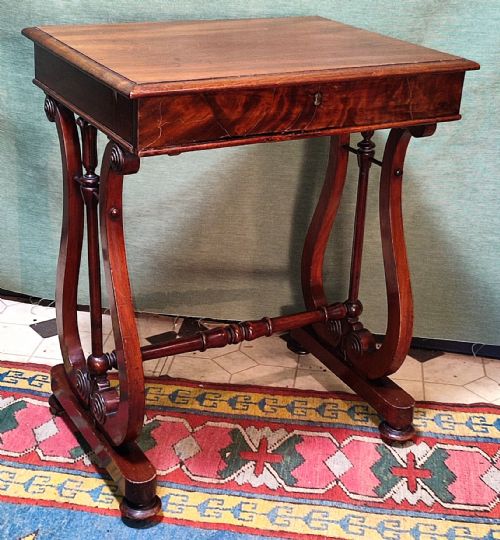


Flame Mahogany Occasional Table
A flame mahogany occasional table brings striking figured timber and practical surface space to a room, drawing the eye with its rich grain.
Flame Mahogany Occasional Table
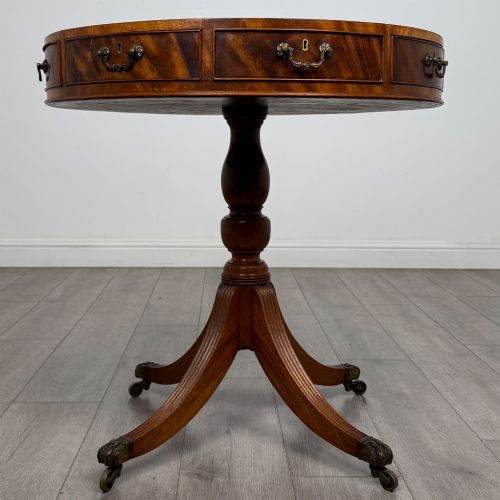
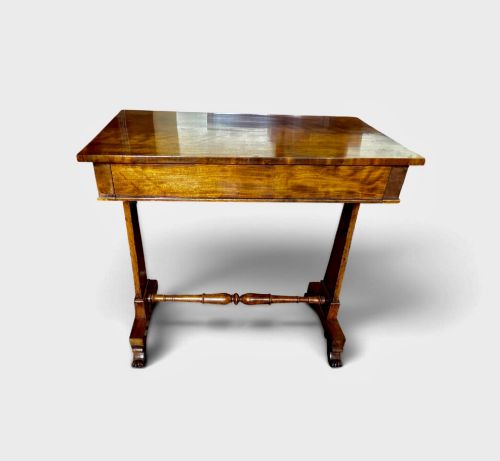
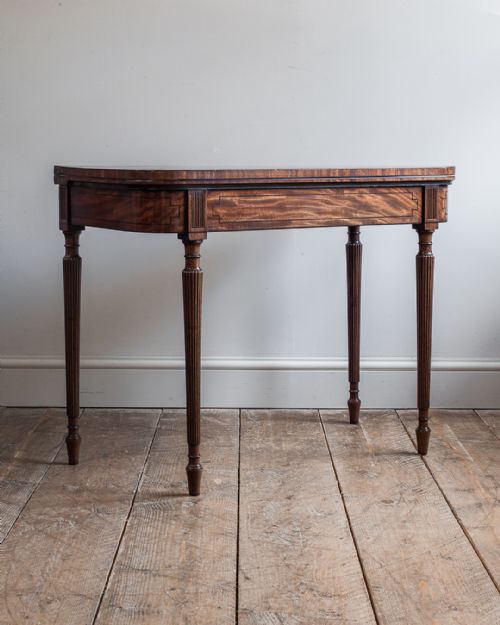
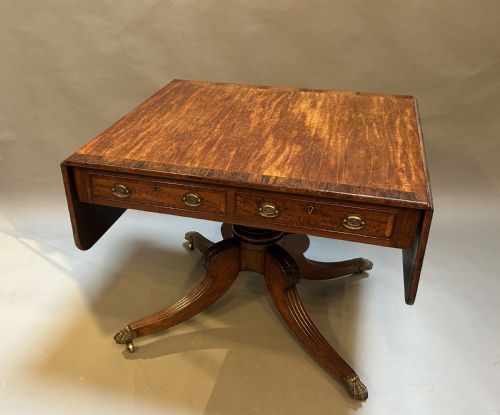
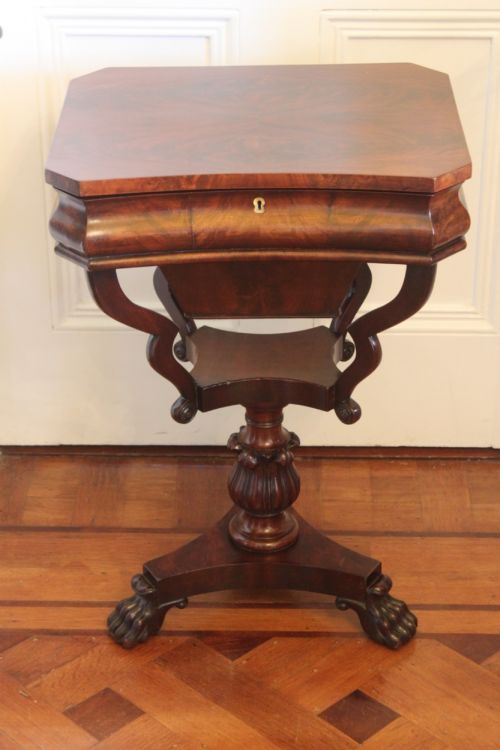
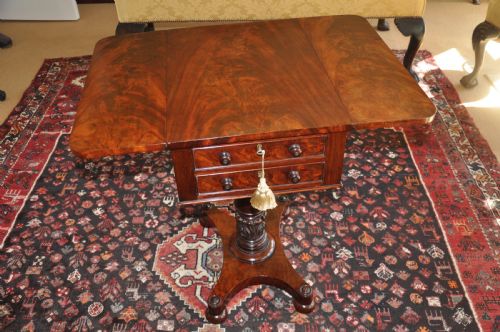
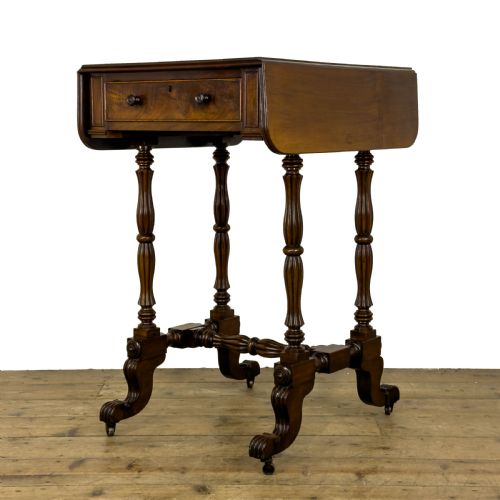
A flame mahogany occasional table displays the distinctive rippled and fiery grain patterns inherent to selected cuts of the timber, appearing primarily across Georgian, Regency, Victorian, and Edwardian periods. These pieces take various forms including tripod wine tables, drop-leaf work tables, sofa tables, and drum tables designed for flexible placement around a home.
The versions most frequently met on this page span the Regency and William IV eras, alongside later Edwardian interpretations. Makers utilised the striking veneer on circular, oval, and rectangular tops supported by pillars, pedestals, or barley twist legs.
Materials and construction
Craftsmen selected sections of mahogany showing dramatic flame grain figures, slicing them into thin veneers to lay over stable secondary wood foundations. This technique maximised the visual impact of the distinctive figuring across table tops.
Structural elements incorporated solid mahogany, sometimes enhanced with brass mounts, fabric inserts, or satinwood stringing. Pedestal bases relied on robust tripod or pillar supports to bear the weight of the timber top.
The site archives record occasional tables built in circular, oval, octagonal, and D-shaped formats.
Distinctions in quality
The standard of a flame mahogany occasional table rests upon the intensity and symmetry of the veneer's figuring across the surface. Superior examples display a balanced, highly active flame pattern rather than plain or disjointed grain matching.
Construction details differentiate the output, from the crispness of turned pillars and carved tripod legs to the seamless application of veneer edges. Finer pieces maintain balanced proportions and integration between the top and its supporting base.
The Flame Mahogany Occasional Table Glossary
- Tilt top
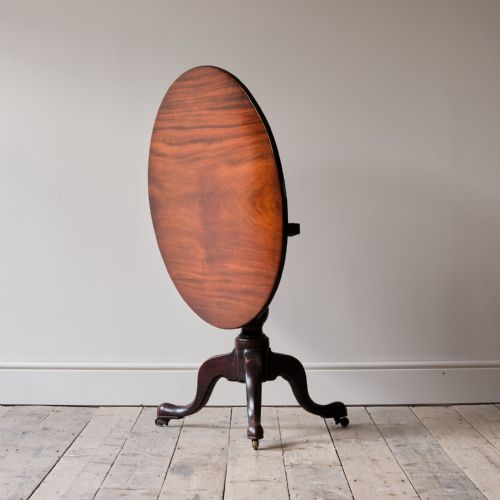
- A table top hinged to the pedestal, allowing it to tilt vertically for storage against a wall when not in use. This mechanism often incorporates a a rule joint and a brass catch.
- Tripod table
- A small freestanding table supported by a central pillar resting on three legs. These are frequently found in circular or oval formats.
- Sofa table
- A rectangular table traditionally placed against the back of a sofa, featuring drop leaves on either side and small drawers. They emerged during the late Georgian and Regency periods.
- Pembroke table
- A small table with hinged drop leaves on two opposing sides, supported by folding brackets or swinging legs. They served versatile functions in sitting rooms and parlours.
Flame Mahogany Occasional Table: Frequently Asked Questions
What is a flame mahogany occasional table?
A flame mahogany occasional table is a small, movable piece of furniture surfaced with highly figured wood veneer. These tables date primarily from the Georgian, Regency, Victorian, and Edwardian eras.
They appear in formats such as wine tables, drum tables, and Pembroke tables, serving functional roles as surface space while highlighting decorative timber.
How were these tables used originally?
These tables served flexible purposes in period interiors, acting as surfaces for lamps, tea service, sewing work, or writing. Drop-leaf and tilt-top versions allowed households to clear floor space when the tables were not needed.
Smaller forms like wine tables and tripod tables moved easily from room to room to meet immediate domestic demands.
How do I style an occasional table at home?
An occasional table works well beside a sofa, armchair, or in a hallway, providing a surface for a lamp, books, or decorative objects. Their compact footprints allow them to fit into corners or unused wall spaces.
Pairing a figured timber top with simpler surrounding furnishings lets the grain pattern stand out as a focal point.
How can I tell Regency from Victorian tables?
Regency tables typically display restrained classical proportions, sweeping sabre legs, brass mounts, and clean architectural lines. Mahogany from this period often exhibits bright, highly figured flame veneers.
Victorian pieces frequently introduce heavier turnings, such as barley twist columns, deeper mouldings, and sometimes darker finishes or more ornate carving.