


Round Marble Pedestal Table
A round marble pedestal table brings cool stone and balanced proportion into a room, offering a sturdy surface that anchors the floor plan.
Round Marble Pedestal Table
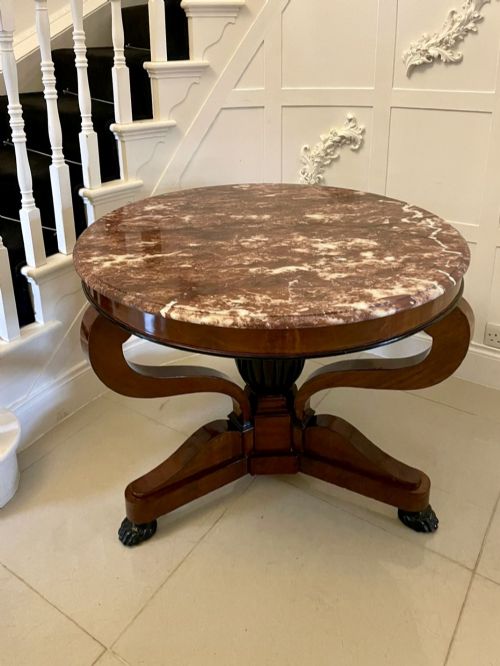
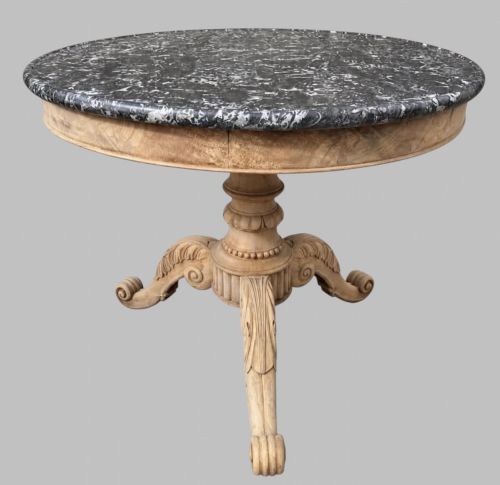
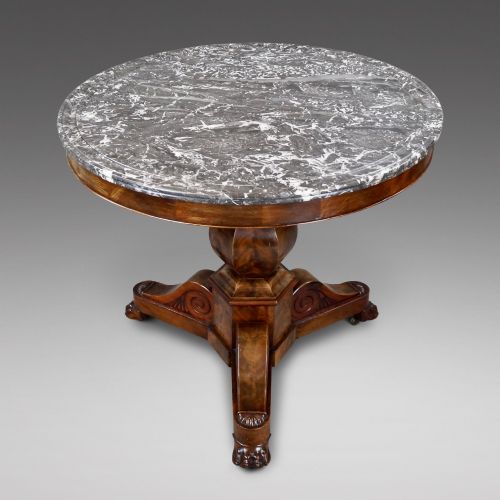
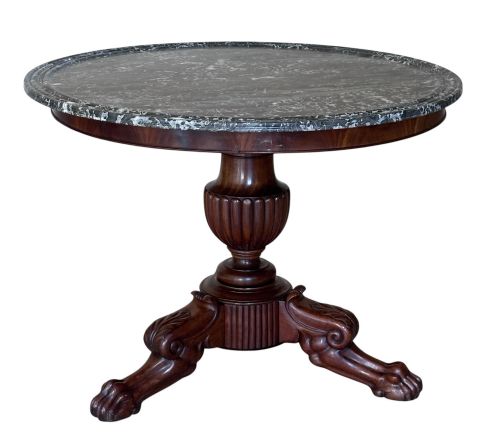
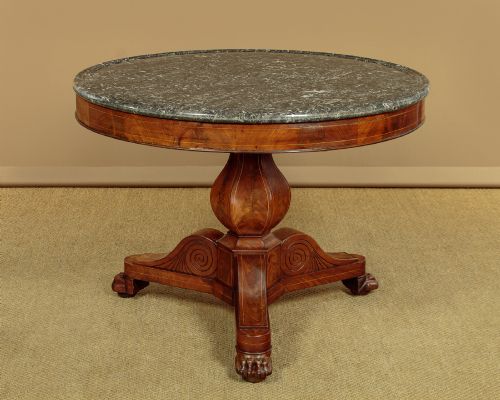
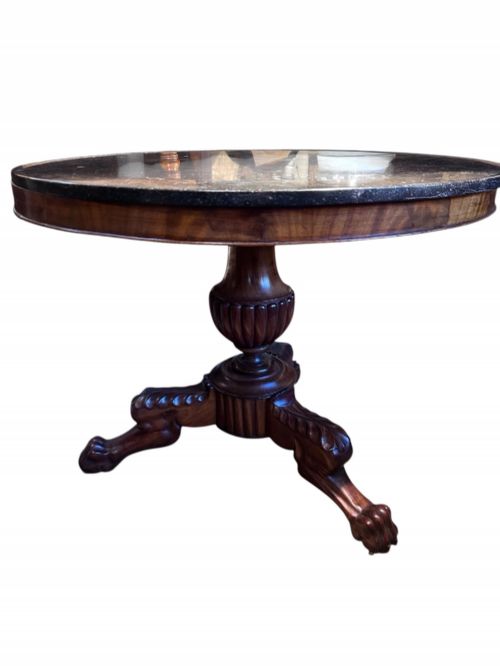
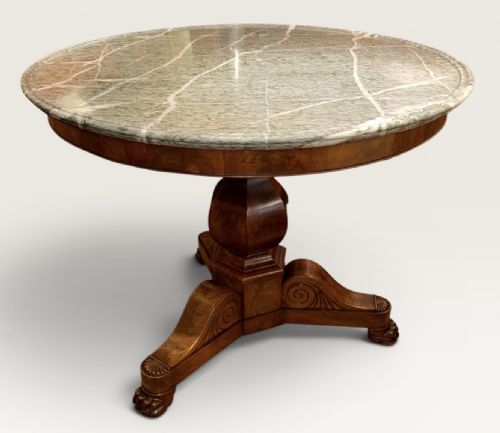
A round marble pedestal table combines a heavy circular stone slab with a central column support, often identified in continental workshops as a gueridon. These pieces serve primarily as centre tables, occasional tables, and compact dining surfaces in various rooms.
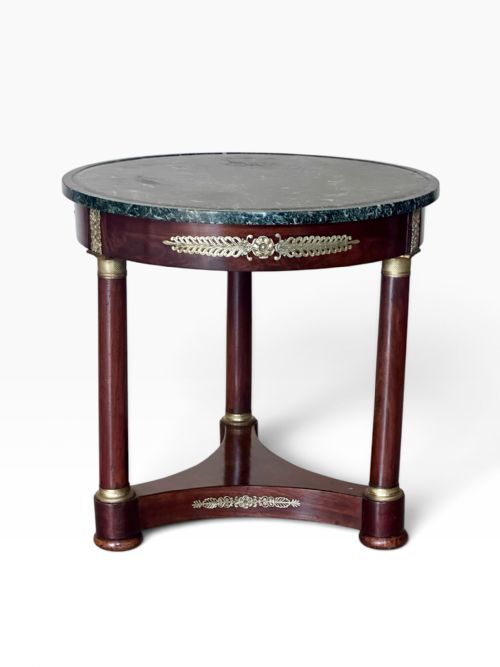
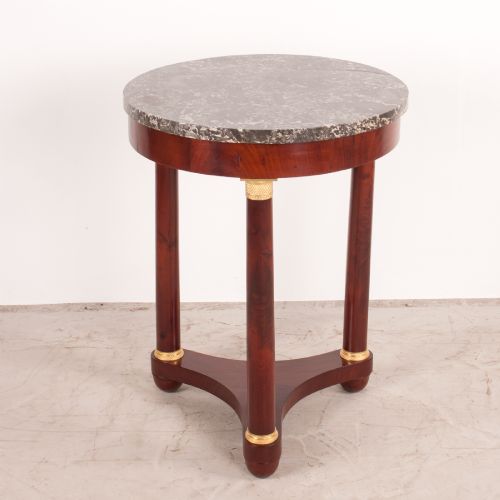
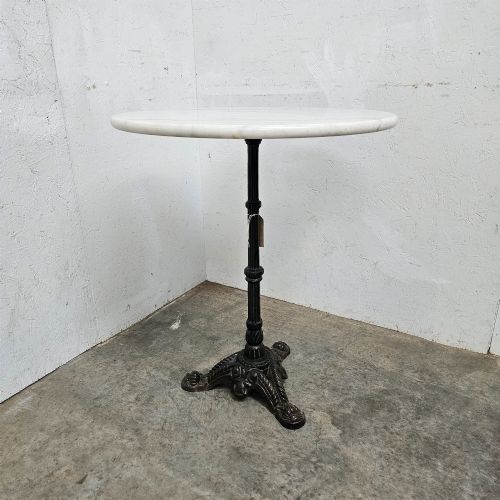
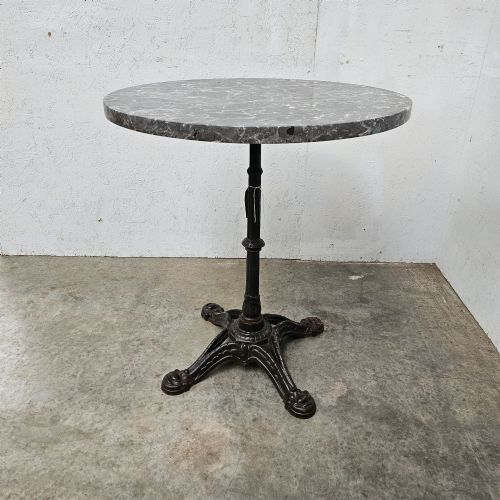
The selections available here lean heavily toward nineteenth-century French examples, alongside Victorian designs and café variations. Buyers encounter everything from formal Empire mahogany stands with elaborate carvings to simple iron-framed bistro pieces.
The form suits smaller spaces where four-legged tables crowd the floor, allowing chairs to tuck in neatly beneath the overhang. The central column provides structural stability while keeping legroom entirely unobstructed.
Materials and construction methods
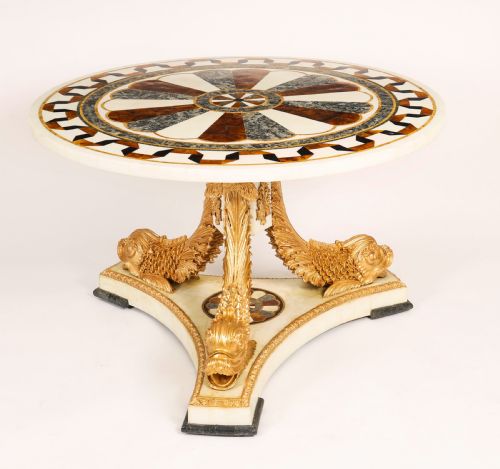
Cabinetmakers constructed the main frames from dense timbers such as mahogany, walnut, burr elm, and giltwood, often building a sturdy wooden drum or tripartite base to receive the stone. Ormolu mounts, brass collars, and cast iron framing added weight and decorative contrast.
Slabs of marble, onyx, and specimen stone were cut, polished, and fitted directly to the top surface, sometimes secured with wooden battens or mortar beds. The joinery beneath relied on heavy central screw threads, tenons, and structural blocking to bear the considerable weight of the stone.
Some nineteenth-century French tables hide tiny wheels beneath their paw feet, letting stubborn marble slide across the parlour with surprising grace.
Distinguishing quality and craftsmanship
The grade of the marble top sets the baseline for the piece, ranging from simple white or grey utility stone to richly figured green marble, multi-coloured specimen work, or translucent onyx. Superior examples feature perfectly matched stone edges and harmonious natural veining.
The joinery and timber selection on the pedestal dictate the overall stability and refinement. Master workshops employed finely figured flame mahogany veneers, crisp fire-gilt bronze mounts, and substantial carved details like swans or rams' heads rather than cast plaster substitutes.
The Round Marble Pedestal Table Glossary
- Gueridon
- A small French round pedestal table designed for holding candles, plants, or decorative objects. The term eventually came to describe larger central tables built on a single column.
- Ormolu
- Gilded bronze used for decorative mounts and accents on furniture frames. This technique involves applying a mercury and gold amalgam to cast bronze before heating.
- Specimen marble
- A decorative top composed of numerous small pieces of various coloured marbles arranged in geometric or pictorial patterns. Such tops demonstrate advanced lapidary skill.
- Empire style
- A neoclassical design movement popular during the early nineteenth century characterised by heavy classical motifs, dark mahogany timbers, and bronze mounts. The aesthetic draws heavily on ancient Roman and Greek archaeology.
- Conserve
- To maintain an antique object in its existing state with minimal intervention, preserving original surface patination and historical wear. This approach prioritises material integrity over cosmetic renewal.
Round Marble Pedestal Table: Frequently Asked Questions
How do I clean a marble top?
Use a soft cloth dampened with warm water and mild, pH-neutral soap to wipe down the stone surface. Avoid acidic cleaners like vinegar or lemon juice, which etch the polished finish.
Dry the marble thoroughly with a clean microfibre cloth to prevent water spots. Routine dusting keeps abrasive grit from scratching the polished surface over time.
Can I use these tables outdoors?
Most antique round marble pedestal tables are built for interior use and lack weather-resistant finishes on their wooden frames. Humidity and frost will cause timber to warp and veneering to lift.
Cast iron and metal café tables from later periods tolerate covered outdoor spaces better than wooden examples. However, freezing temperatures can still crack vulnerable stone tops if left exposed.
Are the marble tops fixed in place?
Many nineteenth-century marble tops simply rest on the wooden frame by gravity alone due to their heavy weight. This loose fit makes moving the table safer if you lift off the stone slab first.
Some pieces feature wooden retaining battens or pins underneath to prevent the top from shifting. Check the underside before lifting to understand how the stone is secured.
How do I date a pedestal table?
Examine the timber species, secondary woods inside the construction, and the type of fixings used beneath the top. Hand-cut dovetails and older screw threads point toward nineteenth-century origins.
Stylistic cues such as heavy empire columns, giltwood carvings, or cast iron bases also help narrow down the manufacturing decade. Comparing the piece to documented examples from similar workshops confirms the timeframe.