
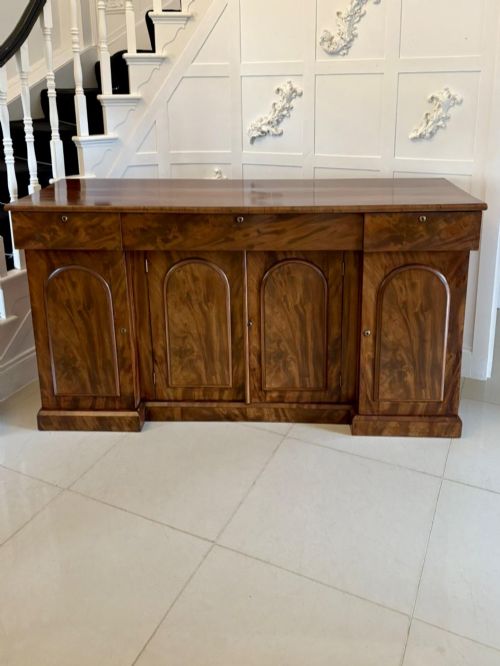
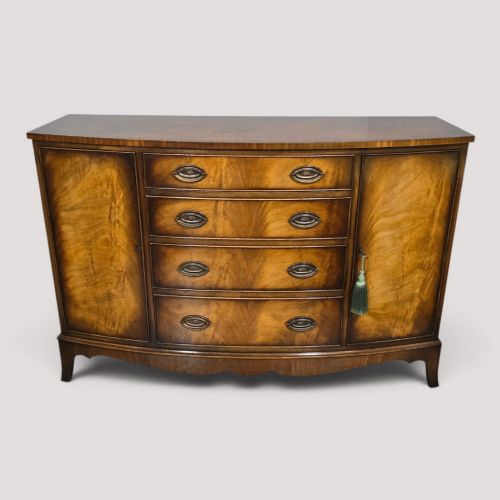
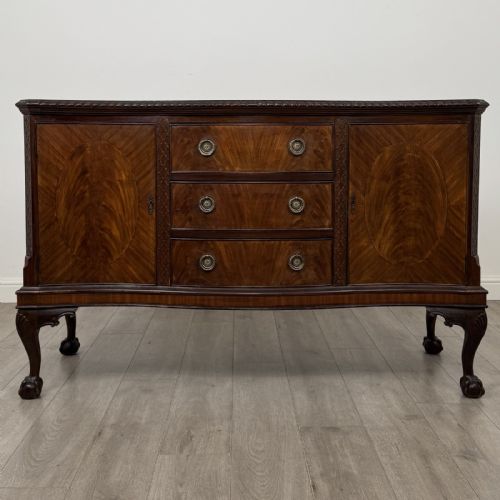
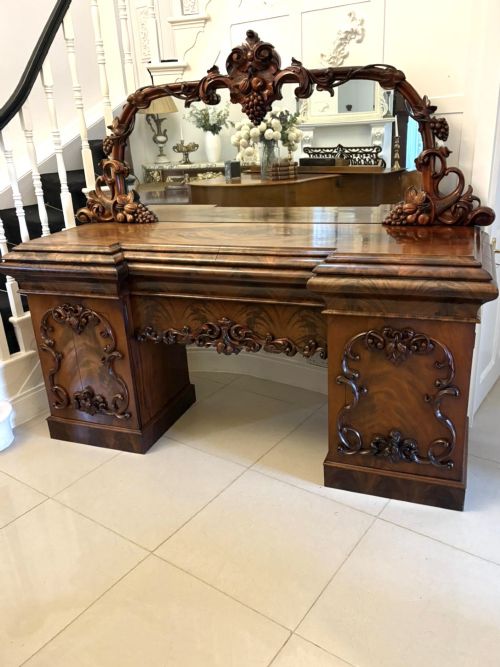
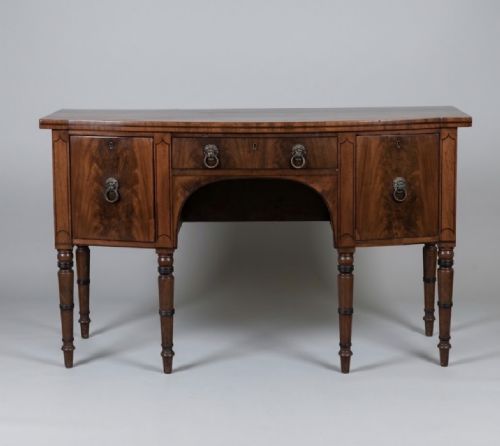
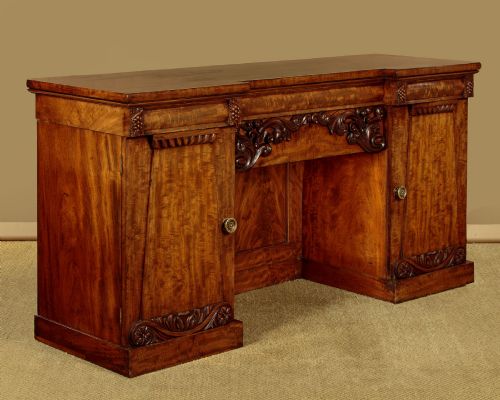
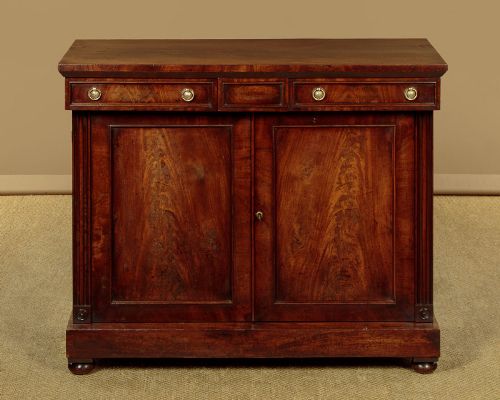
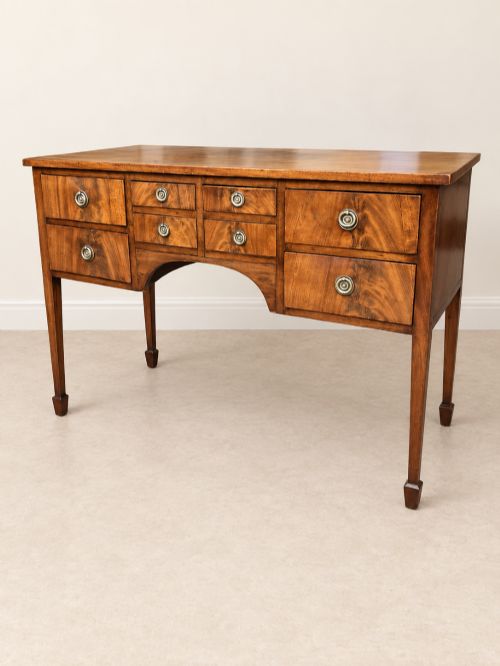
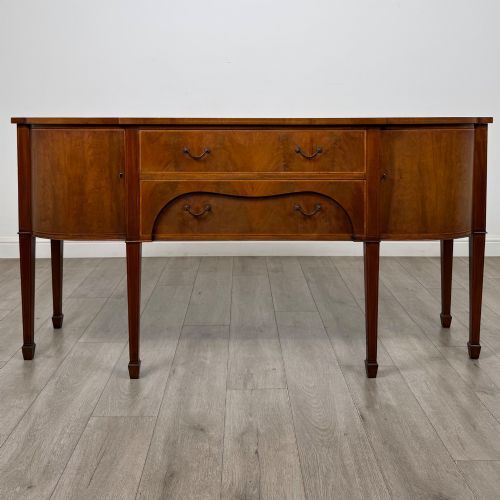
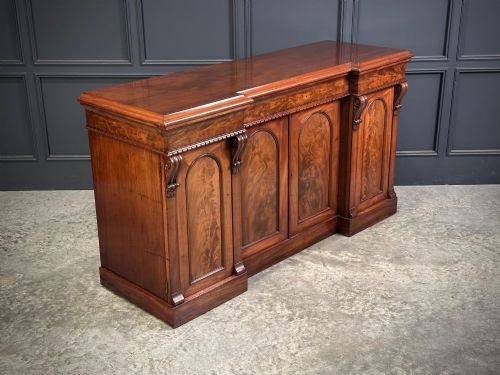
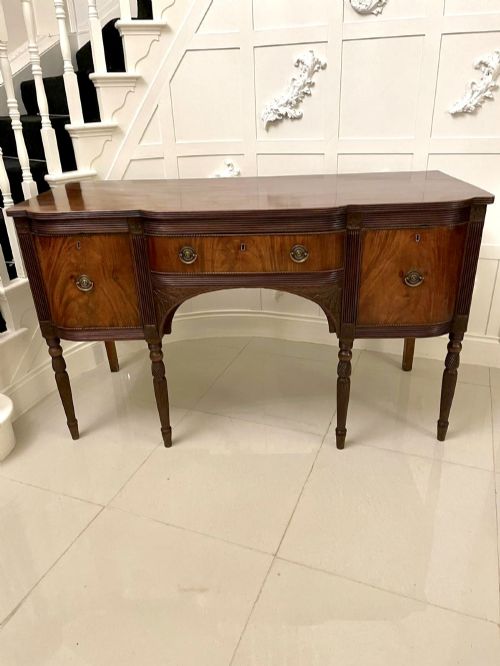
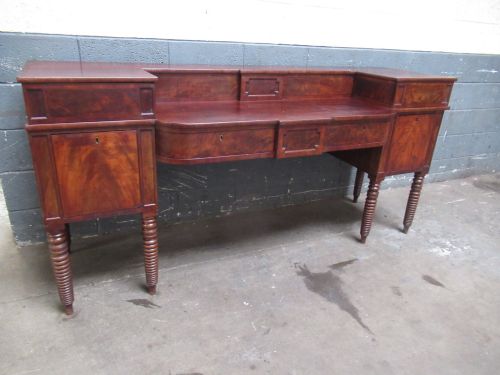
Flame Mahogany Dining Buffet
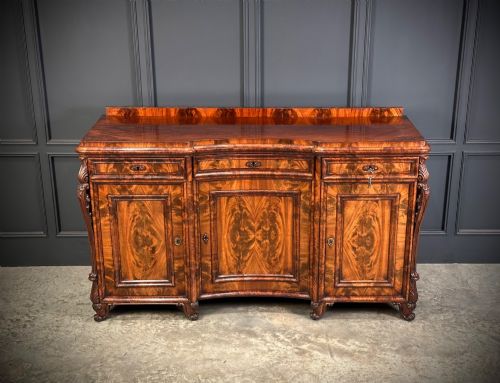
Flame mahogany dining buffet pieces bring striking wood grain and substantial storage to a dining room, uniting George III, Regency and Victorian forms.
Flame Mahogany Dining Buffet
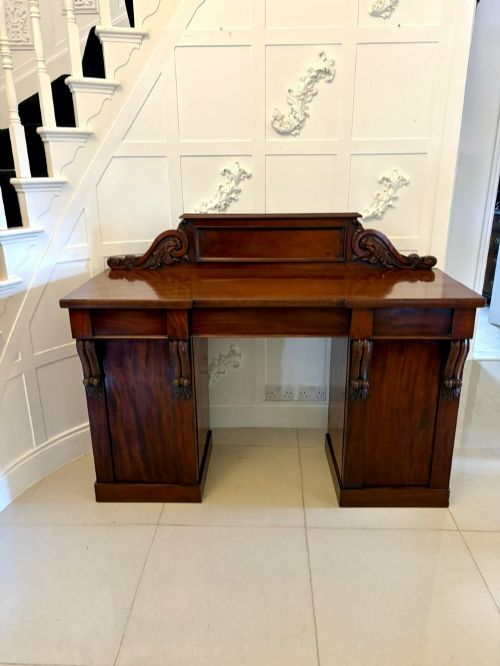
When you search for flame mahogany dining buffet, you encounter large storage furniture primarily spanning the Georgian, Regency and Victorian periods, along with later Edwardian interpretations. These items typically present as sideboards, chiffoniers and serving tables designed for the dining room.
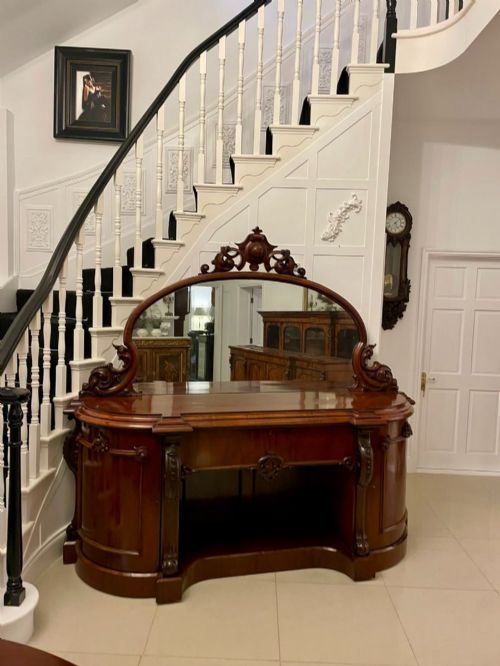
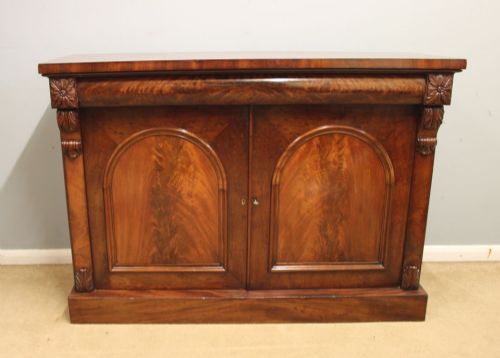
The version you meet most often on this page is the Victorian or nineteenth-century sideboard displaying figured mahogany veneers. These forms often feature bow fronts or breakfront layouts paired with cupboards and drawers for dining service storage.
How they were made
Cabinet makers applied thin veneers of flame mahogany over solid secondary timbers to create dramatic wood grain patterns across the front doors and drawer faces. They selected specific cuts from fork joints where branches met the main trunk to achieve these distinctive flame figures.
Workshops integrated solid mahogany frames, drawer linings of oak or pine, and decorative details such as boxwood and satinwood inlay. Metal fixtures like brass handles and key escutcheons completed the construction alongside hand-carved wooden feet.
Listings span multiple eras from the eighteenth-century George III period through Regency and Victorian designs into Edwardian variations.
What varies in quality
The visual impact of the veneering dictates much of the standing, with symmetrical matching of the flame grain across multiple doors separating standard examples from superior ones. Grain selection determines whether the timber possesses depth and movement or appears flat.
Secondary construction standards establish the baseline of manufacture, seen in the thickness of the mahogany timber and the crispness of hand-carved elements such as lion paw feet or scrolling consoles. The integrity of the internal carcase and drawer dovetailing completes the hierarchy.
The Flame Mahogany Dining Buffet Glossary
- Flame mahogany
- A decorative wood veneer showing a ripple or flame-like pattern derived from specific cuts of timber. This figure appears frequently on the principal display surfaces of nineteenth-century dining furniture.
- Bowfront
- A curved front facade that swells outward in the centre. This shape defines many Georgian and Regency sideboards.
- Breakfront
- A cabinet front where the central section projects forward beyond the flanking wings. This layout creates architectural depth on larger dining pieces.
- Chiffonier
- A compact sideboard or side cabinet typically fitted with enclosed shelving below and sometimes a mirrored back or superstructure above. These pieces served similar dining room functions to larger sideboards.
- Inlay
- Contrasting woods such as boxwood or satinwood fitted into recessed channels on the surface to create decorative borders. Makers utilised this technique to outline drawers and top surfaces.
Flame Mahogany Dining Buffet: Frequently Asked Questions
What is a flame mahogany buffet used for?
These pieces functioned historically in dining rooms to store serving dishes, cutlery and table linen while providing a surface to display silver and ceramics during meals.
Today, they serve the same practical purpose in modern homes while acting as focal storage units in dining rooms, living spaces or hallways.
How do I identify a Regency sideboard?
Regency pieces often display classical architectural proportions, brass lion paw feet, reeded columns and striking flame mahogany veneers dating from the early nineteenth century.
Makers working in this era favored clean geometric lines balanced with restrained inlay and high-contrast timber grain.
Are these buffets solid mahogany?
Most examples use solid mahogany for structural elements like frames, legs and drawer sides, but apply thin flame mahogany veneers across large flat surfaces such as doors and drawer fronts.
This technique allowed cabinet makers to display the most decorative grain patterns without risking the warping that large solid boards of figured timber might experience.
How do I care for a mahogany sideboard?
Protect the polished surface by avoiding direct sunlight and placing pieces away from heat sources that could dry out the wood or crack the veneer.
Apply occasional traditional wax polish and buff with a soft cloth to maintain the natural lustre of the mahogany grain.