



Rich Brown Wooden Credenza
A rich brown wooden credenza brings warmth and architectural presence to a room, offering substantial storage through timeless cabinet forms.
Rich Brown Wooden Credenza
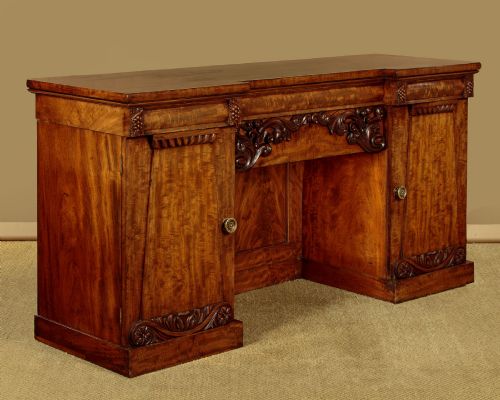
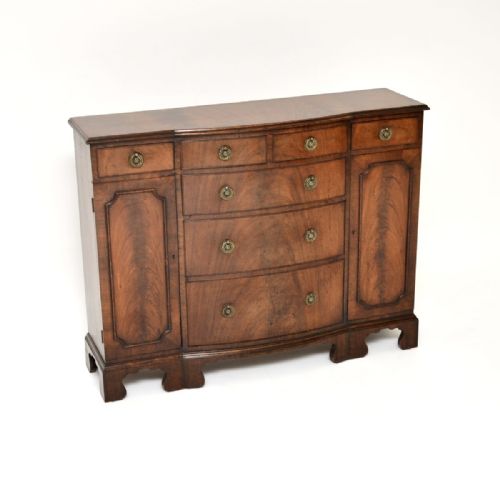
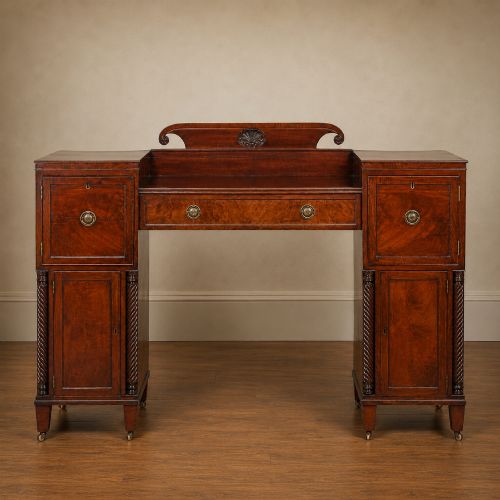
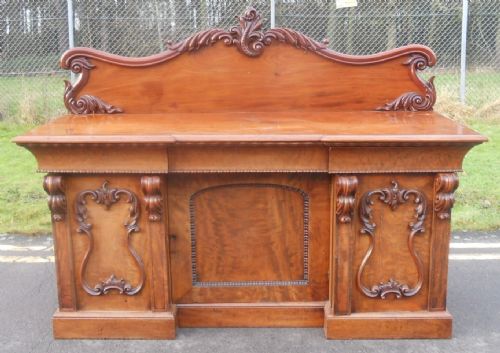
When searching for a rich brown wooden credenza, buyers encounter various large storage forms such as sideboards, chiffoniers, and pedestal sideboards originating from the Georgian, Regency, and Victorian eras. These pieces primarily function as dining room or living space servers, designed with deep cabinets and drawers for serving vessels and linens.
The selection on this page leans heavily towards nineteenth-century mahogany, ranging from early Georgian styles to late Victorian creations. Alongside traditional sideboards, the inventory includes smaller breakfront pieces, bowfront designs, and occasional walnut or oak cabinets that share the same deep, dark timber tones.
Materials and construction
Cabinet makers relied primarily on solid mahogany and carefully selected mahogany veneers, frequently highlighting figured grains like flame mahogany and plum pudding patterns. Secondary timbers such as oak appear in internal drawer construction, while walnut and gonçalo alvez feature in specific provincial and Regency examples.
Construction techniques combine sturdy cabinet-making frameworks with applied brass hardware and carved details. Fine timber selection ensures deep colour saturation, while specialised veneer work creates striking visual movement across large door panels and drawer fronts.
Mahogany dominates the selection, appearing in solid form alongside figured, flame, and veneered variations, supplemented by walnut, oak, and brass.
Distinctions in quality
Quality rests upon the selection of timber and the sophistication of the cabinet maker's joinery. Superior examples display striking figured grain patterns, such as flame mahogany or plum pudding veneer, matched carefully across prominent surfaces rather than applied at random.
Proportion and execution define the higher tier of these pieces. Exceptional items achieve a balance of scale, utilising refined carving, substantial brass fittings, and clean architectural lines that distinguish a bespoke workshop creation from standard production furniture.
The Rich Brown Wooden Credenza Glossary
- Pedestal sideboard
- A large dining room server featuring central storage flanked by two independent pedestals or cupboards. This form became particularly popular during the Regency and early Victorian periods.
- Breakfront
- A cabinet or sideboard whose central section projects forward from the flanking outer sections. This architectural arrangement creates depth and shadow on large furniture facades.
- Flame mahogany
- A decorative veneer cut from where a branch joins the main tree trunk, producing a distinctive flickering flame pattern. Cabinet makers utilised this figure to create dramatic visual symmetry.
- Chiffonier
- A compact sideboard or low cabinet equipped with drawers and enclosed shelving, often featuring a raised back tier. Victorians utilised these versatile pieces in smaller reception rooms.
- Gonçalo alvez
- A dense exotic hardwood prized for its rich brown colouring and contrasting dark figuring. Regency cabinet makers occasionally selected this timber for high-status side cabinets.
Rich Brown Wooden Credenza: Frequently Asked Questions
What rooms suit these large cabinets?
These substantial timber pieces anchor dining rooms and spacious living areas effectively, providing generous surface space and deep internal storage for tableware and linens.
Their rich wood tones and architectural proportions also allow them to function as striking focal points in large entrance halls or studies.
How do I identify a Regency sideboard?
Regency pieces typically display clean classical lines, symmetrical pedestal arrangements, and restrained brass mounts inspired by ancient Roman and Greek design. The timber choice often emphasises rich, dark mahogany or exotic figured woods.
Proportions tend to be rigorous and architectural, avoiding the heavy ornamentation that characterised later Victorian production.
What is flame mahogany veneer?
Flame mahogany is a highly decorative wood cut from the fork of the tree where the grain twists into a distinct flickering pattern. Cabinet makers mirrored these pieces across drawer fronts and cabinet doors to create striking symmetrical designs.
This labor-intensive application indicates higher quality craftsmanship typical of bespoke nineteenth-century workshops.
How should I care for dark wood surfaces?
Maintain rich brown wooden surfaces by dusting regularly with a soft, dry cloth and avoiding direct exposure to strong sunlight or sudden temperature changes. Natural waxes applied sparingly help nourish the grain and preserve the depth of the finish.
Keep liquids away from the polished timber to prevent water marks on the antique French polish or wax.