

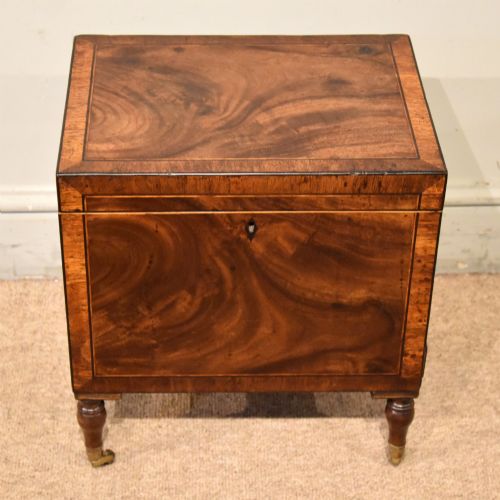
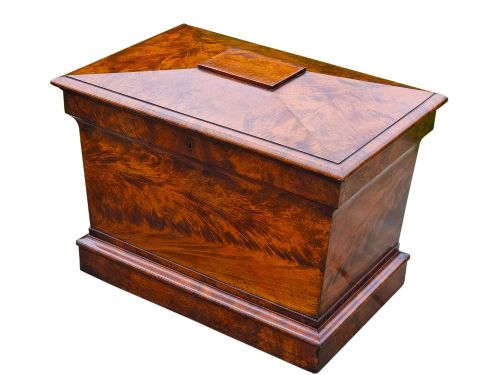
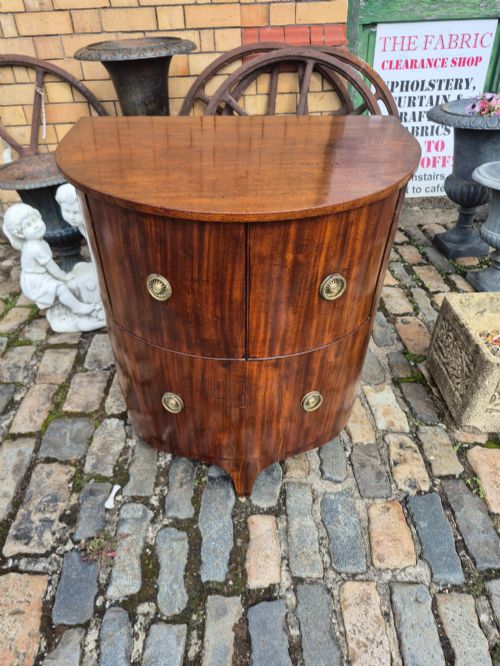
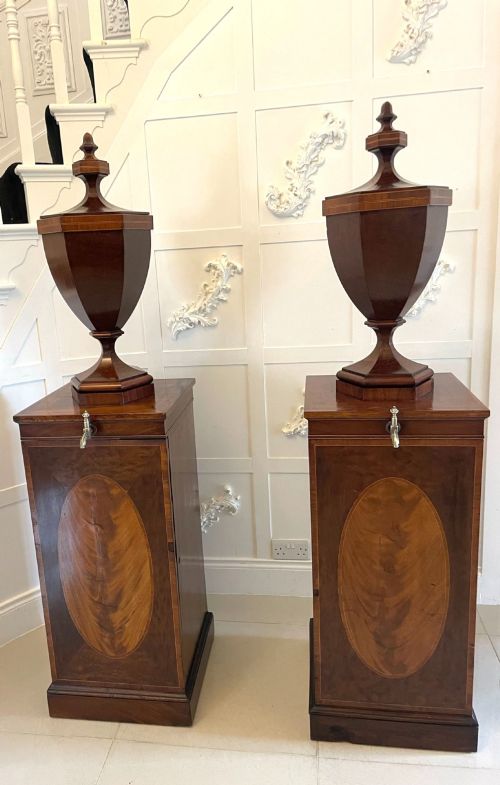

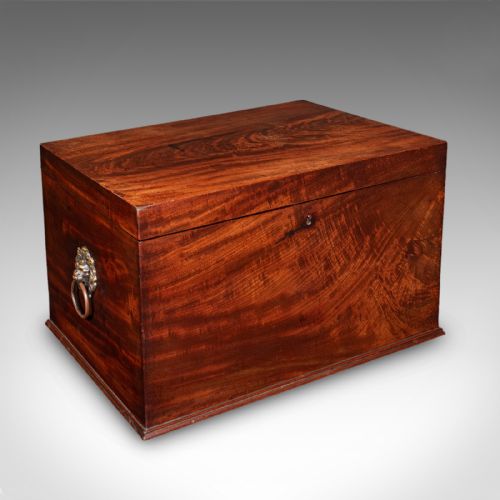


Flame Mahogany Cellarette
Flame mahogany cellarette pieces are substantial wine storage containers with figured timber surfaces, prized for holding bottles securely while anchoring a formal dining room.

Flame Mahogany Cellarette
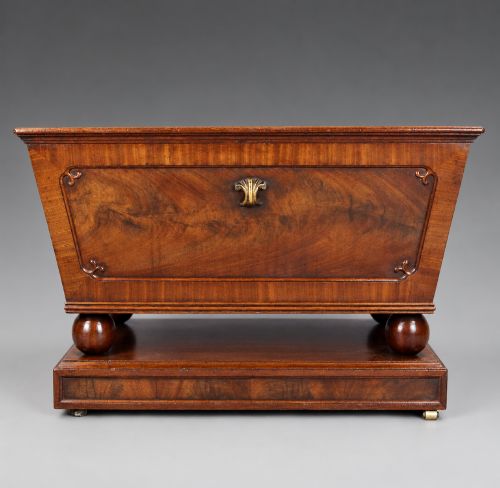
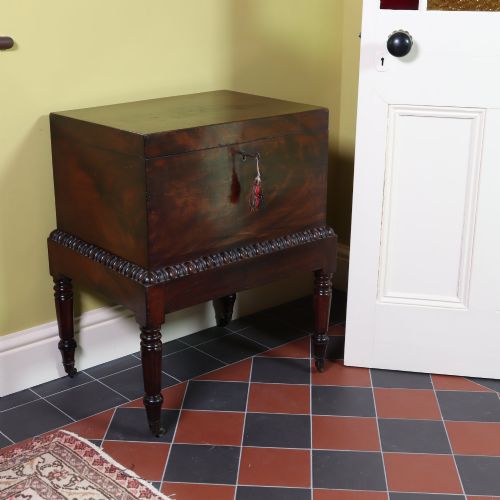
A flame mahogany cellarette is a dedicated wine storage vessel designed to keep bottles cool and accessible during formal dining. When you search for this phrase, you encounter forms ranging from compact table boxes to large sarcophagus-shaped containers.
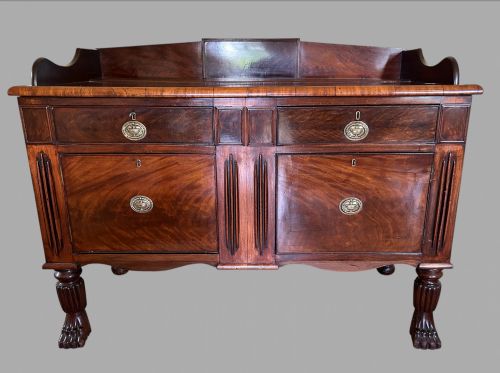
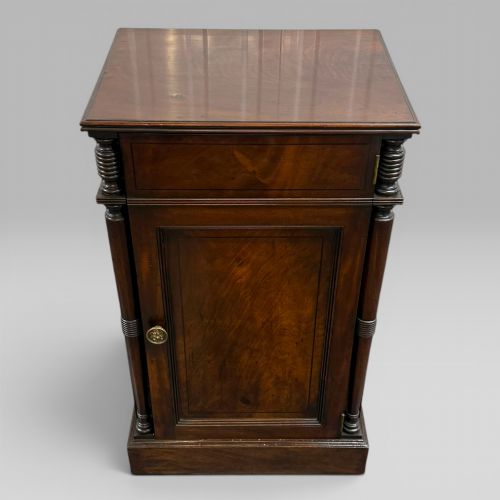
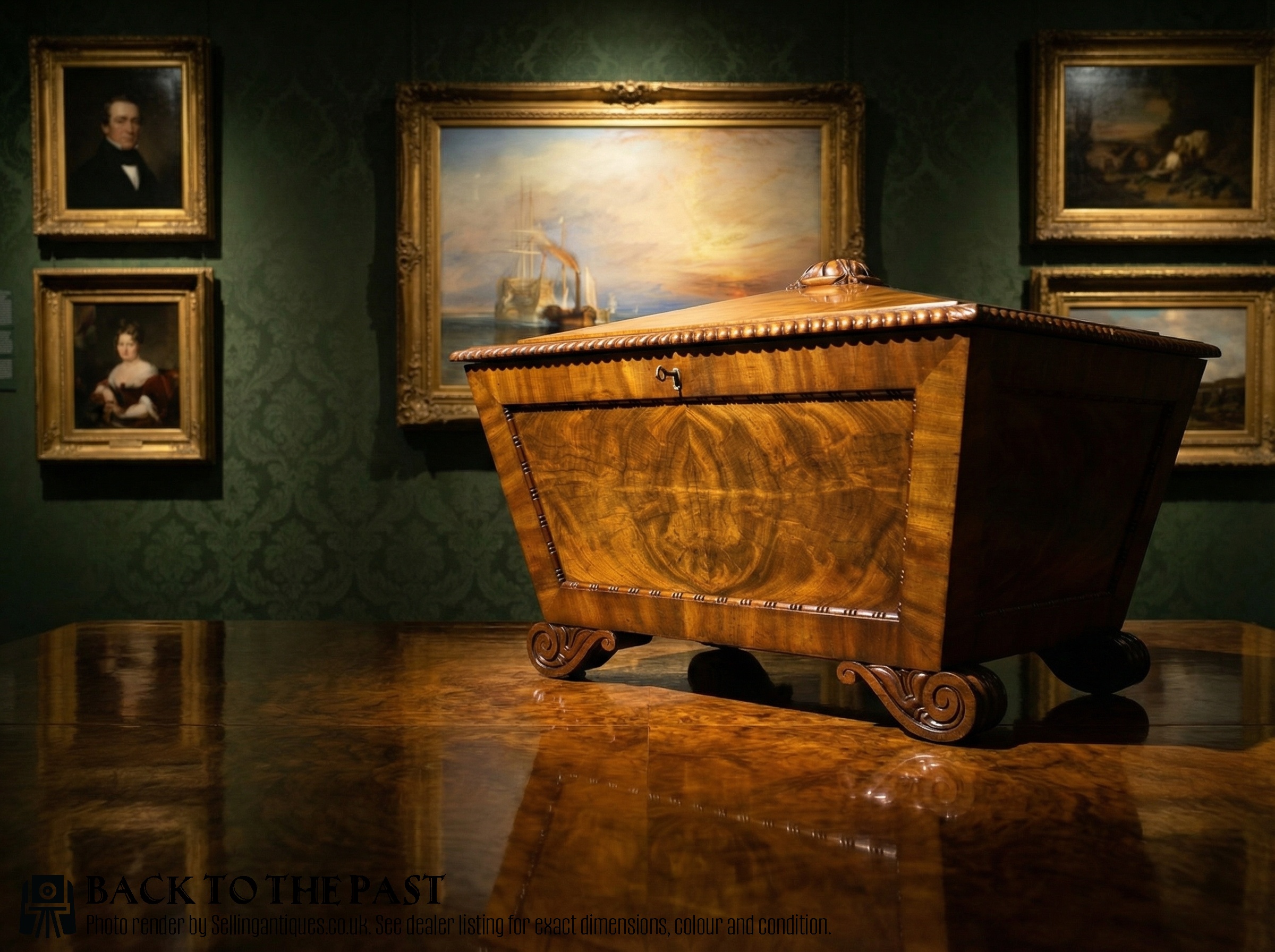
The pieces listed on this page span the Georgian, Regency, William IV, and Victorian periods. Sarcophagus shapes with carved feet and classical proportions dominate the selection alongside occasional sideboards with built-in cellarette compartments.
Materials and construction
Cabinetmakers selected mahogany and flame mahogany veneer for its dramatic grain patterns, often applying boxwood inlay for sharp linear contrast. Carcass construction commonly relied on solid oak internals to provide structural stability for heavy bottle loads.
Metal components played a practical role in daily use, incorporating brass carrying handles, decorative feet, and sometimes zinc linings designed to hold ice for chilling wine. These durable materials ensured the containers could withstand the moisture and weight associated with bottled storage.
Flame Mahogany Cellarette Retail Price Guide 2026
Typical asking prices for flame mahogany cellarette among the pieces listed under this phrase on Sellingantiques today, from the lower quarter to the upper quarter. They describe what is for sale here now, not the wider market.
Listings feature examples from the eighteenth and nineteenth centuries, constructed primarily in mahogany with brass and boxwood details.
Judging the standard of execution
Quality rests upon the selection of the veneer and the crispness of the secondary carving. Pieces featuring highly figured flame mahogany across all visible surfaces command greater attention than those with plain timber.
Interior fittings distinguish standard boxes from finer examples. The presence of original fitted bottle dividers, lead or zinc liners, and robust brass hardware indicates a higher grade of workshop production.
Gillows·Gillingtons
The Flame Mahogany Cellarette Glossary
- Cellarette
- A lockable container used for storing and cooling wine bottles near the dining table. They evolved from simpler buckets into elaborate architectural forms.
- Sarcophagus
- A monumental tomb-like shape with a steep-pitched lid and heavy feet, popular for Regency wine coolers. This outline gave cabinetmakers space to display bold mahogany veneers.
- Veneer
- A thin layer of figured wood applied to a secondary timber base. Flame veneer creates a distinctive rippled pattern resembling flickering fire.
- Boxwood inlay
- Contrasting pale wood inserted into dark mahogany surfaces in thin lines. It frames panels and defines geometric borders on Georgian and Regency furniture.
- Paw foot
- A carved furniture foot resembling an animal paw, frequently seen supporting heavy Regency cellarettes. They lift the main body off the floor and add sculptural weight.
Flame Mahogany Cellarette: Frequently Asked Questions
What is a flame mahogany cellarette used for?
These containers stored wine bottles safely near the dining table before refrigeration became common. Interiors often held ice or cold water to chill the bottles.
Today they function effectively as decorative side tables or low storage chests in dining rooms and living spaces.
How do I distinguish Regency from Georgian pieces?
Georgian examples often favour simpler rectilinear or oval box forms with subtle stringing. Regency pieces lean into heavier classical motifs like sarcophagus shapes, carved paw feet, and bold scrolling handles.
Checking the proportions and secondary woods helps confirm the likely period of manufacture.
Are the metal linings inside original?
Many cellarettes retain their original lead or zinc inserts, which prevented melting ice from damaging the wooden structure. Replacements are common due to corrosion from centuries of damp use.
An intact metal lining or divider grid adds historical completeness to the piece.
How do I care for flame mahogany veneer?
Keep the wood away from direct sunlight and extreme temperature shifts to prevent the veneer from lifting. Regular dusting with a dry cloth maintains the polished surface.
Applying a traditional beeswax polish occasionally helps nourish the timber without building up heavy residues.